Restoration costs in Charlotte keep climbing as unpredictable weather and infrastructure issues hit homes and businesses harder each year. You might expect these bills to stay manageable, but the average fire damage restoration on a typical house now runs about $11,044 and some full-home remodels can reach a jaw-dropping $750,000. The real surprise is that smart decisions on materials, insurance, and timing can make the difference between financial disaster and a stress-free recovery.
Table of Contents
- What Affects Typical Restoration Costs In Charlotte
- Average Cost Ranges By Property Type
- How Insurance Impacts Restoration Expenses
- Tips To Save On Restoration In Charlotte
Quick Summary
| Takeaway | Explanation |
|---|---|
| Geographic and Climate Factors Matter | Charlotte’s diverse weather patterns can lead to significant restoration costs, emphasizing the need for homeowners to understand local restoration strategies and prepare for potential damage. |
| Know the Restoration Costs by Property Type | Restoration costs vary based on property type, with residential projects averaging around $11,044 for fire damage and comprehensive renovations potentially reaching $750,000, highlighting the importance of tailored financial planning. |
| Insurance Coverage is Crucial | Understanding the specifics of insurance policies, including coverage limitations and documentation requirements, is essential for property owners to minimize out-of-pocket expenses during restoration. |
| Proactive Maintenance Can Save Money | Regular property inspections and timely repairs can prevent minor issues from escalating into costly restoration projects, aiding in long-term financial savings. |
| Strategic Material Selection Can Lower Costs | Using reclaimed materials and exploring various sourcing options can significantly reduce restoration expenses while also benefiting the environment. |
What Affects Typical Restoration Costs in Charlotte
Restoration costs in Charlotte vary dramatically based on multiple complex factors that property owners must understand. The intricate landscape of damage recovery involves several key elements that directly impact the financial investment required to return a property to its original condition.
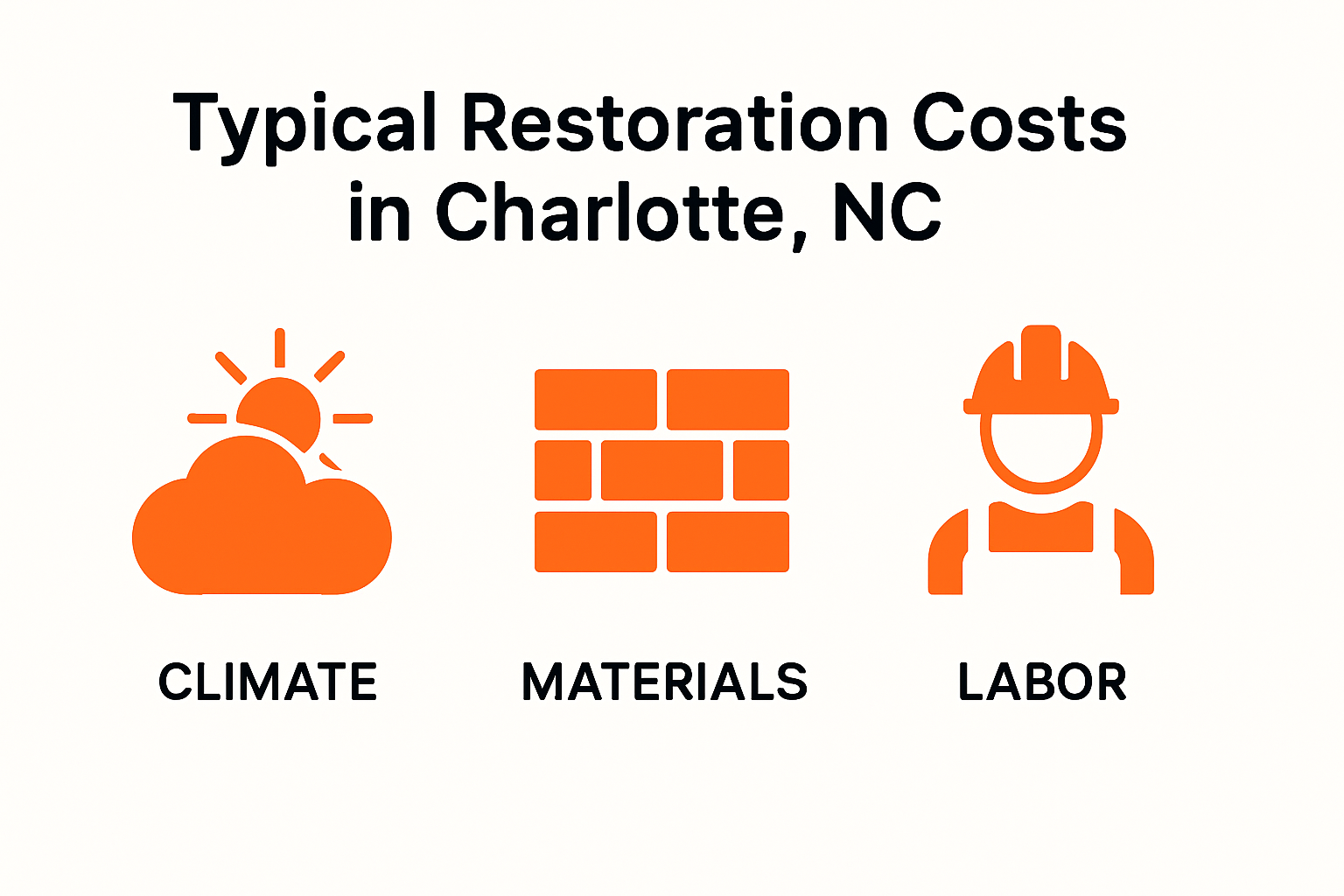
Geographic and Climate Considerations
Charlotte’s unique geographical position creates specific challenges for property restoration. The region experiences diverse weather patterns that significantly influence potential damage and subsequent repair costs. Understanding local restoration strategies becomes crucial for homeowners and business owners preparing for potential restoration needs.
The U.S. Environmental Protection Agency highlights that western North Carolina’s geography presents unique infrastructure challenges. Recent data suggests that storm-related damages have become increasingly expensive, with North Carolina experiencing a dramatic increase in storm cleanup costs. Between 2004 and 2016, the state spent an average of $65 million annually on storm cleanup, but this figure has dramatically escalated to $222 million per year in recent fiscal periods.
Material and Labor Cost Dynamics
Multiple factors contribute to restoration cost variations in Charlotte. Raw material prices, labor availability, and the specific type of damage significantly influence overall expenses. For instance, water damage restoration differs substantially from fire or storm damage repairs. Each type of damage requires specialized techniques, equipment, and expertise.
The State of North Carolina Action Plan estimates that total damage and infrastructure restoration needs in the region could approach $7 billion. This substantial figure underscores the complexity and potential expense of comprehensive property restoration efforts.
Extent and Complexity of Damage Assessment
Professional damage assessment plays a critical role in determining restoration costs. Restoration professionals must conduct thorough evaluations to understand the full scope of damage, which can include structural integrity issues, moisture penetration, potential mold growth, electrical system complications, and hidden structural damages.
Mecklenburg County’s approach to infrastructure management offers insights into cost-effective restoration strategies. The EPA’s analysis revealed that stream restoration techniques can be remarkably cost-effective, managing sediment at rates between $0.60 to $1.00 per pound. This metric demonstrates how precise assessment and targeted restoration can help control overall expenses.
Property owners in Charlotte must recognize that restoration costs are not one-size-fits-all. Factors such as the age of the property, previous maintenance history, insurance coverage, and the specific restoration company’s expertise all contribute to the final financial investment required to restore a damaged property to its pre-loss condition.
Average Cost Ranges by Property Type
Restoration costs in Charlotte vary significantly depending on the property type, with each category presenting unique challenges and financial considerations. Understanding these variations helps property owners prepare more effectively for potential restoration expenses.
Residential Property Restoration Costs
Residential restoration costs demonstrate considerable range based on property size and damage extent. Learn more about detailed restoration estimates for comprehensive planning. According to ProMatcher’s Cost Report, fire damage restoration for a standard 1,500 square foot house in Charlotte averages approximately $11,044.20, with potential variations between $9,786.00 and $12,302.40.

The National Association of the Remodeling Industry of Greater Charlotte categorizes renovation projects, revealing that substantial residential restorations involving entire house remodeling can range between $500,000 and $750,000. These comprehensive projects encompass both interior and exterior restoration, highlighting the potential financial investment required for extensive property damage.
Commercial and Industrial Property Restoration
Commercial and industrial property restoration presents more complex cost structures compared to residential projects. The scale, materials, and operational disruption significantly influence overall restoration expenses. Factors such as specialized equipment, potential business interruption, and intricate infrastructure systems contribute to higher restoration costs.
Restoration for commercial properties often involves multiple specialized assessments, including structural integrity evaluations, electrical system inspections, and comprehensive damage analyses. These detailed assessments ensure thorough restoration while minimizing potential long-term complications.
Water Damage and Specialized Restoration Expenses
Water damage restoration represents a significant category of property recovery with distinct cost considerations. Manta’s 2025 cost data indicates that water damage restoration in Charlotte typically ranges from $2,056.00 to $2,172.00. However, these figures can fluctuate dramatically based on several critical factors.
The extent of water penetration, potential mold growth, structural damage, and the specific areas affected dramatically influence restoration costs. High-moisture environments like basements or areas with complex infrastructure might require more extensive and expensive restoration processes. Professional assessment becomes crucial in accurately determining the full scope of water-related damage and developing a precise restoration strategy.
Property owners should recognize that these cost ranges serve as general guidelines. Each restoration project remains unique, with specific circumstances potentially expanding or contracting the financial investment required. Consulting with professional restoration experts provides the most accurate assessment for individual property needs.
To help you compare the ranges of typical restoration costs by property and damage type in Charlotte, here’s a summary table based on data provided in this guide:
| Restoration Type | Typical Cost Range | Notes |
|---|---|---|
| Fire Damage (1,500 sq. ft. residence) | $9,786 – $12,302 | Average $11,044 for standard home |
| Full-Home Residential Remodel | $500,000 – $750,000 | Encompasses complete interior & exterior |
| Water Damage Restoration | $2,056 – $2,172 | Range for typical water damage restoration |
| Statewide Storm Cleanup (annual avg.) | $65M – $222M | Cost escalation cited for broader NC region |
How Insurance Impacts Restoration Expenses
Insurance plays a critical role in managing and mitigating restoration expenses for property owners in Charlotte. Understanding the intricate relationship between insurance coverage and restoration costs can significantly influence financial outcomes during challenging recovery periods.
Coverage Variations and Policy Limitations
Learn more about comprehensive restoration strategies that complement insurance processes. Insurance policies vary dramatically in their approach to restoration expenses. The Massachusetts Division of Insurance emphasizes that most homeowner’s policies cover reasonable costs of emergency clean-up and temporary repairs, but property owners must document damages thoroughly and preserve all expense receipts.
The specifics of insurance coverage can dramatically impact out-of-pocket restoration expenses. Policies typically differentiate between comprehensive coverage, which might include full restoration costs, and more limited plans that only cover partial expenses. Factors such as the type of damage, extent of destruction, and specific policy clauses significantly influence the financial support available to property owners.
Risk Assessment and Premium Implications
Insurance companies conduct detailed risk assessments that directly influence restoration coverage and potential expenses. FEMA’s guidelines underscore the importance of maintaining adequate insurance coverage to protect against potential future losses. Failure to secure appropriate insurance might result in denial of public assistance funding, placing substantial financial burden on property owners.
A systematic review published in the journal Sustainability highlights that disaster insurance serves as a critical mitigation program. It provides alternative funding mechanisms for post-disaster management, facilitating economic recovery and infrastructure rehabilitation. Property owners in Charlotte must carefully evaluate their risk profiles and select insurance products that offer comprehensive protection against potential restoration scenarios.
Navigating Claims and Restoration Processes
Successful insurance claims require strategic documentation and a thorough understanding of the restoration process. Property owners should prepare comprehensive damage reports, including photographic evidence, professional assessment documentation, and detailed expense records. Understanding the restoration service landscape becomes crucial in effectively managing insurance claims.
Professional restoration companies often work directly with insurance providers, helping streamline the claims process and ensuring that property owners receive maximum entitled compensation. This collaborative approach can significantly reduce financial stress and expedite property recovery. Insurance adjusters typically evaluate restoration estimates, compare them against policy coverage, and determine the extent of financial support.
Property owners in Charlotte must recognize that proactive insurance management involves more than selecting a policy. Regular policy reviews, understanding coverage limitations, maintaining comprehensive documentation, and working with experienced restoration professionals can help optimize insurance outcomes and minimize unexpected financial burdens during challenging restoration projects.
To clarify the key differences between insurance policy features that impact restoration expenses, review the table below:
| Insurance Policy Feature | Comprehensive Plans | Limited Plans |
|---|---|---|
| Emergency Cleanup Coverage | Usually included | May be partial or excluded |
| Full Restoration Coverage | Often included (up to policy limits) | Frequently partial or conditional |
| Documentation Requirements | Strictly enforced | Strictly enforced |
| Out-of-pocket Risk | Lower (subject to deductibles) | Higher |
| Claim Complexity | High (due to thorough review) | Moderate to high |
Tips to Save on Restoration in Charlotte
Restoration expenses can quickly escalate, but strategic planning and informed decision-making can help Charlotte property owners significantly reduce their financial burden. Implementing smart approaches and understanding cost-saving strategies becomes crucial in managing restoration projects effectively.
Proactive Prevention and Early Intervention
Explore sustainable restoration approaches that can minimize long-term expenses. The North Carolina Housing Finance Agency emphasizes the importance of creating a comprehensive home repair budget. Proactively assessing your property’s condition and addressing potential issues early can prevent minor problems from developing into costly restoration projects.
Regular maintenance represents a critical strategy for cost reduction. Conducting periodic home inspections, addressing small repairs immediately, and maintaining critical systems like roofing, plumbing, and electrical infrastructure can prevent extensive damage. The North Carolina Department of Environmental Quality recommends conducting home energy audits to identify potential vulnerabilities and improvement areas, which can lead to significant long-term savings.
Strategic Material Selection and Sourcing
Material selection plays a pivotal role in managing restoration expenses. Habitat Charlotte Region ReStore suggests utilizing reclaimed or recycled materials as an effective method to reduce costs and minimize environmental impact. These alternative sourcing strategies can provide high-quality materials at substantially reduced prices.
Property owners should consider multiple procurement strategies. Comparing quotes from different suppliers, purchasing materials during off-peak seasons, and exploring bulk purchasing options can yield considerable savings. Additionally, some local restoration companies offer package deals or volume discounts that can help reduce overall project expenses.
Financial Planning and Resource Optimization
Comprehensive financial planning becomes essential in managing restoration costs. Developing a detailed budget that includes contingency funds, exploring potential insurance coverage, and understanding available local and state assistance programs can help mitigate financial strain.
Consider investigating grant programs, low-interest restoration loans, and community development resources specific to Charlotte and Mecklenburg County. Some local organizations provide financial assistance for critical home repairs, particularly for elderly, disabled, or low-income residents. Researching these options can uncover unexpected financial support mechanisms.
Property owners should also prioritize restoration needs strategically. Not all damage requires immediate comprehensive restoration. Consulting with professional restoration experts can help identify critical repairs that must be addressed immediately versus those that can be planned and budgeted for over time.
Ultimately, saving on restoration costs in Charlotte requires a multifaceted approach. Combining proactive maintenance, strategic material sourcing, comprehensive financial planning, and professional guidance can help property owners manage restoration expenses effectively while ensuring their property remains in optimal condition.
Frequently Asked Questions
What are the average restoration costs for fire damage in Charlotte, NC?
The average restoration cost for fire damage in a typical 1,500 square foot house in Charlotte is approximately $11,044, with potential variations ranging from $9,786 to $12,302.
How much can full-home remodels cost in Charlotte?
Full-home remodels can be quite expensive, ranging from $500,000 to $750,000 depending on the extent and complexity of the restoration needed.
What factors impact restoration costs in Charlotte?
Restoration costs in Charlotte are influenced by geographic and climate conditions, material and labor dynamics, and the extent and complexity of the damage assessment.
How can homeowners save on restoration costs in Charlotte?
Homeowners can save on restoration costs by conducting regular property inspections, addressing repairs early, choosing reclaimed materials, and developing a comprehensive financial plan.
Restore with Confidence: Charlotte’s Trusted Disaster Recovery Partner
Are you worried about rising restoration costs in Charlotte and the stress that comes with complex insurance claims? This guide highlights how quickly expenses can add up after storms, fires, or floods, especially when insurance paperwork and material choices stand in your way. Many Charlotte property owners feel overwhelmed by unexpected bills, confusing policies, and the pressure to make the right decisions fast. If you want to avoid costly mistakes and secure your maximum compensation, you need a team that brings clarity and expertise.
Turn your knowledge into action today. Discover how the National Insurance Claim Specialist: Charlotte Damage Repair Experts – 2025 can help you reclaim control after disaster strikes. Visit National Insurance Claim Specialist’s website to connect with licensed professionals who treat your home or business as their own. Choose experts who guide you through insurance processes, restoration planning, and every step toward a safe, complete recovery.