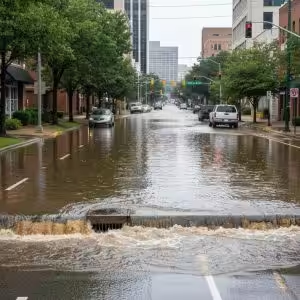
Property restoration costs in Charlotte are climbing fast, especially for anyone facing severe damage. You might expect that most homeowners are protected by insurance, but 93 percent of homes hit by flood damage from Hurricane Helene did not have flood insurance in North Carolina. The real eye-opener is that, in many cases, the restoration bill can be higher than what most people ever expect to pay out of pocket.
Table of Contents
- Key Factors Impacting Property Restoration Costs
- Average Restoration Costs By Property Type
- How Insurance Affects Restoration Expenses
- Tips To Reduce Your Restoration Costs
Quick Summary
| Takeaway | Explanation |
|---|---|
| Damage Severity Influences Costs | The extent and type of damage significantly affect restoration expenses, with costs soaring from a few thousand to tens of thousands based on the severity. |
| Labor and Material Costs Vary | Restoration expenses are impacted by local labor availability and material selection, where costs can increase based on the complexity of repairs and market conditions. |
| Insurance Coverage Matters | Understanding policy coverage is crucial, as comprehensive insurance can save homeowners substantial restoration costs, while limited coverage may leave them with high out-of-pocket expenses. |
| Preventative Maintenance is Key | Regular maintenance can prevent minor damages from escalating, ultimately leading to lower restoration costs. |
| Utilize Local Resources | Property owners should explore community support and emergency repair programs in Charlotte to help mitigate restoration costs. |
Key Factors Impacting Property Restoration Costs
Property restoration costs in Charlotte, NC involve a complex interplay of multiple critical factors that homeowners and property managers must carefully consider. Understanding these variables can help predict potential expenses and prepare for comprehensive recovery efforts.
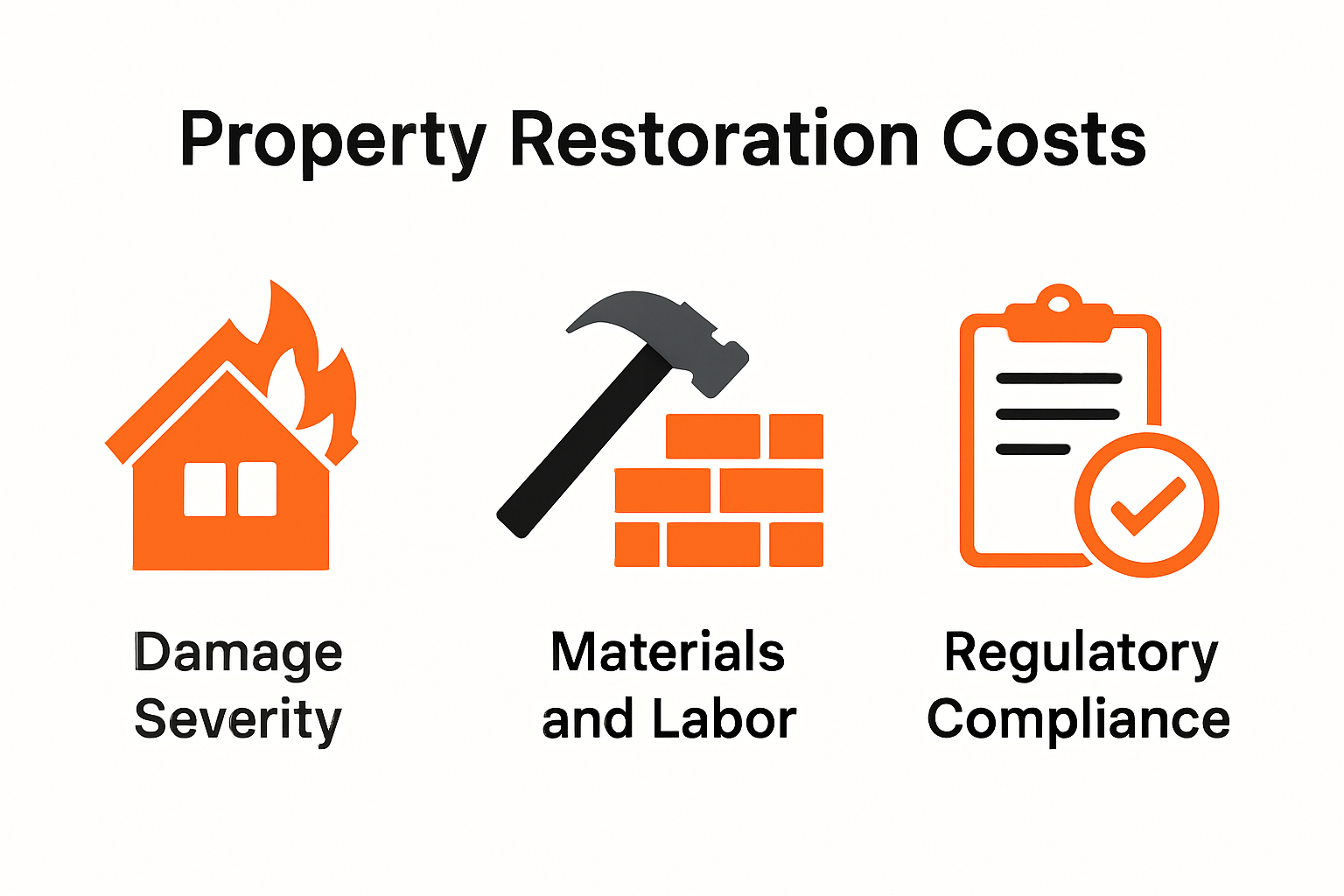
Damage Severity and Scope
The extent and type of damage represent the most significant determinant of restoration costs. Different damage categories require unique remediation approaches and resources. For instance, water damage might necessitate extensive drying, potential mold remediation, and structural repairs. Fire damage typically involves more comprehensive restoration, including smoke odor elimination, structural reconstruction, and potential hazardous material removal.
Comprehensive restoration insights reveal that minor water intrusion could cost between $1,500 to $5,000, while extensive structural damage from fire or severe weather might escalate expenses to $50,000 or more. The complexity increases with factors like material saturation, structural compromise, and secondary damage potential.
Material and Labor Cost Dynamics
Restoration expenses are directly influenced by material selection and labor availability. According to construction industry analysis, local market conditions in Charlotte significantly impact overall project costs. Specialized restoration materials like moisture-resistant drywall, advanced sealants, and high-performance insulation can substantially increase expenses.
Labor costs fluctuate based on several factors:
- Skilled Labor Availability: Certified restoration professionals command premium rates
- Complexity of Restoration Work: Intricate repairs require more specialized expertise
- Seasonal Demand: Peak disaster recovery periods can drive labor costs higher
Regulatory Compliance and Additional Expenses
Local building codes and permit requirements add another layer of complexity to restoration budgets. Regulatory compliance research indicates that meeting current safety standards often involves unexpected modifications and additional inspections. These requirements can include electrical system updates, structural reinforcements, and adherence to energy efficiency protocols.
Property owners should anticipate potential additional expenses such as:
- Permit Fees: Often ranging from $500 to $2,000
- Mandatory Upgrades: Potential costs for bringing property to current code standards
- Inspection Expenses: Professional evaluations required at multiple restoration stages
By understanding these interconnected factors, property owners in Charlotte can develop more accurate restoration cost projections and make informed decisions about recovery strategies. Proactive planning, comprehensive damage assessment, and working with experienced restoration professionals remain crucial in managing these complex financial considerations.

Average Restoration Costs by Property Type
Restoration costs vary significantly across different property types in Charlotte, NC, reflecting the unique challenges and restoration requirements of residential, commercial, and industrial spaces. Understanding these variations helps property owners prepare financially and make informed decisions about recovery strategies.
Residential Property Restoration Costs
Residential properties present a diverse range of restoration scenarios, with costs primarily determined by the property size, damage extent, and specific restoration needs. Comprehensive storm damage insights reveal that residential restoration expenses can fluctuate dramatically.
According to local damage restoration data, residential restoration costs typically break down as follows:
- Single-Family Homes: Water damage restoration ranges from $1,200 to $5,000
- Apartment Units: Smaller spaces may require $800 to $3,500 in restoration work
- Townhouses: Complex restoration can range between $2,500 and $7,000
Commercial Property Restoration Expenses
Commercial properties present more complex restoration challenges due to larger square footage, specialized equipment, and potential business interruption costs. Restoration expenses for commercial spaces often involve multiple layers of consideration beyond physical damage repair.
Restoration costs for commercial properties depend on several critical factors:
- Office Buildings: Restoration can range from $10,000 to $250,000
- Retail Spaces: Expenses might span $5,000 to $150,000
- Warehouse Facilities: Large-scale restorations could exceed $300,000
Industrial Property Restoration Considerations
Industrial properties represent the most complex and expensive restoration scenarios. These environments often require specialized equipment, hazardous material handling, and extensive structural assessments. Regulatory compliance research indicates that industrial restoration involves significant additional expenses related to safety protocols and system recertification.
Typical industrial restoration cost ranges include:
- Manufacturing Facilities: Potential restoration expenses from $50,000 to $500,000
- Processing Plants: Comprehensive restorations might reach $750,000
- Technical Infrastructure: Specialized equipment restoration can significantly increase overall expenses
Property owners must recognize that these figures represent general estimates. Actual restoration costs depend on specific damage conditions, material requirements, and the unique characteristics of each property. Consulting with professional restoration experts provides the most accurate assessment for individual scenarios.
To help you compare restoration costs across property types in Charlotte, NC, the following table provides a summary of typical cost ranges and key expense factors.
| Property Type | Typical Restoration Cost Range | Key Cost Factors |
|---|---|---|
| Single-Family Home | $1,200 – $5,000 | Water damage restoration, property size |
| Apartment Unit | $800 – $3,500 | Smaller area, less complex repairs |
| Townhouse | $2,500 – $7,000 | Complex restoration, shared walls |
| Office Building | $10,000 – $250,000 | Square footage, equipment, business interruption |
| Retail Space | $5,000 – $150,000 | Inventory loss, specialized needs |
| Warehouse Facility | $300,000+ | Large area, infrastructure complexity |
| Manufacturing Facility | $50,000 – $500,000 | Machines, hazardous materials handling |
| Processing Plant | Up to $750,000 | Safety compliance, industry-specific systems |
| Technical Infrastructure | Varies (High) | Specialized equipment restoration |
How Insurance Affects Restoration Expenses
Insurance plays a critical role in managing property restoration expenses, serving as a financial buffer that can significantly reduce out-of-pocket costs for property owners in Charlotte, NC. Understanding the nuanced relationship between insurance coverage and restoration expenses is essential for effective financial planning and recovery strategies.
Policy Coverage and Restoration Scope
Property insurance policies dramatically influence the extent and quality of restoration services. Understanding restoration services after a disaster reveals that comprehensive coverage can mean the difference between minimal repairs and complete property reconstruction.
According to insurance industry research, the types of coverage significantly impact restoration expenses:
- Comprehensive Policies: Cover multiple damage types, potentially saving homeowners $10,000 to $50,000 in restoration costs
- Limited Policies: May only cover specific damage scenarios, leaving property owners responsible for substantial expenses
- Specialized Endorsements: Additional coverage for unique restoration needs can provide critical financial protection
Insurance Claim Challenges and Restoration Costs
Navigating insurance claims represents a complex process that directly influences restoration expenses. Research from the National Flood Insurance Program indicates a troubling trend of declining policy coverage, with residential flood insurance policies dropping from 5.4 million in 2009 to 4.5 million in 2023.
Key challenges affecting restoration expenses include:
- Claim Denial Rates: Approximately 25% of initial property damage claims face partial or complete denial
- Depreciation Calculations: Insurance companies often factor in property age and wear, reducing potential reimbursement
- Documentation Requirements: Extensive proof of damage and restoration needs can complicate claim processes
Risk Mitigation and Insurance Strategy
Property owners in Charlotte, NC can strategically manage restoration expenses through proactive insurance planning. Insurance Journal research highlights that in North Carolina, approximately 93% of homes with flood damage from Hurricane Helene lacked flood insurance, resulting in substantial out-of-pocket restoration costs.
Strategic approaches to managing restoration expenses through insurance include:
- Annual Policy Review: Regularly updating coverage to match property value and potential risk
- Comprehensive Damage Documentation: Maintaining detailed records of property condition
- Understanding Policy Limitations: Identifying and addressing potential coverage gaps
Effective insurance management requires a proactive approach. Property owners must carefully assess their specific restoration needs, understand policy details, and maintain comprehensive documentation. By developing a strategic insurance strategy, individuals can significantly mitigate the financial burden of unexpected property damage and restoration expenses.
The following table summarizes key insurance coverage types and common claim challenges affecting property restoration costs in Charlotte, NC.
| Insurance Type | Coverage Scope | Potential Savings / Gaps | Common Claim Challenges |
|---|---|---|---|
| Comprehensive Policy | Multiple damage types | $10,000 – $50,000 saved | Documentation, depreciation |
| Limited Policy | Specific damage (e.g., fire only) | Coverage gaps, high out-of-pocket costs | Claim denials, exclusions |
| Specialized Endorsements | Unique/restoration (e.g., flood) | Reduces unexpected expenses | Proof of damage, coverage limits |
| No Flood Insurance | No coverage for floods | Full out-of-pocket for flood damage | No claim possible |
Tips to Reduce Your Restoration Costs
Reducing property restoration costs requires strategic planning, proactive maintenance, and informed decision making. Property owners in Charlotte, NC can implement several practical approaches to minimize potential damage and associated restoration expenses.
Preventative Maintenance Strategies
Preventative maintenance represents the most effective method for reducing restoration costs. Learn how to master the claim process and understand the importance of consistent property upkeep. According to North Carolina Cooperative Extension research, regular home maintenance can prevent minor issues from escalating into major repairs.
Key preventative maintenance recommendations include:
- Regular Roof Inspections: Identifying and addressing potential vulnerabilities before significant damage occurs
- HVAC System Servicing: Preventing water damage and potential mold growth through consistent system maintenance
- Gutter and Drainage Maintenance: Ensuring proper water flow and preventing structural water damage
Documentation and Insurance Preparation
Comprehensive documentation serves as a critical strategy for managing restoration expenses. Local restoration experts emphasize the importance of thorough damage documentation for successful insurance claims.
Effective documentation strategies include:
- Detailed Photographic Evidence: Capturing comprehensive visual documentation of property conditions
- Systematic Record Keeping: Maintaining detailed maintenance and repair logs
- Professional Property Assessments: Obtaining periodic professional evaluations to identify potential risk areas
Community and Emergency Resource Utilization
Local resources can significantly reduce restoration expenses for property owners. Emergency repair programs in Charlotte provide critical support for homeowners facing unexpected restoration challenges.
Strategic resource utilization approaches include:
- Safe Home Emergency Repair Programs: Accessing local assistance for urgent repair needs
- Community Support Networks: Connecting with local restoration professionals and support groups
- Municipal Assistance Programs: Exploring government-sponsored home repair and restoration support
Successful cost reduction requires a multifaceted approach. Property owners must combine proactive maintenance, comprehensive documentation, and strategic resource utilization. By implementing these strategies, individuals can significantly mitigate potential restoration expenses and protect their property investment in Charlotte, NC.
Frequently Asked Questions
What are the average property restoration costs in Charlotte, NC?
The average restoration costs in Charlotte vary by property type. Residential restoration costs range from $800 to $7,000, while commercial and industrial properties can range from $5,000 to over $750,000 depending on the severity of the damage.
How do insurance policies affect restoration expenses?
Insurance policies can significantly impact restoration expenses. Comprehensive coverage can save homeowners substantial costs, potentially between $10,000 to $50,000, whereas limited policies may leave homeowners with high out-of-pocket expenses.
What factors increase property restoration costs?
Key factors influencing restoration costs include the severity and scope of damage, material and labor cost dynamics, and the need for regulatory compliance, such as building permits and inspections.
How can I reduce my property restoration costs?
To minimize restoration costs, implement preventative maintenance strategies, maintain thorough documentation of property conditions, and utilize local community resources and emergency repair programs.
Take Control of Restoration Costs and Reclaim Your Peace of Mind
Property damage can disrupt your life overnight. Unexpected restoration expenses, complicated insurance claims, and the stress of meeting regulations leave many Charlotte property owners feeling overwhelmed and at risk of significant out-of-pocket losses. This guide makes it clear that the true cost of water, fire, or storm damage often extends far beyond simple repairs. Without an expert on your side, navigating insurance coverage and restoration requirements can jeopardize your financial recovery and delay the return to normal.
Let National Insurance Claim Specialist (NICS) simplify the process for you. Our licensed team stands ready to manage the complexities of disaster recovery and insurance claims, providing honest guidance and tailored solutions. With NICS, you can avoid common claim pitfalls and secure the maximum compensation your policy allows, whether recovering from hurricane damage, flooding, or fire. Do not let another day pass with uncertainty about restoration costs or insurance benefits. Discover how NICS can protect your property and accelerate your recovery. Act now to regain control and restore your peace of mind before costs climb any higher.
Recommended
- Storm Damage Repair Costs: What to Expect in 2025 – Fire Damage Repair and Water Damage Repair Charlotte NC
- Charlotte Restoration: Find Top Disaster Recovery Services
- Expert Fire Damage Restoration Services – Fire Damage Repair and Water Damage Repair Charlotte NC
- Mastering the Claim Process: How to File for Roof Damage – Fire Damage Repair and Water Damage Repair Charlotte NC
- Rebuilding Lives: Understanding the Significance of Restoration Services After a Disaster – Fire Damage Repair and Water Damage Repair Charlotte NC
- NIC’s Restoration: Your Trusted Restoration Experts