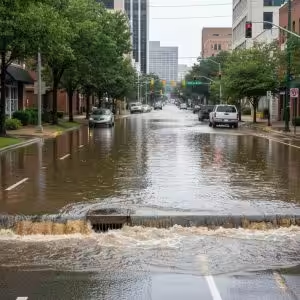
Local Hurricane Damage Assessment: What to Expect for Charlotte Homeowners and Business Owners
A single Category 1 hurricane can inflict thousands of dollars in damage on roofs, windows, and foundations across Charlotte, NC. Homeowners and business owners need a clear, step-by-step guide to secure safety, document losses, and prepare for professional evaluation. This article explains the immediate safety measures and documentation checklist, outlines the local assessment process, details common damage types, walks through insurance documentation best practices, highlights the advantages of partnering with a Charlotte-based restoration specialist, and covers commercial-property considerations—all while showing how NIC’s Restoration’s 24/7 emergency team supports your recovery.
What Are the Immediate Steps After a Hurricane for Safety and Damage Documentation?
The first 24 hours after a hurricane determine how quickly you prevent further property loss and strengthen your insurance claim. Broadly, focus on personal safety, damage recording, and temporary protection to preserve your home or business until professionals arrive.
How Can You Ensure Safety Immediately After a Hurricane?
Immediately after a storm, check for hazards before reentering structures: key signs of roof damage after a storm
- Inspect for downed power lines and leaking gas.
- Wear protective gear such as boots, gloves, and a hard hat.
- Turn off electricity at the breaker if flooding occurred.
- Verify structural stability—avoid sagging roofs or leaning walls.
Following these precautions ensures personal well-being and lays a safe foundation for damage documentation and restoration.
What Should Be Included in Your Initial Damage Documentation Checklist?
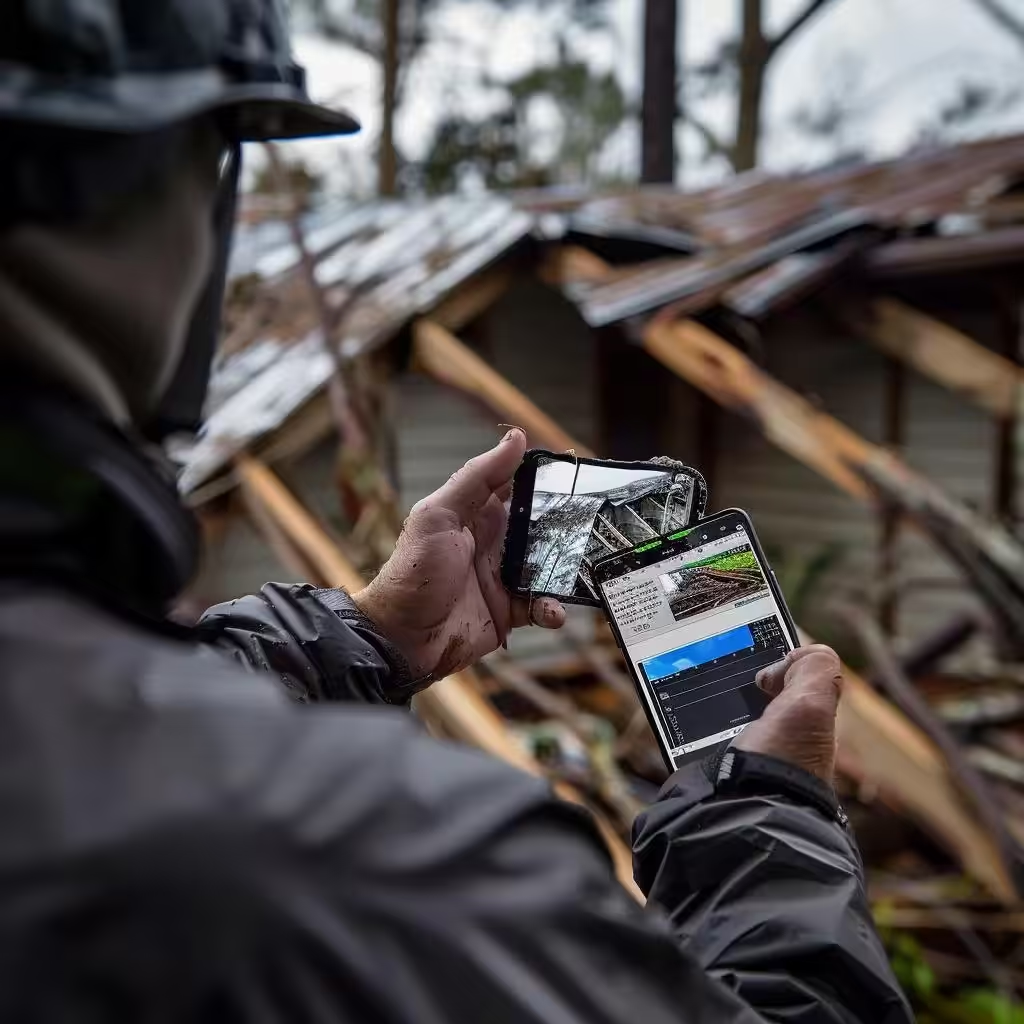
Documenting losses comprehensively accelerates claim approval and repair scheduling. Your checklist should capture: home repair must knows after suffering fire damage
| Item | Description | Best Practice |
|---|---|---|
| Photographs | Wide-angle and close-up shots of all damage | Use high resolution to capture details |
| Video Footage | 360° walkthrough of affected rooms | Narrate date, location, and visible issues |
| Written Notes | Date-stamped descriptions of each area | Include condition before and after |
| Inventory List | List of damaged items with approximate value | Group by room and category |
| Temporary Repairs | Board-up and tarping actions taken | Record materials used and cost |
This table helps you gather all evidence required by insurance adjusters and restoration contractors.
How Do You Prevent Further Damage with Board-Up and Tarping?
Board-up and tarping stop water infiltration and vandalism until permanent repairs begin:
- Secure broken windows and doors with pressure-treated plywood.
- Cover exposed roofing areas with waterproof tarps and sealed fasteners.
- Reinforce weakened garage doors and sidings against wind gusts.
Temporary protection limits interior water damage and structural weakening, preparing your property for the full assessment.
How Is a Local Hurricane Damage Assessment Conducted in Charlotte, NC?
A professional evaluation follows a systematic process that discovers both obvious and hidden damage, ensuring a thorough restoration plan tailored to local building codes and weather conditions. For more information on restoration services, visit comprehensive hurricane damage evaluations by expert team.
What Are the Key Areas Inspected During a Hurricane Damage Assessment?
Experts inspect critical structural and functional zones to identify vulnerabilities:
- Roof: shingles, flashing, gutters, and deck attachment points.
- Exterior Walls: siding, brick mortar, window frames, and shutters.
- Foundation: cracks, settlement signs, and water pooling near footings.
- Interior: ceilings, walls, floors, electrical panels, and HVAC systems.
A detailed walk-around confirms where mitigation is needed and informs estimated repair timelines.
How Do Professionals Detect Hidden Water and Structural Damage?
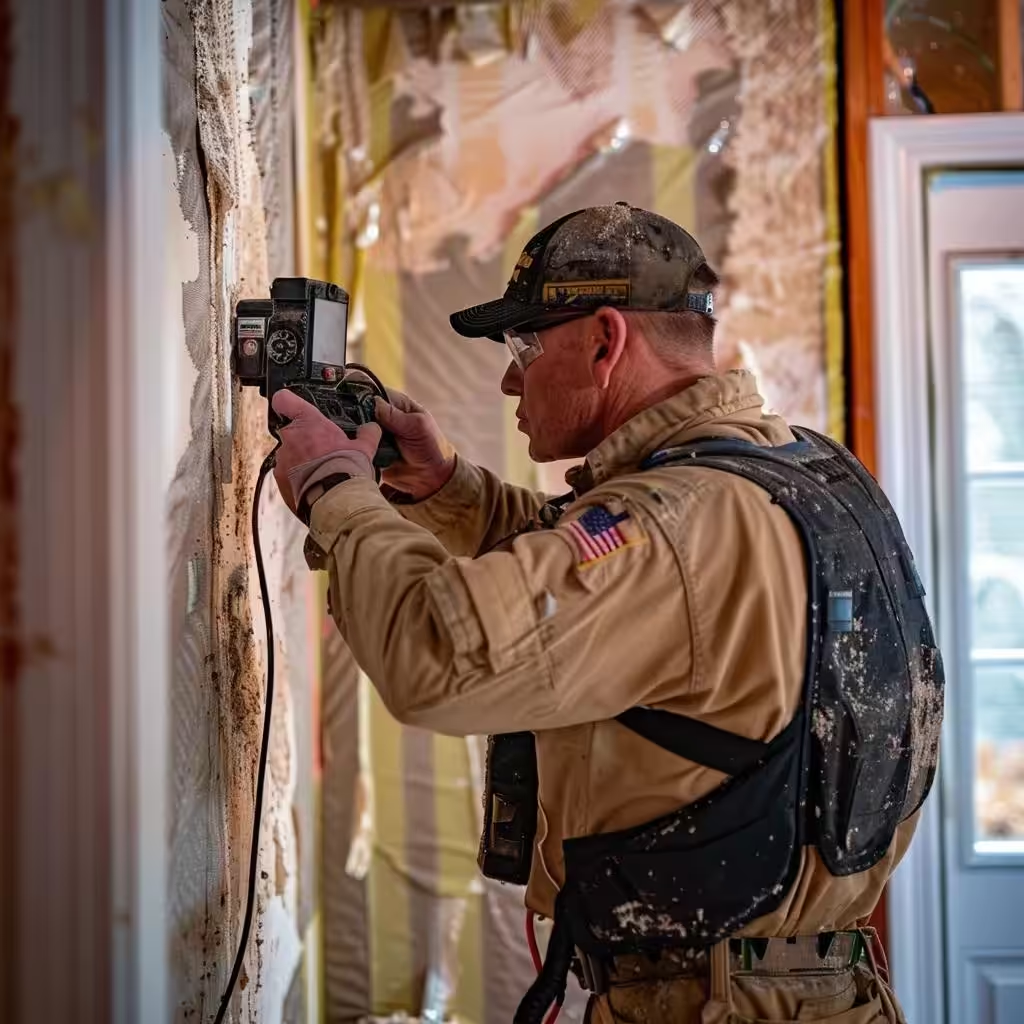
Certified inspectors use moisture meters, infrared cameras, and resistance probes to reveal unseen issues:
| Tool | Function | Benefit |
|---|---|---|
| Infrared Camera | Visualizes temperature anomalies | Pinpoints water intrusion behind walls |
| Moisture Meter | Measures moisture content in materials | Detects elevated moisture in wood and drywall |
| Resistance Probe | Tests gypsum board conductivity | Identifies soggy insulation or flooring |
| Structural Gauge | Monitors crack expansion | Tracks foundation movement over time |
These techniques expose hidden damage that simple visual checks miss, ensuring no compromise to structural integrity.
What Tools and Techniques Are Used in the Assessment Process?
Assessment teams rely on advanced methods to quantify damage severity and scope: comprehensive hurricane damage evaluations by expert team
- Drone Surveys for aerial roof and gutter inspections.
- Thermal Imaging to map heat differentials indicating moisture.
- Core Sampling of masonry to test material strength.
- Load-testing beams and trusses for structural stability.
Combining aerial, laboratory, and field tests creates a complete damage profile, guiding an accurate restoration strategy.
What Types of Hurricane Damage Should Charlotte Property Owners Expect?
Hurricane impacts vary by wind speed, rainfall, and debris. Recognizing types of damage lets you prioritize repairs and call in specialized teams without delay.
How to Identify Roof Damage from Wind and Hail?
Roof damage often starts with displaced shingles and punctures:
- Lifted or missing shingles along ridge lines indicate wind uplift stress.
- Granule loss and dents on asphalt shingles signal hail impact.
- Exposed underlayment or curled edges reveal water penetration risks.
Spotting these signs early reduces leaks and wood rot beneath the roofing system.
What Are the Signs of Water Intrusion and Flood Damage?
Water infiltration attacks interior finishes and supports mold growth:
| Damage Type | Visible Sign | Implication |
|---|---|---|
| Ceiling Stains | Brown rings or discoloration | Active leak above, risking ceiling collapse |
| Wall Blistering | Bubbling paint or wallpaper separation | Moisture trapped in wall cavities |
| Floor Buckling | Warped hardwood or laminate boards | Prolonged exposure to standing water |
| Electrical Faults | Tripped breakers or corroded wiring | Hidden wiring hazards |
Early detection of moisture issues prevents widespread deterioration and health risks.
How Is Structural Damage Assessed After a Hurricane?
Structural checks confirm that framing and load-bearing elements remain sound:
- Examine load-bearing walls for cracks wider than 1/8 inch.
- Test beam alignment and sag using laser levels.
- Inspect roof truss connections for rotated or bent metal plates.
- Evaluate foundation anchors for pull-out or rust.
Accurate structural evaluation safeguards occupants and determines needed reinforcement.
When Should You Be Concerned About Mold Growth and Prevention?
Mold can develop within 24 to 48 hours in damp environments:
- Inspect hidden spaces (behind cabinets, under carpets) with moisture readings above 16 %.
- Look for musty odors and black or green patches in corners.
- Schedule mold remediation if visible growth or elevated humidity persists.
Timely mold control protects indoor air quality and prevents costly rebuilds.
Mold Growth and Prevention
Mold can develop rapidly in damp environments, often within 24 to 48 hours. It is crucial to inspect areas prone to moisture, such as behind cabinets and under carpets, and to address any signs of mold growth promptly to prevent health risks and costly repairs.
Centers for Disease Control and Prevention (CDC)
This citation supports the article’s advice on mold prevention and the importance of early detection.
How Do You Document Hurricane Damage for Insurance Claims in Charlotte?
Accurate documentation transforms chaotic storm aftermath into a well-organized claim package that accelerates compensation and repair approvals.
What Is the Best Way to Photograph and Video Hurricane Damage?
High-quality visual evidence strengthens your claim narrative:
- Use natural daylight and steady camera positions for clarity.
- Capture wide-angle overviews followed by close-ups of specific failures.
- Narrate dates, locations, and observed conditions while recording video.
- Store digital files with timestamp metadata and back them up offsite.
Clear imagery helps adjusters verify losses and streamlines settlement discussions.
How Should You Create a Detailed Inventory of Damaged Property?
A thorough inventory lists every affected item and supporting details:
- Group possessions by room: electronics, furniture, appliances.
- Note make, model, age, and replacement cost for each item.
- Include purchase receipts or estimated values for antiques and art.
- Reference serial numbers and warranty information where available.
This comprehensive asset log reduces coverage disputes and missing reimbursement.
What Are the Key Steps When Working with Insurance Adjusters?
Collaborating effectively with your adjuster expedites claim resolution:
- Schedule a joint inspection to review documented damage.
- Provide all photos, videos, and inventory lists in advance.
- Ask clarifying questions about coverage limits and exclusions.
- Request written confirmation of agreed repair scopes and timelines.
Open communication ensures your restoration priorities align with policy provisions.
How Do Hurricane Deductibles Affect Your Insurance Claim?
Hurricane-specific deductibles typically range from 2 % to 5 % of your dwelling coverage: hurricane damage.
- A 3 % deductible on a $300,000 dwelling limit equals a $9,000 out-of-pocket expense.
- Deductible credits may apply if you maintain approved mitigation measures.
- Understanding your policy’s hurricane clause avoids unexpected outlays.
Knowing deductible calculations lets you plan cash flow for temporary repairs and co-pays.
Why Choose a Local Restoration Partner for Hurricane Damage in Charlotte?
Working with a Charlotte-based expert guarantees rapid response, code compliance, and familiarity with regional climate challenges—reducing downtime and repair costs.
What Are the Benefits of Hiring a Charlotte-Based Restoration Company?
Local practitioners deliver tailored service advantages:
- Faster on-site arrival enabled by proximity and 24/7 dispatch.
- Deep knowledge of Mecklenburg County building codes and permit processes.
- Established relationships with area insurance adjusters for smoother claims.
- Dedicated crews familiar with local weather patterns and typical damage.
Local Restoration Partner Benefits
Choosing a local restoration company offers advantages such as faster response times, knowledge of local building codes, and established relationships with local insurance adjusters. These factors can lead to smoother claims processes and more efficient repairs.
Federal Emergency Management Agency (FEMA)
This supports the article’s recommendation to use a local restoration company by highlighting the benefits of local expertise.
Which Restoration Services Are Typically Offered After Hurricane Damage?
A full-service restoration partner addresses every recovery phase:
| Service Type | Description | Why Essential |
|---|---|---|
| Water Damage Restoration | Extraction, drying, dehumidification | Stops mold growth and structural decay |
| Structural Repairs | Framing, foundation stabilization | Restores load-bearing capacity |
| Roof and Exterior Repair | Shingle replacement, siding repair | Protects against future weather intrusion |
| Mold Remediation | Containment, removal, antimicrobial treatment | Ensures healthy indoor air quality |
Comprehensive offerings allow for a single point of coordination through NIC’s Restoration.
How Does 24/7 Emergency Response Improve Your Recovery?
Around-the-clock readiness minimizes secondary damage:
- Immediate water extraction prevents wood rot and mold.
- Rapid board-up stops unauthorized entry and debris intrusion.
- Prompt damage assessment accelerates insurance and repair schedules.
Early intervention protects your property and preserves claim eligibility.
What Certifications and Qualifications Should You Look For?
Certified professionals guarantee quality and compliance:
- IICRC (Institute of Inspection, Cleaning and Restoration Certification) credentials.
- Licensed general contractor status for structural and roofing repairs.
- EPA Lead-Safe Certification when working in older construction.
- Local business licensing and bonding in Mecklenburg County.
These qualifications signal proven expertise and regulatory adherence.
What Should Charlotte Business Owners Know About Commercial Hurricane Damage Assessment?
Commercial properties face unique challenges from inventory losses to operational downtime. A targeted assessment identifies risks and safeguards business continuity.
How Is Business Property Damage Different from Residential Damage?
Commercial evaluations emphasize revenue protection and larger infrastructure:
- Inventory and equipment losses often exceed building damage in value.
- Electrical and data cabling assessments are critical for operational restart.
- Compliance with ADA and fire code requirements may require specialized permits.
Recognizing these differences ensures a tailored recovery plan for businesses.
What Should Be Included in a Business Property Damage Checklist?
Business owners need detailed records covering both property and profit losses:
- Structural and interior damage photos with square-foot measurements.
- Equipment serial numbers, model details, and replacement quotes.
- Business interruption logs documenting closure dates and lost revenue.
- Vendor and payroll records to support extra expense claims.
This exhaustive checklist bolsters both property and business-interruption claim components.
How Do Business Interruption Claims Work After a Hurricane?
Business interruption coverage reimburses lost income and continuing expenses:
- Document pre-storm revenue trends and post-storm sales drops.
- Track temporary relocation costs and employee wages during downtime.
- Coordinate with adjusters on agreed daily revenue loss estimates.
- Submit periodic financial statements until full operations resume.
Accurate financial documentation accelerates reimbursement and minimizes cash-flow gaps.
What Are Common Questions About Local Hurricane Damage Assessment in Charlotte?
These concise answers help you move forward with confidence and clarity on key concerns.
What Should I Do Immediately After a Hurricane Damages My Home?
Ensure personal safety first, then document all damage with photos and videos. Contact your insurance provider to report the loss and arrange a joint inspection before making temporary repairs.
How Do I Assess Hurricane Damage Effectively?
A systematic inspection covers the roof, exterior walls, foundation, interior finishes, and hidden areas using moisture meters and infrared imaging. Record every finding in writing and media for a precise restoration plan.
Does Homeowners Insurance Cover Hurricane Damage?
Most Charlotte policies include a hurricane deductible and storm coverage for wind and water intrusion. Flood damage often requires a separate flood insurance policy endorsed by FEMA.
Hurricane Damage and Insurance Claims
Homeowners insurance policies typically cover wind damage from hurricanes, but often include a separate hurricane deductible. Flood damage, however, usually requires a separate flood insurance policy, often provided by FEMA.
Insurance Information Institute
This information is relevant to the article as it explains the types of insurance coverage available for hurricane damage.
When Should I Call a Professional for Hurricane Damage Assessment?
Call a certified restoration expert as soon as you’ve secured safety and documented damage. Early assessment prevents further loss and accelerates insurance approvals.
How Can I Prepare for Future Hurricanes in Charlotte?
Maintain an up-to-date home inventory, elevate critical utilities, install storm shutters, and schedule annual roof inspections. Pre-storm preparation reduces potential damage and deductible costs. Is your roof safe?
Recovering from hurricane damage in Charlotte NC demands prompt safety measures, meticulous documentation, and a trusted local restoration partner. By following these guidelines and relying on NIC’s Restoration’s 24/7 expertise, property owners can secure faster claims, robust repairs, and peace of mind.
Frequently Asked Questions
What Should I Include in My Hurricane Preparedness Plan?
Creating a hurricane preparedness plan is essential for minimizing damage and ensuring safety. Include an emergency kit with food, water, medications, and first aid supplies. Establish a communication plan with family members and identify a safe location for evacuation. Regularly review and update your plan, ensuring all household members are familiar with it. Additionally, consider securing important documents and creating a home inventory to facilitate insurance claims after a storm.
How Can I Protect My Property Before a Hurricane Hits?
Before a hurricane, take proactive measures to protect your property. Trim trees and remove debris that could become projectiles. Secure windows and doors with storm shutters or plywood, and elevate outdoor furniture and equipment. Ensure gutters and downspouts are clear to prevent water damage. Additionally, consider installing a sump pump in basements and securing any loose items in your yard. These steps can significantly reduce potential damage during a storm.
What Are the Long-Term Effects of Hurricane Damage on Property?
Long-term effects of hurricane damage can include structural issues, mold growth, and decreased property value. Water intrusion can lead to mold, which poses health risks and requires costly remediation. Structural damage may compromise the integrity of the building, necessitating extensive repairs. Additionally, properties that have experienced significant damage may face challenges in resale value and insurance coverage. Regular inspections and maintenance are crucial to address these issues promptly.
How Can I Find a Reliable Restoration Company in Charlotte?
To find a reliable restoration company in Charlotte, start by seeking recommendations from friends, family, or local community groups. Check online reviews and ratings on platforms like Google and Yelp. Verify the company’s credentials, including licenses, certifications, and insurance. It’s also beneficial to request quotes from multiple companies and ask about their experience with hurricane damage specifically. A reputable company should provide clear communication and a detailed plan for restoration.
What Should I Do If I Suspect Mold Growth After a Hurricane?
If you suspect mold growth after a hurricane, act quickly to mitigate health risks. First, ensure the area is dry, as mold thrives in moisture. Inspect hidden spaces, such as behind walls and under carpets, for signs of mold. If visible growth is present or if humidity levels are high, contact a certified mold remediation specialist. They can assess the situation and safely remove the mold while preventing further contamination.
Are There Any Financial Assistance Programs for Hurricane Recovery?
Yes, various financial assistance programs are available for hurricane recovery. The Federal Emergency Management Agency (FEMA) offers grants for temporary housing, home repairs, and other disaster-related expenses. Additionally, local government programs may provide low-interest loans for rebuilding efforts. Non-profit organizations and community groups often offer resources and support for affected individuals. It’s essential to research and apply for assistance as soon as possible to expedite recovery efforts.