Flood Damage Restoration Process Explained for Charlotte Residents: Step-by-Step Guide to Emergency Flood Cleanup and Repair
Floodwaters can invade a property within minutes, and mold spores can colonize damp materials in as little as 24 hours, making immediate action vital for Charlotte homeowners and business owners. This guide explains the flood damage restoration process Charlotte residents trust, laying out a clear roadmap from initial assessment through final inspection. You’ll learn what flood damage entails, explore the seven critical restoration steps, and discover how Nics Restoration’s local expertise, 24/7 emergency response, and IICRC-certified team deliver fast, reliable results. We’ll also cover expected timelines, cost factors, insurance claim navigation, and prevention strategies—all tailored to the Charlotte, NC climate and building conditions.
In this article, readers will find: home restoration
- An overview of flood damage impacts and why speed matters
- A detailed, featured-snippet-ready breakdown of the seven-step restoration process
- Insights into Nics Restoration’s unique 24/7 emergency services and certifications
- Timeframes, cost estimates, and local insurance guidance
- Practical tips to prevent future floods and where to find Charlotte-specific resources
Understanding flood damage thoroughly sets the stage for effective cleanup and repair.
What Is Flood Damage and Why Is Immediate Restoration Critical in Charlotte?
Flood damage occurs when water infiltrates walls, flooring, and belongings, causing structural weakening, material decay, and health risks from mold. Rapid restoration is essential in Charlotte’s humid subtropical climate, where lingering moisture accelerates microbial growth and rot. For example, a flooded basement left untreated can develop mold spots across drywall within 48 hours, requiring costly replacement. Acting quickly prevents secondary harm and restores safety and property value.
Rapid intervention leads directly into identifying root causes of flooding and understanding scope.
What Causes Flood Damage in Charlotte, NC?

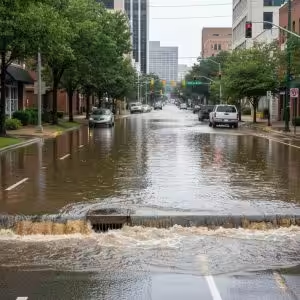
Flood damage in Charlotte often stems from heavy storm runoff, sewer backups, burst pipes during winter dips, and rising creeks after tropical showers. Local topography and aging infrastructure can exacerbate basement seepage or street flooding. Seasonal thunderstorms and remnants of hurricanes create sudden volumes of water that local drains cannot handle. Identifying these drivers helps technicians plan targeted mitigation measures.
Knowing causes guides us to consider how water damage restoration affects homes and businesses next.
How Does Flood Damage Affect Homes and Businesses?
When floodwater saturates building materials, wood framing swells, drywall softens, and insulation loses thermal performance. Electrical systems may short out, and HVAC ductwork can harbor bacteria. In commercial spaces, inventory and equipment face ruin without swift extraction. Even minor water levels compromise foundational integrity over time. Preventing such outcomes depends on emergency removal and controlled drying.
Exploring these structural and health impacts leads to the urgency of mold prevention in restoration.
Why Is Rapid Flood Damage Restoration Essential to Prevent Mold and Structural Issues?
Mold spores can germinate within damp drywall and carpeting within 24–48 hours, producing allergens and weakening cellulose fibers. Prolonged moisture also invites wood rot and corrosion of metal connectors. Rapid flood damage restoration halts these processes by extracting water, reducing humidity, and sanitizing surfaces. This quick action stops microbial growth and preserves load-bearing elements, ensuring healthy indoor air and sound structure.
Environmental Science & Technology, “The Influence of Humidity on Fungal Growth in Buildings” (2018)
This research supports the article’s emphasis on the importance of rapid flood damage restoration in Charlotte’s humid climate to prevent mold.
Preventing mold and decay requires a proven, step-by-step restoration workflow as outlined below.
What Are the 7 Key Steps in the Flood Damage Restoration Process?
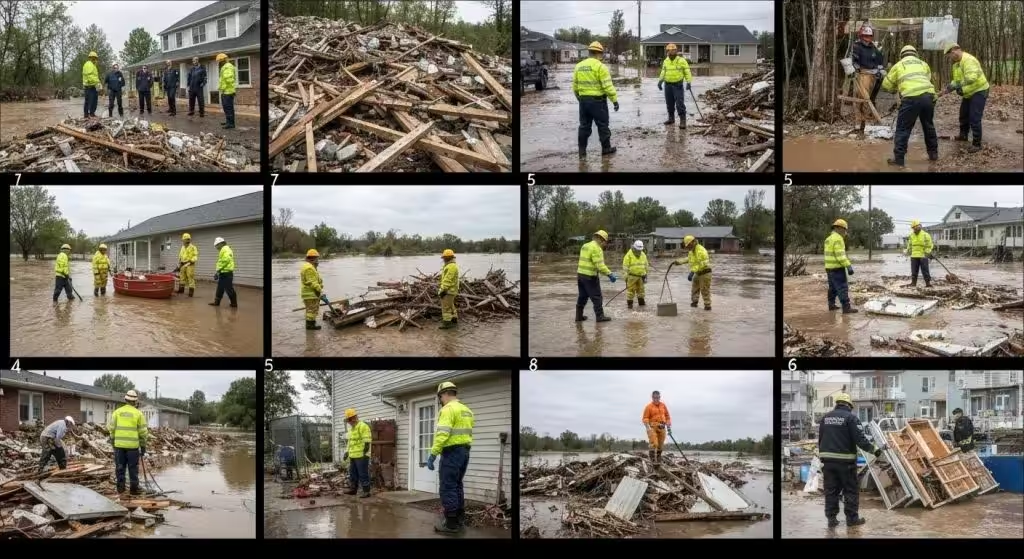
The flood damage restoration process Charlotte residents rely on follows seven defined stages that ensure safety, thorough drying, and complete repair:
- Emergency contact and damage assessment
- Water extraction and emergency removal
- Structural drying and dehumidification
- Cleaning, sanitizing, and deodorization
- Restoration and repairs
- Final inspection
- IICRC standards compliance
Each step builds on the previous one to deliver a fully restored property.
Step 1 – How Does Emergency Contact and Damage Assessment Work?
Emergency contact begins with a 24/7 hotline that dispatches a certified technician within hours. On arrival, the team documents water levels, identifies hazards like electrical shorts, and measures moisture in floors and walls. This comprehensive assessment defines the scope of work, cost estimate, and safety measures. A clear action plan supports efficient resource allocation and quick start of extraction efforts.
Assessment findings naturally transition to the next priority: removing standing water.
Step 2 – What Happens During Water Extraction and Emergency Water Removal in Charlotte?
Water extraction uses powerful pumps, submersible vacuums, and industrial wet/dry vacuums to remove standing water swiftly. Technicians position high-capacity pumps at low points and clear blocked drains to accelerate removal. Rapid extraction reduces moisture absorption by subfloors and drywall, minimizing long-term damage. This urgent removal sets the stage for controlled environmental drying.
With bulk water gone, the focus shifts to precision drying and humidity control.
Step 3 – How Is Structural Drying and Dehumidification Performed?
Structural drying employs a network of air movers, dehumidifiers, and moisture meters to extract bound water from materials. Air movers direct high-velocity airflow across surfaces, while dehumidifiers lower ambient humidity to below 40%. Technicians map drying progress with sensors, adjusting equipment to target damp hotspots. This scientific drying restores moisture balance without over-drying or warping.
Once materials reach safe moisture levels, surfaces are ready for cleaning and sanitizing.
Step 4 – What Are the Cleaning, Sanitizing, and Deodorization Procedures?
After drying, affected items and surfaces undergo cleaning with EPA-approved detergents, antimicrobial sprays, and specialized odor-neutralizing agents. Porous materials like carpet padding may be removed and discarded if necessary to prevent mold recurrence. Hard surfaces receive sanitization to eliminate bacteria and viruses. Finally, deodorization treatments neutralize musty odors, leaving indoor air fresh and safe.
With disinfected, odor-free spaces, restoration specialists can rebuild and repair. home restoration.
Step 5 – How Are Restoration and Repairs Completed After Flood Damage?
Restoration ranges from minor cosmetic fixes—like repainting baseboards—to full reconstruction of walls, floors, and cabinetry. The team sources matching materials and follows local building codes to restore structural and aesthetic integrity. Licensed contractors manage any required electrical, plumbing, or framing work. Completed repairs return the property to its pre-loss condition, ready for occupants or customers.
Repaired structures then undergo a thorough quality check before hand-over.
Step 6 – Why Is Final Inspection Important in Flood Damage Restoration?
Final inspection verifies that moisture levels meet industry standards, all safety issues are resolved, and all repairs match agreed specifications. Technicians conduct one last moisture scan, visual walkthrough, and client review. This quality assurance step prevents future surprises and confirms complete restoration. Homeowners and business owners receive documentation ensuring peace of mind and proof for insurance purposes.
Meeting Charlotte’s standards leads to the final commitment: strict IICRC compliance.
Step 7 – How Does Nics Restoration Ensure Compliance with IICRC Standards?
Nics Restoration follows the IICRC S500 Standard for Professional Water Damage Restoration at every phase. Certified technicians receive ongoing training in the latest techniques for extraction, drying, and sanitization. Equipment calibration and documented procedures ensure consistent quality. Adhering to IICRC guidelines guarantees best practices, safety, and reliable outcomes for every Charlotte flood damage project.
Institute of Inspection, Cleaning and Restoration Certification (IICRC), “S500 Standard for Professional Water Damage Restoration” (2023)
This citation validates the article’s reference to IICRC standards and their importance in the flood damage restoration process.
Understanding the seven-step process clarifies how specialized teams bring expertise and structure to emergency flood cleanup.
How Does Nics Restoration Provide Expert Flood Damage Cleanup in Charlotte?
Nics Restoration blends local knowledge with industry best practices to deliver comprehensive flood restoration services for Charlotte’s unique weather and building styles. Their approach combines rapid response, certified expertise, and a full suite of damage remediation offerings to restore homes and businesses efficiently.
What Makes Nics Restoration’s 24/7 Emergency Response Unique?
Charlotte’s storms rarely warn before striking; Nics Restoration’s on-call team stands ready around the clock to respond within one to two hours. This hyper-local rapid response minimizes water exposure time and secondary damage. A dedicated dispatch center monitors calls 24/7, coordinating crews based on proximity and severity to accelerate arrival.
Quick arrival directly influences the quality and speed of the entire restoration process.
How Do IICRC Certified Technicians Improve Flood Restoration Quality?
IICRC certification ensures each technician masters the S500 Standard and uses calibrated instruments for moisture mapping and drying efficiency. Their structured training covers advanced water extraction methods, microbial remediation, and safe handling of chemicals. Certified teams follow documented procedures that maintain safety and optimize outcomes, reducing repair time and cost.
Certified expertise enhances both customer confidence and technical precision from assessment through final inspection.
What Comprehensive Services Does Nics Restoration Offer Beyond Flood Cleanup?
Beyond flood damage, Nics Restoration provides mold remediation, fire and smoke damage repair, carpet cleaning, and full-scale reconstruction. This one-stop model simplifies project management and billing for Charlotte property owners. Whether restoring offices after a pipe burst or rebuilding kitchens after heavy rains, clients benefit from a single trusted partner.
Integrated services accelerate project completion and maintain consistent quality across damage types.
What Do Charlotte Residents Say About Nics Restoration?
Local testimonials praise Nics Restoration’s professionalism, clear communication, and efficient turnaround. One homeowner noted, “The team arrived two hours after our call, explained every step, and had our basement dry within days.” Businesses highlight minimal downtime and thorough documentation that eased insurance claims. Consistent five-star reviews underscore trust and satisfaction across neighborhoods from South End to Ballantyne.
Positive feedback reinforces the company’s commitment to reliable, expert flood restoration.
How Long Does the Flood Damage Restoration Process Take in Charlotte?
Drying and repairs after a flood typically take between three days and two weeks, depending on the scope of damage, materials affected, and weather conditions. Efficient project scheduling and continuous moisture monitoring by technicians can accelerate completion. For more information, visit water damage restoration services.
What Factors Influence Drying Time After Flood Damage?
Multiple factors affect drying duration:
- Material Type: Porous materials like drywall dry slowly compared to concrete
- Moisture Level: Deep saturation adds days of drying time
- Humidity and Temperature: High humidity and low temperatures slow evaporation
- Airflow and Equipment: More air movers and dehumidifiers speed up the process
A balance of equipment capacity and environmental control ensures efficient drying.
Typical Drying Durations in Charlotte
| Material | Typical Drying Time | Considerations |
|---|---|---|
| Concrete Slab | 2–4 days | Depends on subfloor moisture absorption |
| Wood Framing | 3–5 days | Warping risk if over-dried |
| Drywall Panels | 4–7 days | May require removal if mold is detected |
| Carpet Padding | 1–2 days | Often discarded to prevent mold growth |
These timeframes guide scheduling for cleaning and rebuild phases.
How Do Professionals Monitor Moisture and Drying Progress?
Technicians use thermal imaging cameras, moisture meters, and data loggers to track moisture levels in walls, floors, and crawl spaces. Regular readings identify lingering damp spots and inform equipment placement adjustments. Progress reports ensure transparency and help clients plan subsequent repairs.
Accurate monitoring bridges the gap between extraction and final inspection steps.
When Can Homeowners Return Safely After Restoration?
Homeowners and businesses can re-occupy spaces once moisture readings reach safe levels—typically below 15% for wood and under 1.5% humidity for drywall. Technicians provide clearance certificates based on industry standards. Returning occupants after this verification prevents health risks and structural issues, closing the restoration cycle.
Clear safety checks make way for insurance claims support.
What Are the Typical Costs of Flood Damage Restoration in Charlotte, NC?
Flood restoration costs in Charlotte can range from $1,500 for minor basement drying to $20,000+ for full reconstruction, depending on damage severity and square footage. Understanding cost drivers helps homeowners plan and budget effectively.
What Factors Affect Charlotte Flood Repair Costs?
Cost factors include:
- Extent of Water Intrusion: Deeper flooding requires more extraction and drying
- Affected Area Size: Larger homes or commercial spaces increase labor and equipment needs
- Material Damage: Replacement of flooring, drywall, or cabinetry raises expenses
- Mold Remediation Needs: Mold testing and removal add specialized labor
- Permitting and Code Compliance: Local building permits and inspections can add fees
Cost Drivers and Ranges
| Cost Driver | Impact on Cost | Typical Range |
|---|---|---|
| Water Extraction | Equipment rental | $3–$7 per square foot |
| Structural Drying | Air mover/dehumidifier | $2–$5 per square foot per day |
| Mold Remediation | Testing and removal | $500–$6,000 depending on scope |
| Reconstruction Repairs | Materials and labor | $15–$50 per square foot |
| Permit and Inspection Fees | Compliance | $100–$500 total |
Clear estimates help homeowners compare quotes and choose cost-effective solutions.
How Can Homeowners Estimate Restoration Expenses?
Obtaining a detailed on-site assessment provides accurate line-item estimates. Clients can request a written scope of work that lists labor, equipment, and material costs. Comparing at least two professional bids ensures rate transparency. Factoring in insurance deductibles gives a realistic out-of-pocket expectation.
Detailed proposals align budget planning with project timelines and restoration quality.
Are There Ways to Reduce Flood Damage Repair Costs?
Preventive measures cut potential expenses:
- Ensuring proper grading and gutter maintenance
- Installing flood vents in crawl spaces
- Purchasing separate flood insurance coverage
- Acting within 24 hours to limit mold and structural harm
Early mitigation and policy coverage significantly lower restoration bills.
Proactive prevention connects directly to navigating insurance claims smoothly.
How Can Charlotte Residents Navigate Flood Insurance Claims Effectively?
Effective flood insurance claims require prompt documentation, accurate inventories, and clear adjuster communication. Navigating Charlotte’s policy landscape demands specific paperwork and understanding of coverage limits.
Is Flood Damage Covered by Standard Homeowners Insurance in Charlotte?
Standard homeowners policies generally exclude flood damage, requiring a separate flood insurance policy through the National Flood Insurance Program (NFIP) or private carriers. Without dedicated flood coverage, repair costs fall entirely on property owners. Confirming policy details before an event avoids unexpected out-of-pocket expenses.
Knowing coverage boundaries leads to gathering correct documentation for claims.
What Documentation Is Needed for Flood Insurance Claims?
Essential records include:
- Photographs and video of all affected areas
- Detailed inventory of damaged items with purchase dates
- Technician moisture readings and damage assessments
- Repair estimates and invoices
- Flood insurance policy declarations page
Journal of Insurance Regulation, “Best Practices for Flood Insurance Claims” (2022)
Proper documentation helps expedite the claims process and ensures fair compensation for damages.
How Does Nics Restoration Assist with Insurance Adjusters and Claims?
Nics Restoration provides comprehensive damage reports, moisture maps, and repair invoices tailored to adjuster requirements. Technicians often join site walk-throughs with adjusters to explain technical findings. This professional support streamlines approval, prevents underpayment, and keeps restoration on schedule.
What Are Common Challenges in Flood Insurance Claims and How to Overcome Them?
Claim denials and lowball offers often stem from incomplete documentation, unclear damage scope, or policy misunderstandings. Overcoming these obstacles involves: our service
- Providing thorough, time-stamped records
- Clarifying policy language with carrier representatives
- Engaging a reputable restoration expert to validate claims
Proper support and clear evidence protect homeowner interests and speed reimbursement.
Addressing claim complexities paves the way for long-term flood resilience strategies.
How Can Charlotte Homeowners Prevent Future Flood Damage?
Preventing future floods combines routine maintenance, protective installations, and local resource awareness. These measures reduce risk and potential restoration costs.
What Home Maintenance Tips Reduce Flood Risk?
Regular tasks that limit flood hazards include:
- Cleaning gutters and downspouts to ensure proper runoff
- Inspecting roof flashing and seals around windows and doors
- Checking foundation cracks and applying waterproof sealants
- Maintaining sump pumps and testing battery backups
Consistent maintenance minimizes water entry points and structural vulnerability. water damage
How Do Flood Barriers and Landscaping Help Protect Properties?
Physical prevention methods such as flood barriers, raised planters, and graded landscaping redirect water away from foundations. Portable flood gates at door thresholds block surge entry. Rain gardens and bioswales absorb stormwater before it reaches the home. Proper exterior design forms a first line of defense against heavy rains.
Landscape-based solutions naturally complement interior flood preparations.
Where Can Residents Find Local Charlotte Flood Resources and Alerts?
Charlotte area homeowners can monitor:
- Mecklenburg County floodplain maps
- City of Charlotte stormwater updates and alerts
- National Weather Service watches and warnings
- Local emergency management webpages
Proactive preparation completes our comprehensive guide to managing flood damage and safeguarding your Charlotte property.
Homeowners and business owners facing flood damage restoration in Charlotte can rely on this structured process and Nics Restoration’s expertise for rapid cleanup, professional repairs, and long-term prevention. Immediate contact mobilizes certified technicians, precise drying, and safe reconstruction—so you can return confidently to a healthy, fully restored space.