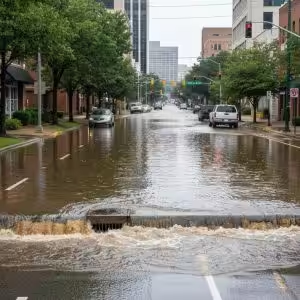
Water damage is a serious threat in Charlotte, with about 11 percent of buildings in the city at high risk of flooding. Most people brace for heavy rain and assume their roof or basement is the weak link. Get ready for a surprise. Urban development and even tree roots under older neighborhoods sneakily create hidden water damage hazards that catch owners off guard. Here is how Charlotte’s water risks stack up and the easy steps to keep your property dry year round.
Table of Contents
- Identifying Common Water Damage Risks In Charlotte
- Essential Prevention Tips For Homes And Businesses
- Seasonal Maintenance To Keep Properties Safe
- Insurance Insights For Water Damage Protection
Quick Summary
| Takeaway | Explanation |
|---|---|
| Regular Inspections Are Crucial | Conduct property inspections at least twice a year, focusing on areas prone to water intrusion like roofs, foundations, and plumbing systems to detect early signs of moisture issues. |
| Implement Proper Drainage Solutions | Ensure downspouts extend 5-10 feet from the foundation and that property grading directs water away from structures, preventing moisture accumulation. |
| Understand Insurance Coverage | Review homeowners insurance policies carefully to know what water damage is covered and consider purchasing additional flood insurance for comprehensive protection. |
| Seasonal Maintenance Is Essential | Perform targeted maintenance each season, such as cleaning gutters in fall/winter and inspecting roofs in spring/summer, to address unique water damage risks associated with changing weather. |
| Document Any Water Damage | Maintain detailed records and photographs of any incidents and repairs to support insurance claims and demonstrate responsible property management. |
Identifying Common Water Damage Risks in Charlotte
Understanding water damage risks in Charlotte requires a strategic approach that considers the city’s unique environmental and urban characteristics. Learn about our specialized restoration strategies to protect your property from potential water-related challenges.
Geographic and Climate Vulnerabilities
Charlotte’s geographic location and subtropical climate create a perfect storm for water damage risks. According to climate research, approximately 11% of buildings in the area are at high risk of flooding. This statistic underscores the critical need for proactive water damage prevention.
The city’s proximity to multiple water sources and its complex topography contribute to increased water damage potential. Heavy rainfall patterns, particularly during summer and fall, amplify the risk of moisture intrusion. Charlotte experiences an average annual rainfall of around 43 inches, which significantly increases the likelihood of water-related structural issues.
Structural and Urban Development Risks
Urban development in Charlotte has transformed the landscape, creating additional water damage vulnerabilities. Aging infrastructure, inadequate drainage systems, and rapid construction can compromise a building’s water resistance. Older homes built before modern building codes are especially susceptible to water damage.
Residential and commercial properties face unique challenges. Older neighborhoods with mature tree systems often have complex root networks that can damage underground pipes, creating hidden water leak risks. New developments, while constructed with modern techniques, can still experience water intrusion due to improper grading, insufficient waterproofing, or poorly sealed foundations.
Seasonal and Environmental Triggers
Charlotte’s humid subtropical climate presents multiple seasonal water damage triggers. Summer thunderstorms and occasional hurricane remnants can cause sudden, intense water exposure. Winter freeze-thaw cycles create additional stress on building materials, potentially causing cracks that allow water penetration.
Environmental factors such as high humidity levels contribute to moisture accumulation. Poorly ventilated spaces like attics, basements, and crawl spaces become breeding grounds for mold and mildew. Without proper moisture control, these areas can develop significant water damage that compromises structural integrity and poses health risks.
Recognizing these risks is the first step in effective water damage prevention. Homeowners and property managers must remain vigilant, implementing proactive maintenance strategies and understanding the specific vulnerabilities of their Charlotte properties.
Essential Prevention Tips for Homes and Businesses
Preventing water damage requires a comprehensive strategy that combines proactive maintenance, strategic infrastructure improvements, and consistent monitoring. Learn how our experts recommend protecting your property from potential water-related risks.
Regular Property Inspection and Maintenance
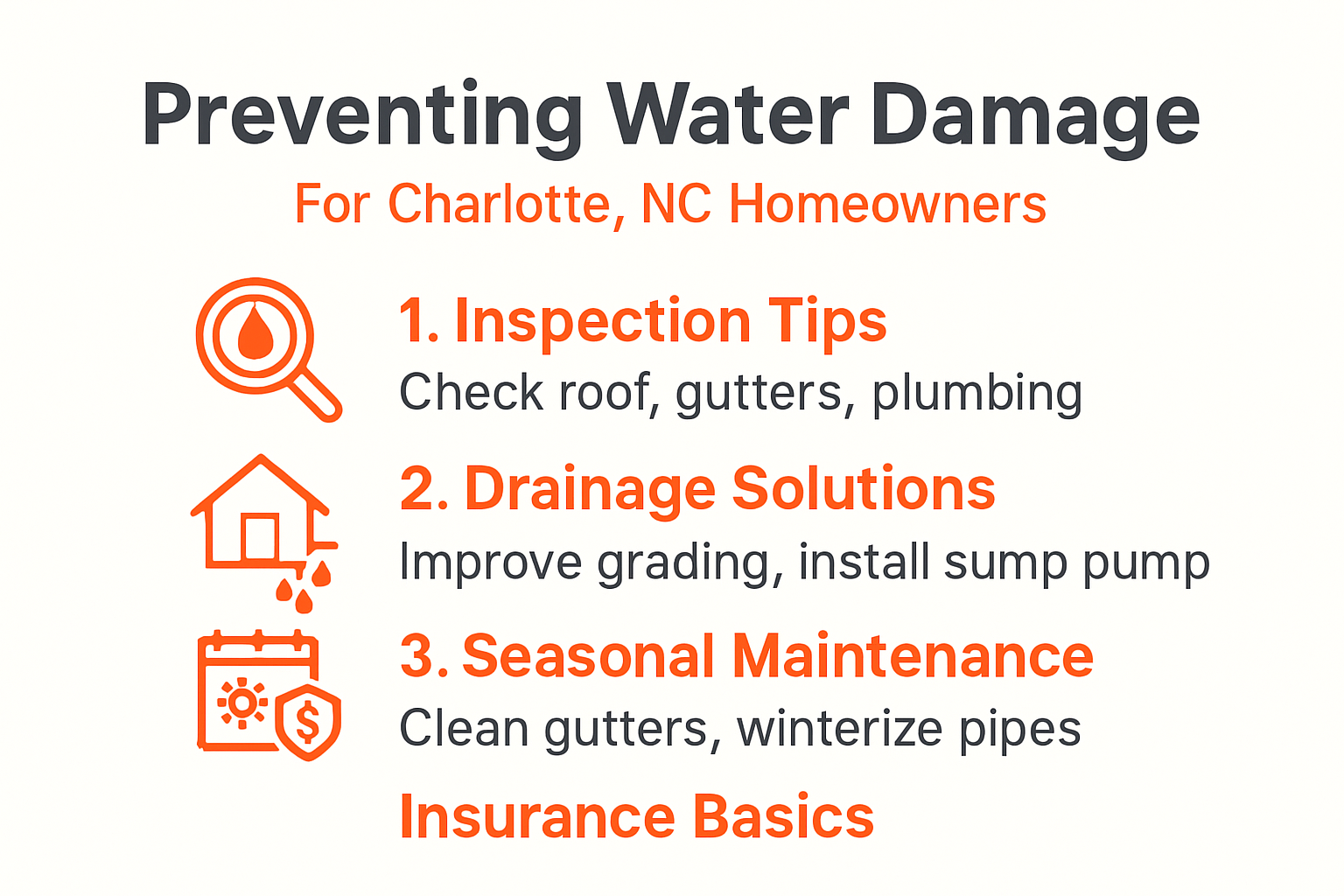
Professional property inspections serve as the first line of defense against water damage. According to water damage prevention experts, homeowners and businesses should conduct comprehensive assessments at least twice annually. These inspections should focus on critical areas prone to water intrusion such as roofs, foundations, plumbing systems, and exterior drainage structures.
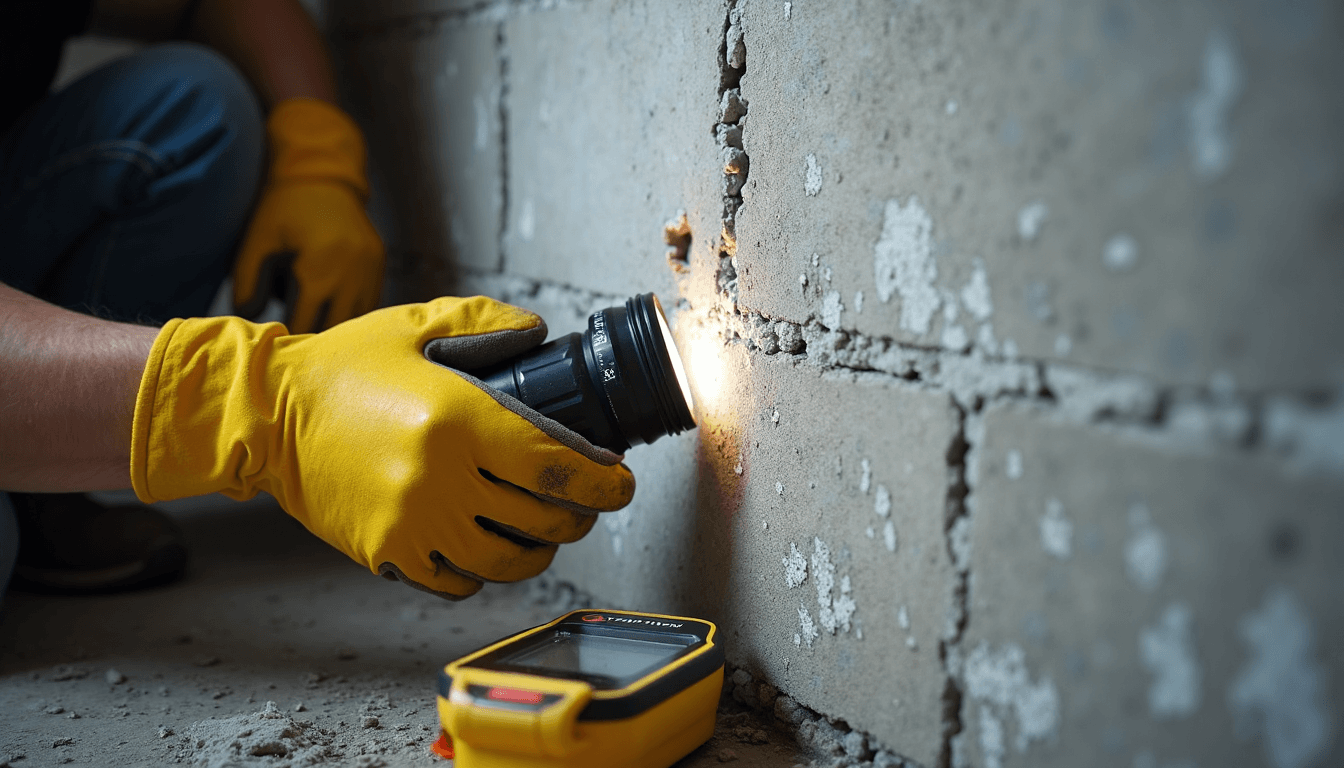
Key inspection points include checking for potential roof leaks, examining window and door seals, assessing foundation integrity, and monitoring underground pipe conditions. Homeowners should pay special attention to signs of moisture accumulation like water stains, mold growth, or unusual dampness in walls and ceilings. Early detection can prevent minor issues from escalating into major structural problems that require extensive and costly repairs.
Strategic Drainage and Waterproofing Solutions
Effective water damage prevention in Charlotte demands strategic drainage management. Experts recommend ensuring downspouts extend 5-10 feet from the foundation to redirect water away from critical structural areas. Proper grading around your property is equally crucial. The ground should slope away from the building, creating natural water runoff that prevents moisture accumulation near foundational walls.
Waterproofing techniques provide an additional layer of protection. This might include applying specialized sealants to basement walls, installing French drains, or implementing comprehensive exterior waterproofing membranes. Commercial properties and older residential structures benefit significantly from professional waterproofing assessments that identify and address potential vulnerability points.
Advanced Technological and Preventative Measures
Modern technology offers innovative solutions for water damage prevention. Smart water leak detection systems can provide real-time monitoring and instant alerts when unexpected moisture is detected. These systems can be particularly valuable for businesses with complex infrastructure or homeowners who travel frequently.
Additionally, routine maintenance of critical systems plays a pivotal role. This includes regularly cleaning gutters, inspecting and replacing worn pipe connections, and ensuring proper ventilation in moisture-prone areas like attics and crawl spaces. Businesses should develop comprehensive maintenance schedules that include professional assessments of their entire water management infrastructure.
By implementing these strategic prevention tips, Charlotte property owners can significantly reduce their risk of water damage. Proactive approaches not only protect structural integrity but also help prevent potential financial losses associated with extensive water-related repairs. Remember that consistent vigilance and timely interventions are your most effective tools in maintaining a dry, secure property.
Seasonal Maintenance to Keep Properties Safe
Seasonal maintenance represents a critical strategy for protecting properties from water damage in Charlotte’s dynamic climate. Discover our comprehensive property protection approach to safeguard your investment throughout the year.
Spring and Summer Preparedness
Spring and summer bring unique water damage challenges to Charlotte properties. Maintenance experts recommend comprehensive inspections focusing on potential moisture vulnerability. During these seasons, homeowners should prioritize roof and exterior assessments, checking for potential leak points created by intense thunderstorms and high humidity.
Critical spring and summer maintenance tasks include inspecting roof shingles for damage, examining exterior paint and sealants for cracks, and ensuring proper drainage around the property. Homeowners should pay special attention to areas prone to water accumulation, such as around air conditioning units, which can create moisture buildup. Clearing debris from gutters and downspouts becomes essential, preventing water from backing up and potentially infiltrating the home’s structure.
Fall and Winter Water Damage Prevention
Autumn and winter present distinct water damage risks that require targeted maintenance strategies. Charlotte’s temperature fluctuations can create significant stress on building materials, potentially leading to hidden water intrusion points. Homeowners should conduct thorough inspections of exterior pipes, checking for potential freeze-related vulnerabilities.
Key fall and winter maintenance activities include sealing exterior cracks, insulating exposed pipes, and preparing drainage systems for potential freezing temperatures. According to seasonal maintenance research, clogged gutters are a primary cause of water damage during these seasons. Cleaning gutters and ensuring downspouts extend 5-10 feet from the foundation can prevent significant water intrusion risks.
Year-Round Interior Maintenance Strategies
Consistent interior maintenance serves as a critical defense against water damage throughout the year. Homeowners should develop a routine inspection process that includes checking under sinks, behind appliances, and in moisture-prone areas like bathrooms and basements. Hidden leaks can cause extensive damage if left undetected, making regular monitoring essential.
Implement a systematic approach to interior maintenance by creating a quarterly checklist. This should include examining water supply lines, checking for signs of moisture around windows and doors, and ensuring proper ventilation in areas susceptible to humidity. Smart home technologies can provide additional protection, with leak detection systems offering real-time monitoring and instant alerts for potential water-related issues.
By adopting a proactive and comprehensive seasonal maintenance approach, Charlotte property owners can significantly reduce their risk of water damage. Each season brings unique challenges, and understanding these specific vulnerabilities allows for targeted prevention strategies. Remember that consistent attention and timely interventions are the most effective methods of protecting your property from potential water-related damage.
Insurance Insights for Water Damage Protection
Navigating water damage insurance in Charlotte requires strategic understanding and proactive planning. Learn about comprehensive damage recovery strategies to protect your financial interests.
Understanding Coverage Limitations
Homeowners insurance in Charlotte presents complex coverage scenarios for water damage. Research indicates that standard policies typically cover sudden and accidental internal water damage like burst pipes or appliance malfunctions. However, they consistently exclude flood-related damages, requiring property owners to secure separate flood insurance policies.
The critical distinction lies in the origin of water damage. Internally caused water incidents such as plumbing failures are generally covered, while external water sources like rising river levels or storm surges demand additional insurance protection. Homeowners must carefully review policy language, understanding specific exclusions and coverage limitations to avoid unexpected financial burdens.
Documenting and Reporting Water Damage
Precise documentation represents a crucial element in successful insurance claims. Insurance experts recommend immediate reporting within 72 hours of discovering water damage. This timeframe is critical for maintaining claim validity and demonstrating responsible property management.
Effective documentation involves comprehensive photographic evidence, detailed written descriptions of damage, and maintaining records of all repair estimates and professional assessments. Property owners should create a systematic approach to capturing damage details, including time-stamped photographs, itemized lists of affected areas, and professional inspection reports. This meticulous approach significantly increases the likelihood of successful insurance claim processing.
Financial Considerations and Risk Management
North Carolina’s evolving insurance landscape reflects increasing environmental risks. According to regional insurance analysis, homeowners are experiencing premium increases averaging 21% over recent years, directly correlating with heightened natural disaster potentials. These rising costs underscore the importance of proactive risk management and comprehensive insurance strategies.
Property owners can mitigate financial risks by implementing preventative measures, maintaining detailed property maintenance records, and exploring comprehensive insurance packages. Considerations include investing in additional flood insurance, upgrading property infrastructure to reduce damage potential, and working with insurance providers who specialize in Charlotte’s unique environmental challenges.
By understanding insurance complexities, documenting potential damages meticulously, and adopting strategic risk management approaches, Charlotte property owners can effectively protect their investments against water-related financial uncertainties. Knowledge and preparation remain the most powerful tools in navigating the intricate world of water damage insurance protection.
Frequently Asked Questions
What are the common risks for water damage in Charlotte, NC?
Water damage risks in Charlotte include geographic vulnerabilities from heavy rainfall, aging infrastructure, and seasonal triggers like thunderstorms and freeze-thaw cycles.
How can I prevent water damage in my home?
Prevent water damage by conducting regular inspections, implementing proper drainage systems, and utilizing waterproofing techniques such as sealants and French drains.
What seasonal maintenance should I perform to avoid water damage?
Year-round maintenance includes inspecting roofs and gutters in spring and summer, sealing cracks and insulating pipes in fall and winter, and checking for moisture in basements and crawl spaces throughout the year.
How do I ensure my insurance covers water damage?
Review your homeowners insurance policy to understand coverage limitations, document any water damage promptly, and consider additional flood insurance for comprehensive protection.
Take Control of Water Damage Risks With Charlotte’s Local Experts
You just learned how unpredictable weather, aging infrastructure, and tricky insurance policies make water damage a real threat in Charlotte. If you are tired of the constant worry about hidden leaks, mold, or denied claims, you are not alone. Homeowners and businesses face confusing insurance fine print and the growing cost of repairs, especially when rainfall and storms hit hard. The article highlighted that missing out on early detection or misunderstood insurance can lead to expensive setbacks and stress.
Ready to keep your property protected and your mind at ease? The team at National Insurance Claim Specialist (NICS) understands every detail of Charlotte’s climate, and has helped many clients manage storm, flood, and water disaster recovery from start to finish. We handle the complex insurance process for you to help maximize your compensation and restore your property with expertise and transparency. Do not wait until the next storm or leak. Contact NICS today for a free consultation and take the first step toward lasting security.