Storm damage insurance in Charlotte can feel overwhelming when the forecast turns grim. Here is something few realize. North Carolina homeowners typically face strict 72-hour reporting windows on storm claims and hurricane deductibles can reach 5 percent of your home’s insured value. But here’s the real catch. The biggest risk isn’t the next storm itself. It’s missing out on coverage because of hidden exclusions or missing a tiny policy deadline. Understanding these surprising pitfalls could mean the difference between a denied claim and money in your hands after the next round of high winds.
Table of Contents
- What Storm Damage Insurance Covers In Charlotte
- Steps To File A Storm Damage Insurance Claim
- Common Pitfalls And How To Avoid Claim Denials
- Tips For Choosing The Right Storm Damage Insurance Policy
Quick Summary
| Takeaway | Explanation |
|---|---|
| Understand Coverage Types | Homeowners in Charlotte should know that most policies cover wind, hail, falling objects, and lightning damage, but specifics may vary by policy. |
| Be Aware of Limitations | Flood damage often requires separate insurance, and immediate reporting (within 72 hours) is crucial to avoid claim denials. |
| Document Thoroughly | After storm damage, take detailed photos and note damage assessments promptly to strengthen your claim. |
| Review Policy Details | Engage in comprehensive policy assessments to identify coverage limits, special deductibles, and exclusions regarding storm damage. |
| Plan Proactively | Regularly assess and update your policy, considering potential vulnerabilities and additional coverage options before storm seasons start. |
What Storm Damage Insurance Covers in Charlotte
Storm damage in Charlotte presents unique challenges for homeowners and property owners navigating insurance claims. Understanding the specific types of coverage and potential limitations is crucial for protecting your property against severe weather events common in North Carolina.
Types of Storm Damage Typically Covered
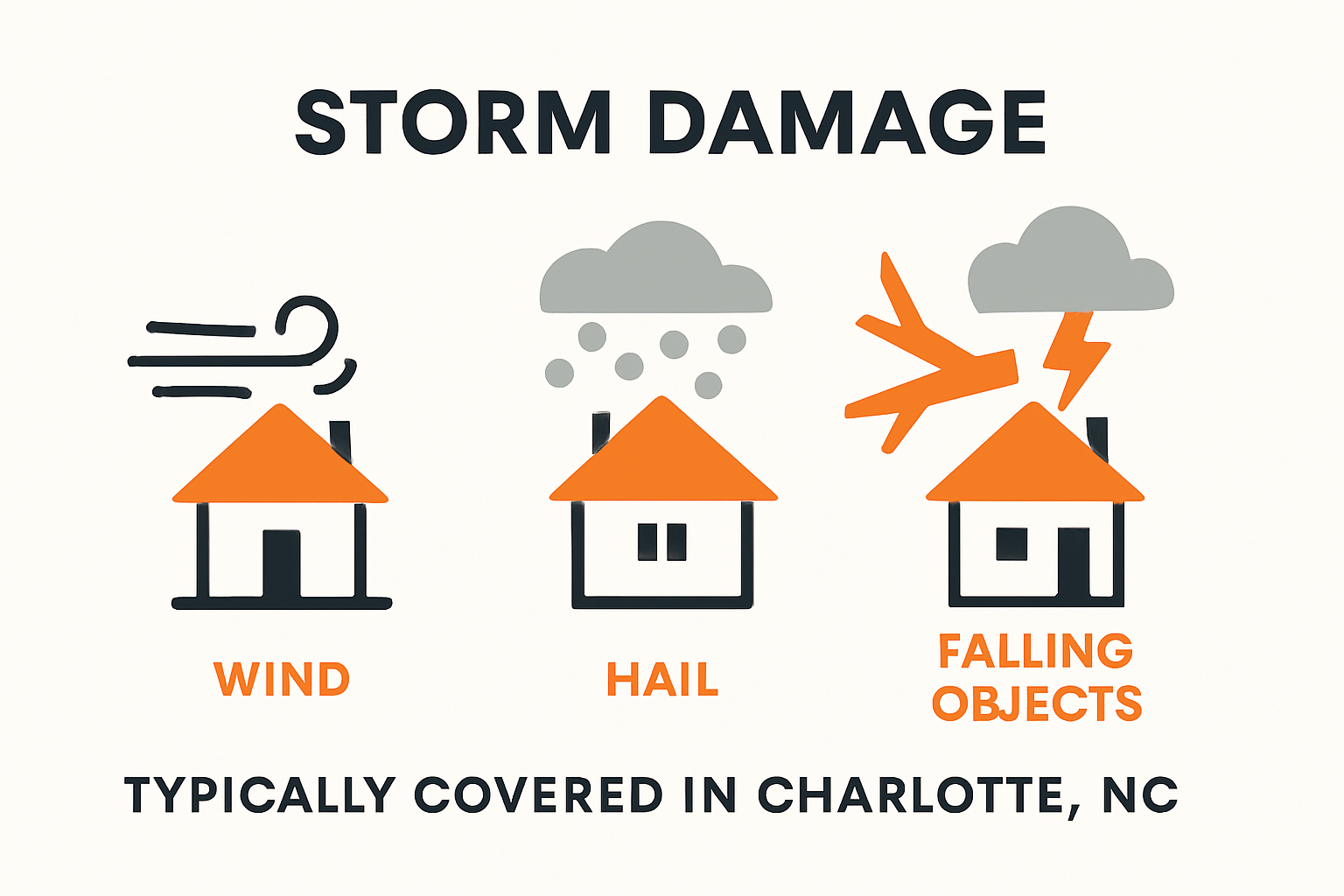
Most standard homeowners insurance policies in Charlotte provide coverage for several key types of storm-related damage. Wind damage from hurricanes and severe thunderstorms typically receives comprehensive protection. This includes damage to your roof, siding, windows, and structural elements caused by high winds. Hail damage is another critical coverage area, with policies often protecting against roof damage, exterior paint destruction, and structural impacts.
Insurance generally covers damage from:
- Windstorms: Damage caused by hurricane-force or severe thunderstorm winds
- Hail Damage: Roof and exterior property damage from hailstones
- Falling Objects: Trees or debris damaged during storms that impact your property
- Lightning Strikes: Electrical and structural damage from lightning events
Interestingly, our comprehensive guide on storm damage repair costs provides additional insights into potential expenses homeowners might encounter during recovery.
Critical Policy Limitations and Exclusions
While storm damage insurance offers significant protection, property owners must understand critical limitations. According to research from Policy Advocate, most policies have specific exclusions that can catch homeowners off guard. Flood damage, for instance, typically requires a separate National Flood Insurance Program policy. Water damage from storm surge or rising ground water often falls outside standard homeowners insurance coverage.
North Carolina insurance regulations mandate that storm damage must be reported within 72 hours of discovery. This strict reporting window means property owners must act quickly to document and report potential damage. Failing to notify your insurance provider promptly could result in claim denial, making immediate assessment and documentation critical.
Deductibles for storm damage in Charlotte can be significantly different from standard insurance deductibles. Research from Burns and Wilcox indicates that hurricane or named-storm damage often carries a separate deductible calculated as a percentage of the insured property value typically ranging from 2% to 5%, compared to traditional flat-rate deductibles.
Property owners should carefully review their specific policy details, paying close attention to:
- Exact coverage limits
- Specific storm-related exclusions
- Percentage-based deductible calculations
- Documentation requirements for claims
Understanding these nuanced details can mean the difference between comprehensive recovery and substantial out-of-pocket expenses during challenging post-storm restoration efforts.
Steps to File a Storm Damage Insurance Claim
Filing a storm damage insurance claim in Charlotte requires a strategic and methodical approach. Property owners must navigate a complex process that demands quick action, detailed documentation, and clear communication with their insurance provider.
Initial Documentation and Assessment
Immediate documentation is critical after experiencing storm damage. Research from Policy Advocate recommends taking comprehensive photographs and videos of all damaged areas within 72 hours of the storm event. These visual records serve as crucial evidence for your insurance claim. Focus on capturing detailed images of:
- Roof damage and missing shingles
- Structural impacts
- Broken windows
- Exterior siding damage
- Water intrusion points
Learn more about documenting roof damage effectively to maximize your potential claim success. Professional documentation can significantly strengthen your insurance claim and provide clear evidence of storm-related destruction.

Formal Claim Submission Process
Submitting a formal storm damage claim involves several critical steps. According to North Carolina insurance regulations, property owners must submit a signed, sworn Proof of Loss statement within a specified timeframe. This document should comprehensively detail:
- Exact date of storm damage
- Detailed description of damaged items
- Estimated repair or replacement costs
- Additional living expenses if the property becomes uninhabitable
Professional documentation becomes paramount. Keep meticulous records of all communications with your insurance provider, including:
- Claim reference numbers
- Names of representatives contacted
- Dates and summaries of conversations
- Copies of all submitted documentation
Working with Insurance Adjusters
Once you file your claim, an insurance adjuster will typically schedule an on-site inspection. Preparation is key to a successful assessment. Research indicates that property owners should:
- Be present during the adjuster’s inspection
- Have all documentation readily available
- Provide detailed repair estimates from professional contractors
- Understand your policy’s specific coverage limits
Prepare a comprehensive folder with all relevant documents, including:
- Original insurance policy
- Photographic evidence
- Repair estimates
- Receipts for any emergency repairs
Understanding the nuanced process of storm damage insurance claims can significantly impact your ability to recover expenses and restore your property efficiently. Patience, thorough documentation, and proactive communication with your insurance provider are essential for navigating this complex process successfully.
Common Pitfalls and How to Avoid Claim Denials
Navigating storm damage insurance claims in Charlotte requires careful attention to detail and strategic preparation. Property owners frequently encounter obstacles that can potentially derail their insurance recovery efforts, making it crucial to understand and proactively address common claim challenges.
Documentation and Reporting Mistakes
Research from Policy Advocate reveals that many claim denials stem from critical documentation errors. One of the most significant pitfalls is delayed reporting. North Carolina insurance policies typically require notification “as soon as practicable” after damage occurs, with most insurers expecting claims to be filed within 72 hours of the storm event.
Key documentation mistakes to avoid include:
- Incomplete damage records: Failing to provide comprehensive photographic evidence
- Missing repair estimates: Not obtaining professional assessments of storm damage
- Incomplete communication logs: Inadequate tracking of insurance interactions
Our comprehensive guide to roof damage claims offers additional insights into creating robust documentation that can withstand insurance scrutiny.
Understanding Policy Exclusions
Most homeowners are unaware of critical policy limitations that can lead to unexpected claim denials. Detailed research indicates that standard insurance policies often contain complex exclusions that catch property owners off guard. Water damage presents a particularly tricky scenario, with most standard policies excluding flood-related damages.
Critical exclusions to be aware of include:
- Flood damage: Typically requires separate National Flood Insurance Program coverage
- Gradual deterioration: Damage from long-term wear is usually not covered
- Maintenance-related issues: Pre-existing damage or lack of property maintenance
Property owners should carefully review their policy’s specific language, paying close attention to:
- Exact definitions of covered perils
- Specific exclusion clauses
- Deductible structures for different types of damage
Navigating the Claims Appeal Process
When a claim is initially denied, property owners are not without recourse. Insurance experts recommend a strategic approach to appealing claim decisions. The key is to build a comprehensive case that addresses the specific reasons for denial.
Effective appeal strategies include:
- Obtaining independent professional assessments
- Gathering additional documentation
- Requesting a detailed explanation of the denial
- Consulting with a public insurance adjuster
Understanding the nuanced landscape of storm damage insurance claims requires patience, meticulous documentation, and a proactive approach. Property owners who invest time in understanding their policy, documenting damage thoroughly, and communicating clearly with their insurer significantly improve their chances of successful claim resolution.
Remember, each piece of documentation serves as critical evidence. Treat your claim like a comprehensive legal document, leaving no room for ambiguity or incomplete information. The difference between a denied claim and a successful recovery often lies in the details.
Tips for Choosing the Right Storm Damage Insurance Policy
Selecting the appropriate storm damage insurance policy in Charlotte requires careful consideration and strategic planning. Property owners must navigate a complex landscape of coverage options, understanding the unique weather challenges specific to North Carolina’s climate.
Comprehensive Coverage Assessment
Research from Policy Advocate emphasizes the importance of thoroughly reviewing your policy’s declarations page and the “perils insured against” section. Most standard homeowners insurance policies cover wind, hail, and lightning damage, but critical gaps often exist that can leave property owners vulnerable.
Key coverage elements to evaluate include:
- Wind damage protection: Comprehensive coverage for hurricane and severe thunderstorm impacts
- Hail damage provisions: Specific clauses addressing roof and exterior property damage
- Replacement cost coverage: Ensures full replacement value rather than depreciated value
- Additional living expenses: Protection for temporary relocation if your property becomes uninhabitable
Learn more about potential storm damage repair costs to understand the full financial implications of your policy choices.
Understanding Special Deductibles and Limitations
North Carolina’s unique storm environment demands specialized insurance considerations. Insurance experts recommend carefully examining policy-specific details, particularly around special deductibles and coverage limitations.
Critical considerations include:
- Hurricane deductibles: Often calculated as a percentage of home value (typically 2% to 5%)
- Flood damage exclusions: Standard policies typically do not cover flood-related damages
- Named storm provisions: Specific conditions for claims during officially designated storm events
Property owners should pay close attention to:
- Exact deductible calculations
- Specific exclusions for different types of storm damage
- Additional coverage options for comprehensive protection
Timing and Strategic Policy Planning
Research from Miller’s Mutual Group highlights a critical consideration for Charlotte property owners: insurance agents may not be able to bind new or increased storm coverage once a hurricane or named storm is imminent. This underscores the importance of proactive policy planning.
Strategic policy preparation recommendations:
- Review and update your policy before hurricane season begins
- Consider additional flood insurance through the National Flood Insurance Program
- Conduct an annual review of your property’s current replacement value
- Discuss specific storm-related vulnerabilities with your insurance provider
Choosing the right storm damage insurance policy is more than a financial decision—it’s a critical step in protecting your property and peace of mind. Charlotte’s dynamic weather patterns demand a nuanced approach to insurance coverage. Take time to understand the details, ask probing questions, and ensure your policy provides comprehensive protection against potential storm-related risks.
Remember, the cheapest policy is not always the most comprehensive. Invest time in understanding the fine print, and don’t hesitate to consult with insurance professionals who specialize in storm damage coverage for North Carolina properties.
Frequently Asked Questions
What types of storm damage does insurance cover in Charlotte, NC?
Most homeowners insurance policies in Charlotte typically cover wind damage from hurricanes, hail damage, falling objects, and lightning strikes. However, it’s essential to review your specific policy, as coverage can vary.
Are there any exclusions in storm damage insurance policies?
Yes, common exclusions include flood damage, which often requires a separate National Flood Insurance Program policy, as well as damage from gradual deterioration and maintenance-related issues.
What is the reporting deadline for storm damage claims in North Carolina?
Homeowners in North Carolina must report storm damage claims within 72 hours of discovering the damage to avoid potential claim denials.
How can I avoid common pitfalls when filing a storm damage insurance claim?
To avoid pitfalls, ensure you document damage thoroughly with photos, keep detailed communication logs with your insurance provider, and consult your policy for specific coverage limitations and exclusions.
Ready to Make Your Storm Insurance Work for You?
After a storm, every moment counts. As this guide highlights, Charlotte homeowners face strict reporting windows, hidden exclusions, and stressful documentation demands. Missing a deadline or missing proof can mean losing out on thousands for vital repairs. You deserve more than confusion and frustration when disaster strikes.
Choose peace of mind from the start. National Insurance Claim Specialist (NICS) takes the pressure off by handling the entire insurance claim process for you. Our licensed experts offer:
- Detailed storm damage assessments so you capture every detail for your claim
- Direct support in navigating strict 72-hour filings and complex policy rules
- Professional restoration to get your home back to normal fast
Afraid you might miss out on maximum compensation or make a costly insurance mistake? Visit NICS today to connect with a local specialist. Let us help you secure what you are entitled to and start rebuilding with confidence. Take control of your claim now—before the next storm hits.