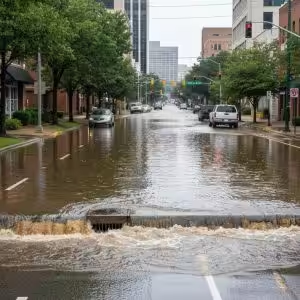
Hurricane Damage Assessment: Key Insights and Essential Steps for Homeowners
Assessing hurricane damage immediately after a storm can mean the difference between timely repairs and escalating losses. Homeowners often face hidden risks—from compromised roofs to water-soaked framing—that require systematic evaluation. This guide shows how a thorough hurricane damage assessment works, why professional expertise matters, and how to navigate safety, insurance, and local Charlotte, NC requirements. Readers will learn: storm damage restoration.
- What hurricane damage assessment is and its key stages
- How to recognize wind, water, debris, and structural damage
- Practical safety inspections and when to call experts
- Effective insurance documentation and claim filing steps
- Charlotte-specific building code considerations and resources
- How to document structural damage and plan restoration with Nics Restoration
With these insights, homeowners can protect their property value, accelerate repairs, and secure professional support when it matters most.
What Is Hurricane Damage Assessment and Why Is It Crucial for Homeowners?
Hurricane damage assessment evaluates all aspects of storm impact on a home—roof, walls, foundation, utilities—to create a detailed repair plan and insurance report. By measuring damage severity and documenting conditions, homeowners ensure safety, streamline insurance claims, and guide licensed contractors through precise restoration steps.
How Does Hurricane Damage Affect Residential Properties?
Hurricane wind and rain can compromise every component of a house, from shingles to load-bearing walls. Wind gusts often uplift roofing materials and break windows, while driving rain seeps into attics and interior walls. Floodwaters saturate subfloors and framing, leading to mold growth. Debris impact can dent siding and puncture exterior sheathing. Understanding these damage mechanisms prepares homeowners for targeted inspections and repairs.
Why Should Homeowners Conduct a Professional Damage Assessment?
A professional damage assessment delivers accurate measurements, comprehensive photo documentation, and an expert repair estimate that few homeowners can replicate. Certified specialists follow industry standards to identify hidden risks—like weakened roof trusses or hidden water intrusion—that casual walkthroughs overlook. Their detailed report improves insurance claim approval rates and speeds up restoration, reducing out-of-pocket costs and minimizing business or family disruptions.
Hurricane Damage Assessment Importance
Professional damage assessments are crucial for homeowners as they provide accurate measurements, detailed documentation, and expert repair estimates, which can improve insurance claim approval rates and expedite restoration. These assessments help identify hidden risks and reduce out-of-pocket costs, minimizing disruptions.
Federal Emergency Management Agency (FEMA), “Homeowner’s Guide to Hurricane Preparedness” (2024)
This source supports the article’s emphasis on the value of professional assessments in the context of hurricane damage.
What Are the Key Stages in a Hurricane Damage Assessment Process?
A structured assessment follows five main stages that ensure no damage is missed:
- Pre-Inspection Safety Check – Verify power is off and hazards are contained.
- Exterior Evaluation – Examine roof, gutters, siding, and windows for visible damage.
- Interior Inspection – Check ceilings, walls, floors, and utility systems for leaks or cracks.
- Moisture Mapping and Mold Testing – Use moisture meters and sampling to detect hidden water damage.
- Final Reporting and Repair Plan – Compile findings into a detailed report with cost estimates and repair priorities.
These stages guide homeowners from initial hazard mitigation to claim-ready documentation, setting the stage for efficient restoration.
What Are the Most Common Types of Hurricane Damage to Look For?
Homeowners should focus on four primary damage categories—wind, water, structural, and debris—that often overlap and worsen each other’s effects.
To illustrate common damage attributes and examples, consider the table below.
| Damage Type | Key Attribute | Real-World Example |
|---|---|---|
| Wind Damage | Uplift and impact stress | Missing shingles, torn metal flashing |
| Water Damage | Intrusion and saturation | Ceiling stains, warped hardwood floors |
| Structural | Load-bearing compromise | Cracks in foundation walls, sagging roof rafters |
| Debris | Puncture and abrasion | Dented siding, broken window panes |
Each damage type demands specific inspection methods and repair strategies that build on one another to restore home integrity.
How Can Homeowners Safely Conduct a Post-Hurricane Damage Inspection?
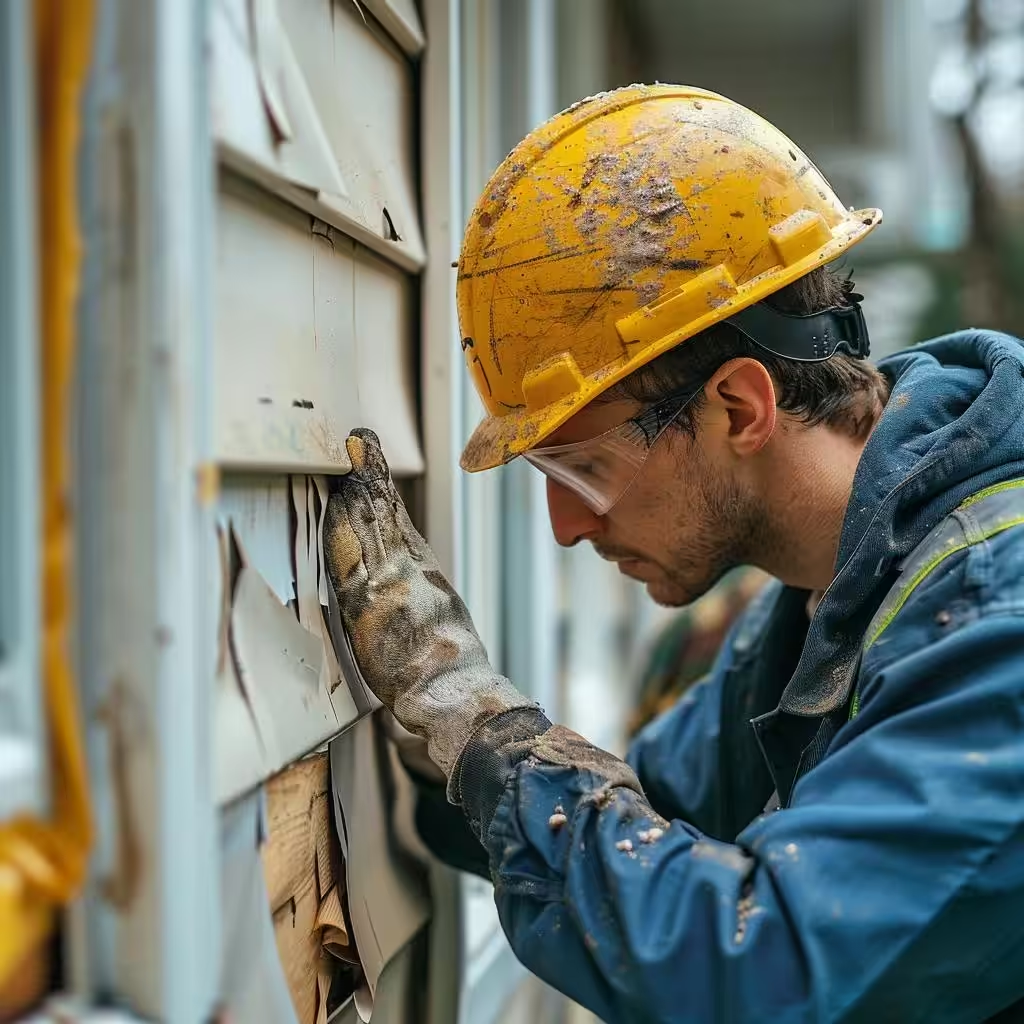
Inspecting a damaged property carries risks from live electrical wires, gas leaks, and unstable structures. A safety-first approach protects residents and inspectors while ensuring a complete evaluation.
What Are the Immediate Safety Hazards to Watch For After a Hurricane?
- Downed power lines entangled with debris
- Gas leaks from cracked utility lines
- Unstable roofs or walls at risk of collapse
- Sharp objects hidden under floodwaters
How to Perform a Step-by-Step Safety Checklist After a Storm?
Before detailed inspections, follow these five safety steps: roof inspections and safety
- Shut off electricity at the main breaker to avoid electrocution.
- Turn off the gas supply and check for odor of leaks.
- Wear protective gear—hard hat, gloves, steel-toe boots.
- Remove or mark large debris in walkways and driveways.
- Use a moisture meter before entering damp areas to avoid slip hazards.
Completing this checklist first ensures a controlled assessment environment and reduces liability for homeowners and restoration crews.
When Should You Call Emergency Services or Professionals?
Homeowners should call emergency restoration or licensed experts if they encounter:
- Active gas odors or audible hissing near lines
- Significant structural failure, such as buckling walls
- Standing floodwater inside the home
- Live electrical arcing or sparking
Early escalation to authorities or restoration teams, like Nics Restoration’s 24/7 emergency service, can limit further damage and provide immediate stabilization.
How Do Homeowners Navigate Hurricane Insurance Claims Effectively?
Securing insurance coverage for hurricane damage requires precise documentation and familiarity with policy terms. A clear claim process ensures quicker settlements and full reimbursement for covered losses.
What Does Homeowners Insurance Typically Cover for Hurricane Damage?
Homeowners insurance generally covers wind-related damage—such as broken windows or storm-damaged roofing—while flood damage from storm surge requires a separate National Flood Insurance Program policy. Policies often include deductibles specific to hurricane events. Understanding these distinctions helps homeowners prepare appropriate claims.
How to Document and File a Hurricane Damage Insurance Claim?

A consistent documentation process includes:
- Taking timestamped photos of all damage areas
- Keeping repair estimates from licensed contractors
- Filling out insurer forms with itemized loss details
- Retaining all receipts for emergency repairs and accommodations
This systematic approach aligns with insurer requirements and speeds approval of wind damage claims.
What Are Common Challenges in Hurricane Insurance Claims and How to Overcome Them?
Homeowners often face claim denials due to insufficient evidence or unclear policy language. To overcome these hurdles: home damage restoration
- Provide thoroughly labeled photographs and videos
- Reference policy sections that cover specific damage types
- Request an on-site adjuster meeting
- Engage a public adjuster or restoration expert to advocate on your behalf
By proactively addressing documentation gaps and communication breakdowns, homeowners can achieve fairer settlements.
How Can Local Restoration Experts Assist with Insurance Claims?
Local experts bring specialized knowledge of policy language and claim procedures. Nics Restoration’s adjuster support service coordinates directly with insurers, ensuring the repair scope matches coverage limits. Their IICRC-certified reports strengthen claim validity and reduce dispute turnaround times.
What Are Charlotte, NC Specific Considerations for Hurricane Damage and Repairs?
Charlotte’s climate, building materials, and local codes shape restoration requirements. Homeowners must adhere to regional standards to secure permits and ensure resilient repairs.
How Do Charlotte Building Codes Affect Hurricane Damage Repairs?
Charlotte’s building department enforces wind zone standards and roof tie-down requirements. Roof replacements must use specified underlayment and hurricane straps. Permits are required for structural and roofing work exceeding a set value. Compliance with local codes ensures legal restoration and minimizes future damage risk.
Charlotte Building Codes and Hurricane Repairs
Adhering to Charlotte’s building codes is essential for homeowners to secure permits and ensure resilient repairs after a hurricane. These codes, which include wind zone standards and roof tie-down requirements, are critical for legal restoration and minimizing future damage risks.
City of Charlotte, “Building Standards and Codes” (2024)
This citation reinforces the importance of local building codes in the context of hurricane damage repair in Charlotte, NC.
What Are Common Hurricane Damage Patterns in Charlotte Homes?
Homes in Charlotte often experience:
- Roof shingle blow-off in high-gust events
- Flooding in basement and crawl spaces on low-lying lots
- Partial wall failures where siding is age-worn
- Mold growth in humidity-trapped attics
Why Choose a Local, IICRC-Certified Restoration Company in Charlotte?
A local IICRC-certified firm offers:
- Rapid response within the Charlotte metropolitan area
- Familiarity with Mecklenburg County permit processes
- Use of region-approved materials and contractors
- Proven track record in storm damage restoration
Nics Restoration’s deep Charlotte roots and certification guarantee compliant, high-quality repairs.
How to Access Charlotte Resources for Hurricane Recovery?
Homeowners can tap into:
- City of Charlotte Building Standards Department for permits
- Mecklenburg County Emergency Management for assistance programs
- Local ReStore and salvage centers for recycled building materials
- Neighborhood associations for coordinated recovery efforts
Utilizing these resources promotes cost-effective repairs and community resilience.
How to Assess and Report Structural Damage After a Hurricane?
A detailed structural damage report documents roof, foundation, and framing issues critical for insurance and repair planning. This report empowers homeowners and contractors to address safety and compliance.
What Are the Signs of Roof and Foundation Damage to Document?
The most telling signs include:
- Roof: Missing or curled shingles, damaged flashing, water stains in the attic.
- Foundation: Horizontal cracks, wall separation, uneven floors or door jams.
| Entity | Attribute | Value |
|---|---|---|
| Roof System | Shingle Integrity | Curling, granule loss, uplift |
| Roof Flashing | Seal Condition | Gaps, corrosion, detachment |
| Foundation | Crack Orientation | Horizontal hairline vs. vertical wider |
| Framing | Structural Alignment | Sagging joists, elbowed beams |
| Subfloor | Moisture Level | >16% on moisture meter indicates damage |
Documenting these elements in a structured report ensures accurate repair estimates and code-compliant restoration.
When Is a Structural Engineer Needed Versus a Restoration Specialist?
A structural engineer is essential when there is: storm damage restoration.
- Significant foundation upheaval or wall bowing
- Visible settlement exceeding ¼ inch in floor level
- Major beam or column damage affecting load paths
Restoration specialists handle surface repairs, moisture mitigation, and cosmetic reconstruction under engineer guidance. Coordinating both professionals ensures safe, code-approved restoration.
How to Prepare a Detailed Structural Damage Report for Insurance and Repairs?
An effective report includes:
- Date-stamped photographs of each affected element
- Clear descriptions of damage severity and location
- Measured dimensions and moisture meter readings
- Engineer’s notes on load-bearing capacity and safety
- Cost estimates for corrective actions and permits
This level of detail aligns with insurer requirements and supports streamlined contractor scheduling.
What Are the Next Steps After Hurricane Damage Assessment for Homeowners?
After the assessment, homeowners transition from evaluation to restoration planning, leveraging professional services and practical tools to manage recovery.
How to Plan Your Restoration and Repair Journey?
Begin by prioritizing safety-critical repairs, then:
- Review the damage report and insurer coverage.
- Schedule emergency stabilization (tarping roofs, boarding windows).
- Obtain building permits and engineer approvals.
- Coordinate with licensed contractors for phased repairs.
- Track progress and invoices in a restoration project ledger.
A structured plan keeps restoration on time and within budget.
What Emergency Services Does Nics Restoration Provide in Charlotte?
Nics Restoration delivers: our service
- 24/7 emergency board-up and tarping
- Rapid water extraction and structural drying
- Mold remediation and odor control
- Temporary power and moisture monitoring
Their local emergency teams stabilize homes immediately, reducing the risk of secondary damage.
How to Use Downloadable Checklists and Visual Guides for Ongoing Recovery?
Homeowners can accelerate recovery by using: home restoration
- Charlotte Hurricane Damage Assessment Checklist (PDF)
- Damage Documentation Photo Guide (infographic)
- Insurance Claim Process Flowchart (visual map)
These resources streamline inspections, support clear communication with contractors and insurers, and keep recovery efforts on track.
Repairing storm damage requires systematic evaluation, timely safety measures, and collaboration with certified professionals. By following these essential steps—from detailed assessment to permit-compliant repairs—homeowners can restore their properties efficiently and build long-term resilience against future hurricanes.
Frequently Asked Questions
What should I do immediately after a hurricane to ensure safety?
Immediately after a hurricane, prioritize safety by following a checklist. Shut off electricity at the main breaker to prevent electrocution, turn off the gas supply, and check for gas leaks. Wear protective gear such as hard hats and gloves, and clear large debris from walkways. Use a moisture meter before entering damp areas to avoid slip hazards. These steps help create a safe environment for conducting damage assessments and reduce the risk of injury.
How can I identify hidden water damage in my home?
To identify hidden water damage, look for signs such as water stains on ceilings and walls, warped flooring, and musty odors. Use a moisture meter to check for elevated moisture levels in walls and floors, especially in areas prone to flooding. Inspect attics and basements for signs of mold growth or dampness. If you suspect hidden damage, consider hiring a professional for a thorough inspection, as they can use specialized tools to detect moisture that may not be visible.
What are the benefits of using a public adjuster for my insurance claim?
A public adjuster can significantly benefit homeowners navigating insurance claims after hurricane damage. They are licensed professionals who advocate on behalf of the policyholder, ensuring that claims are accurately documented and presented. Public adjusters understand the intricacies of insurance policies and can help maximize settlements by providing detailed evidence of damages. Their expertise can alleviate the stress of dealing with insurers, allowing homeowners to focus on recovery while ensuring they receive fair compensation for their losses.
How do I choose the right restoration contractor after hurricane damage?
Choosing the right restoration contractor involves several key steps. Start by seeking recommendations from friends, family, or local community groups. Verify credentials, ensuring the contractor is licensed, insured, and IICRC-certified. Request detailed estimates and check references from previous clients. It’s also wise to review online ratings and testimonials. Finally, ensure the contractor is familiar with local building codes and can provide a clear timeline for the restoration process, which is crucial for effective recovery.
What types of permits might I need for hurricane repairs in Charlotte?
In Charlotte, homeowners may need various permits for hurricane repairs, particularly for structural work. Common permits include those for roof replacements, major repairs to load-bearing walls, and any modifications that affect the building’s footprint. It’s essential to check with the City of Charlotte’s Building Standards Department to determine specific requirements based on the extent of the damage. Obtaining the necessary permits ensures compliance with local codes and helps avoid potential fines or issues during the restoration process.
How can I prevent future hurricane damage to my home?
Preventing future hurricane damage involves proactive measures. Start by reinforcing your roof with hurricane straps and ensuring proper drainage around your property. Install impact-resistant windows and doors to minimize wind and debris damage. Regularly maintain gutters and downspouts to prevent water accumulation. Additionally, consider landscaping strategies that reduce wind exposure, such as planting trees away from the house. Investing in these preventive measures can significantly enhance your home’s resilience against future storms.
What resources are available for hurricane recovery in Charlotte?
Charlotte homeowners can access various resources for hurricane recovery. The City of Charlotte’s Building Standards Department provides information on permits and local building codes. Mecklenburg County Emergency Management offers assistance programs for those affected by disasters. Local ReStore and salvage centers can supply recycled building materials at reduced costs. Additionally, neighborhood associations often coordinate recovery efforts, providing support and resources to help residents rebuild and recover effectively after a hurricane.