Local Fire Damage Restoration Companies: What Homeowners Should Know
The aftermath of a fire is overwhelming, with flames, smoke, and water damage combining to create extensive problems. Homeowners in Charlotte, NC who need fire damage restoration charlotte nc often seek help from local professionals for expert assistance. These experienced teams assess, clean, repair, and restore properties to safety, assisting homeowners with insurance claims and ensuring a smooth recovery. For more information or immediate support, contact us. This guide explains the restoration process—from damage assessment to final repairs—providing clarity during a stressful time.
The article reviews the tools and techniques used to remove smoke, odor, and water damage, and highlights best practices for mold remediation, structural repairs, and content cleaning. Emphasis is placed on thorough documentation for insurance claims, rapid emergency response, and the expertise of certified technicians. Each section below addresses a common question to help homeowners understand what to expect and how to choose the best restoration service.
What Services Do Local Fire Damage Restoration Companies Provide?
Local fire damage restoration companies offer comprehensive services to restore both the structure and contents of a property after a fire. They begin with an in-depth inspection to evaluate damage to the building and personal belongings using state-of-the-art tools. Their services include:
• Emergency board-up and tarping to secure the property and prevent further weather or vandalism damage. • Removal of smoke residues and odors using air scrubbers, ozone generators, and thermal fogging. • Water extraction and drying with high-speed air movers, dehumidifiers, and moisture detectors to stop mold growth. • Structural repairs to damaged elements like drywall, flooring, roofing, and insulation, restoring building integrity. • Content cleaning and restoration, where furniture, documents, and electronics are cleansed or salvaged with specialized techniques. • Mold remediation to completely remove any mold resulting from moisture damage. • Ongoing monitoring and maintenance to prevent secondary issues.
These companies work closely with insurance adjusters, ensuring every step is documented for a smooth claims process.
How Is Fire Damage Assessed and Inspected?
Assessment and inspection begin immediately with an emergency call and a rapid site visit. Experts use thermal imaging cameras, moisture meters, and air quality monitors to detect both visible and hidden damage. They evaluate:
• Structural integrity (walls, beams, roofs, electrical and plumbing systems). • Possible hazards, such as weakened structures or toxic residues. • Damage to personal belongings, prioritizing items that can be salvaged.
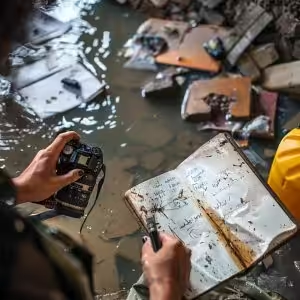
Inspectors document all findings with high-resolution photographs and videos. This detailed report forms the basis for the restoration plan and supports insurance claims, ensuring nothing is overlooked—from superficial soot to deep water damage that might lead to mold.
What Does Emergency Response Include: Board-Up and Tarping?
Following a fire, an immediate emergency response is critical to secure the property. Restoration companies quickly perform:
• Board-up services: Filling gaps like broken windows and doors with sturdy boards to protect the property from external elements. • Tarping: Covering damaged roofs and exposed areas with high-quality tarps to shield against rain, wind, and debris.
These measures help control further moisture intrusion and secondary damage. The teams often set up monitoring protocols to ensure that the temporary solutions remain effective until permanent repairs begin. Prompt action minimizes additional financial loss and provides peace of mind by protecting the homeowner’s investment.
How Are Smoke, Odor, and Water Damage Removed?
Removing damage from smoke, odor, and water involves a systematic process using specialized equipment and methods:
• Extraction: Industrial vacuums and cleaning agents remove soot and smoke residues from surfaces and belongings. • Odor Neutralization: Air scrubbers, deodorizers, and treatments like thermal fogging or ozone are used to break down and eliminate persistent odors. • Water Removal: High-powered extraction tools remove excess water from firefighting efforts, while dehumidifiers and air movers accelerate the drying process to prevent mold.
Every step is carefully documented for insurance claims. The process restores a healthy indoor environment and prevents long-term complications from moisture and contaminants.
What Structural Repairs and Content Cleaning Are Offered?
After cleaning, restoration companies proceed with rebuilding and content recovery:
• Structural Repairs: Damaged areas such as walls, floors, roofing, and support beams are repaired or replaced. Certified contractors ensure repairs meet safety standards, and in some cases, upgrades are made for improved durability. • Content Cleaning: Sensitive items such as furniture, documents, and electronics are professionally cleaned using specialized techniques. Different materials receive tailored treatments to remove soot without further damage. • Documentation: Detailed reports and before-and-after photos are taken to streamline the insurance claims process.
The restoration of structural integrity and personal belongings is managed simultaneously so that once repairs are completed, the property is safe for reoccupation.
How Do Restoration Companies Handle Mold Remediation?
Mold remediation is essential, especially when water damage creates a damp environment conducive to mold growth:
• Inspection: Technicians use moisture meters and infrared cameras to find hidden mold, even behind walls or under floors. • Containment: Affected areas are isolated with barriers to prevent the spread of spores. • Cleaning: Specialized antifungal and antimicrobial agents, along with HEPA filters, are used to clean affected surfaces and airborne particles. • Removal of Contaminated Materials: In severe cases, damaged drywall or insulation is removed and replaced. • Verification: Post-remediation tests are often recommended to ensure that mold is completely eradicated and air quality is restored.
Guidelines are provided to homeowners to maintain low indoor humidity and schedule regular inspections, preventing future mold outbreaks.
How Do Local Fire Damage Restoration Companies Support Homeowners With Insurance Claims?
Restoration companies not only handle repairs but also help with the complex insurance claim process. They:
• Provide detailed documentation, including photographs, reports, and repair estimates, to support the claim. • Explain the claim process clearly to homeowners and work directly with insurance adjusters to advocate for full coverage. • Assist in gathering required documents such as fire reports, inspection notes, and invoices. • Offer support and documentation during any claim disputes to challenge underassessments by insurance companies.
This proactive approach helps shorten claim timelines and reduces the financial burden on homeowners.
What Is the Process for Insurance Claim Assistance?
Immediately after the incident, experts compile a comprehensive documentation package that includes photos, written estimates, and repair logs. This package is submitted to the insurance company, and homeowners are guided through each step until final settlement.
How Can Restoration Experts Help Maximize Your Insurance Coverage?
By providing detailed and clear documentation along with expert assessments, restoration professionals negotiate with insurance adjusters to ensure that all restoration costs are covered.
What Documents and Evidence Are Needed for Fire Damage Claims?
Typical documents include fire incident reports, restoration estimates, photographic evidence, repair invoices, and detailed inspection reports—all vital for substantiating the insurance claim.
Why Is Fast Response Critical When Choosing a Fire Damage Restoration Company?
A swift response minimizes further damage and reduces overall restoration costs. Quick action is vital because:
• It prevents additional harm from weather, water infiltration, and mold growth. • Emergency measures, like board-up and tarping, must be performed immediately to secure the property. • Rapid water extraction and drying reduce the risk of long-term moisture damage.
Timely intervention helps preserve the property’s structural integrity and minimizes the financial impact on homeowners. Additionally, a fast response builds confidence in the restoration team and expedites the insurance claim process.
How Does Quick Arrival Minimize Further Property Damage?
Immediate deployment of protective measures such as board-up and tarping prevents additional damage from the environment and safeguards vulnerable areas of the property.
What Are the Benefits of 24/7 Emergency Services?
Round-the-clock availability ensures that, regardless of when damage occurs, experts can promptly address issues, minimizing loss and preserving property value.
How Do Certified Technicians Ensure Effective Restoration?
Certified technicians are trained to follow rigorous safety and repair standards. Their expertise leads to high-quality repairs and accurate assessments, ensuring that all work meets industry requirements.
What Should Homeowners Look for When Hiring a Local Fire Damage Restoration Company?
When selecting a restoration company, homeowners should consider:
• Certification and Experience: Look for companies with recognized certifications and a strong history of successful restorations. • Reputation: Customer testimonials and portfolios of past work provide insight into the company’s reliability and quality. • Communication: The provider should explain the restoration process clearly and offer detailed documentation to support insurance claims. • Post-Restoration Support: Consider firms that offer warranty services and follow-up inspections after restoration. • Insurance and Bonding: Ensure the company is fully insured and bonded to protect against any liabilities.
How Important Is Certification and Experience?
These factors ensure that a company has the proven expertise and reliability necessary to handle complex restoration projects safely and efficiently.
What Questions Should You Ask Before Hiring?
Key questions include asking about emergency response times, repair warranties, support with insurance claims, and detailed documentation practices to ensure transparency throughout the process.
How Do Customer Reviews and Testimonials Influence Your Choice?
Positive reviews and testimonials reflect a company’s track record and help homeowners gauge the quality of service, reliability, and overall customer satisfaction.
How Does the Fire Damage Restoration Process Work From Start to Finish?
The restoration process follows several structured steps:
- Assessment: Certified professionals inspect and document all damage, forming a restoration plan.
- Emergency Response: Immediate measures such as board-up and tarping secure the property.
- Cleaning: Teams remove soot, smoke, and water damage using industrial-grade equipment.
- Repairs: Structural repairs and content restoration are carried out concurrently.
- Final Inspection: The property is thoroughly inspected to ensure it is safe, clean, and fully restored.
This systematic approach, built on industry best practices and advanced technology, minimizes disruptions and rebuilds the property efficiently, restoring normalcy for homeowners.
What Are the Key Steps in Fire Damage Restoration?
The process includes damage assessment, emergency board-up and tarping, comprehensive cleaning, structural and content repairs, and a final inspection to confirm quality restoration.
How Long Does Each Stage Typically Take?
Timelines vary based on damage severity: emergency measures may be done in hours, whereas cleaning and repairs might take several days to weeks, depending on factors like weather and insurance processes.
What Can Homeowners Expect During Structural Repairs and Cleanup?
Homeowners should expect a well-coordinated approach that includes debris removal, cleaning of soot, thorough drying of water-damaged areas, and meticulous structural repairs—all communicated clearly through regular updates.
How Can Homeowners Prevent Further Damage After a Fire Before Restoration Begins?
Once a fire occurs, immediate steps can prevent additional damage until professionals arrive:
• Secure the property by contacting emergency services for board-up and tarping. • Move salvageable items to a safe location. • Document current conditions with photos and notes for insurance purposes. • Shut down HVAC systems to avoid spreading smoke contaminants. • Consider temporary power solutions carefully to maintain safety.
Taking these actions helps slow further deterioration and preserves valuable items until the restoration process starts.
What Immediate Actions Should You Take After Fire Damage?
Quickly secure the property, document all damage with photos, and call emergency restoration services. This prevents further deterioration and supports the renewal process.
How Can Temporary Board-Up and Tarping Protect Your Property?
These measures shield exposed openings and damaged roofs from weather-related harm and unauthorized access, stabilizing the property until permanent repairs are made.
When Should You Avoid DIY Cleanup?
DIY cleanup is risky when structural instability, toxic residues, or significant water damage are present. Professional services ensure safety and proper documentation for insurance purposes.
What Are the Costs and Pricing Factors for Local Fire Damage Restoration Services?
Restoration costs vary based on several factors:
• The damage’s severity and the property’s size. • The extent of water, smoke, and structural damage, including mold remediation needs. • Additional services such as content cleaning and emergency board-up/tarping.
Professionals provide detailed estimates breaking down labor, materials, and equipment costs. Insurance plays a key role, with many companies working directly with insurers to align work with policy requirements. Homeowners should obtain multiple quotes and discuss all factors, including potential deductibles and financing options.
What Influences the Cost of Fire Damage Restoration?
Costs depend on damage scale, required services, material quality, and the urgency of the response. Local market conditions and insurer negotiations can also affect the final expense.
How Do Insurance and Restoration Companies Coordinate on Payment?
Restoration companies provide detailed documentation and clear estimates to work with insurance adjusters, ensuring that repair costs are minimized and coverage is maximized.
Are There Financing or Payment Plans Available?
Many companies offer flexible financing or payment plans to ease the financial burden if insurance coverage is partial, ensuring that homeowners can manage restoration costs more effectively.
Frequently Asked Questions
Q: What immediate actions should be taken after a fire damage incident? A: Secure the property by boarding up broken windows/doors, document the damage with photos, and contact a reputable fire damage restoration company to prevent further deterioration and support insurance claims.
Q: How long does the full fire restoration process typically take? A: Timelines vary; emergency measures may be completed in hours, while full restoration (cleaning, repairs, mold remediation) can take several days to weeks, depending on damage severity and external factors like weather.
Q: How do fire damage restoration companies ensure safety during the cleanup process? A: Certified technicians use personal protective equipment, isolate contaminated areas, and deploy HEPA filters and industrial-grade cleaning agents to safeguard both workers and occupants.
Q: What type of documentation is provided for insurance claims? A: Comprehensive reports are produced including detailed assessments, high-resolution photographs, video documentation, and written estimates—all critical for substantiating claims.
Q: Can homeowners perform any of the restoration work themselves? A: It is strongly advised not to, due to hazards and the complexity of the work. Professional services ensure a safe, thorough restoration with proper documentation for insurance purposes.
Q: Are financing or payment plans available if insurance coverage is insufficient? A: Yes, many local companies offer flexible financing or payment plans to help manage restoration costs when insurance does not cover the full expense.
Final Thoughts
Local fire damage restoration companies transform devastating incidents into manageable recoveries. Their comprehensive approach—including rapid emergency response, thorough damage assessment, meticulous cleaning, structural repairs, mold remediation, and detailed support with insurance claims—ensures that every aspect of the damage is addressed. By choosing a company with certified technicians, strong customer testimonials, and transparent practices, homeowners can not only restore their property to safety but also regain peace of mind and move forward with confidence.