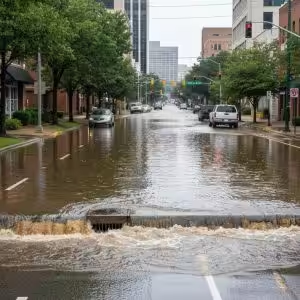
Property damage repairs in Charlotte are adding up faster than ever, with hidden repair costs causing final bills to skyrocket by as much as 300 percent over the initial estimate. Sounds unbelievable, right? Most owners think solid photographs and a quick inspection have them covered, but that shortcut often leaves thousands of dollars behind. Knowing exactly how these estimates work gives you the upper hand that can mean the difference between a shortfall and a full recovery.
Table of Contents
- Understanding Property Damage Estimates In Charlotte
- Key Steps In The Property Damage Assessment Process
- Common Mistakes In Estimating Property Damage Costs
- How To Maximize Your Property Damage Settlement
Quick Summary
| Takeaway | Explanation |
|---|---|
| Comprehensive Documentation is Essential | Property owners should maintain thorough records of damage, including detailed photographs, descriptions, and inventory lists, to support their insurance claims effectively. |
| Understand Local Factors Impacting Estimates | Various factors such as weather patterns, building age, and compliance with local codes significantly influence property damage assessments in Charlotte. |
| Engage Professionals for Accurate Assessments | Utilizing expert inspection services can uncover hidden damages and provide a more complete assessment, ensuring accurate restoration estimates and supporting claims. |
| Avoid Common Estimating Mistakes | Property owners must be cautious of underestimating hidden costs and miscalculating material and labor expenses, which can lead to financial shortfalls during repairs. |
| Strategic Communication with Insurers is Key | Maintaining clear, factual, and organized communication with insurance adjusters helps facilitate a smoother claims process and aids in achieving fair settlements. |
Understanding Property Damage Estimates in Charlotte
Property damage estimates represent a critical financial assessment that determines the extent and cost of repairs after unexpected damage to residential or commercial properties in Charlotte. These comprehensive evaluations serve as the foundation for insurance claims, restoration planning, and financial recovery.
The Anatomy of a Property Damage Estimate
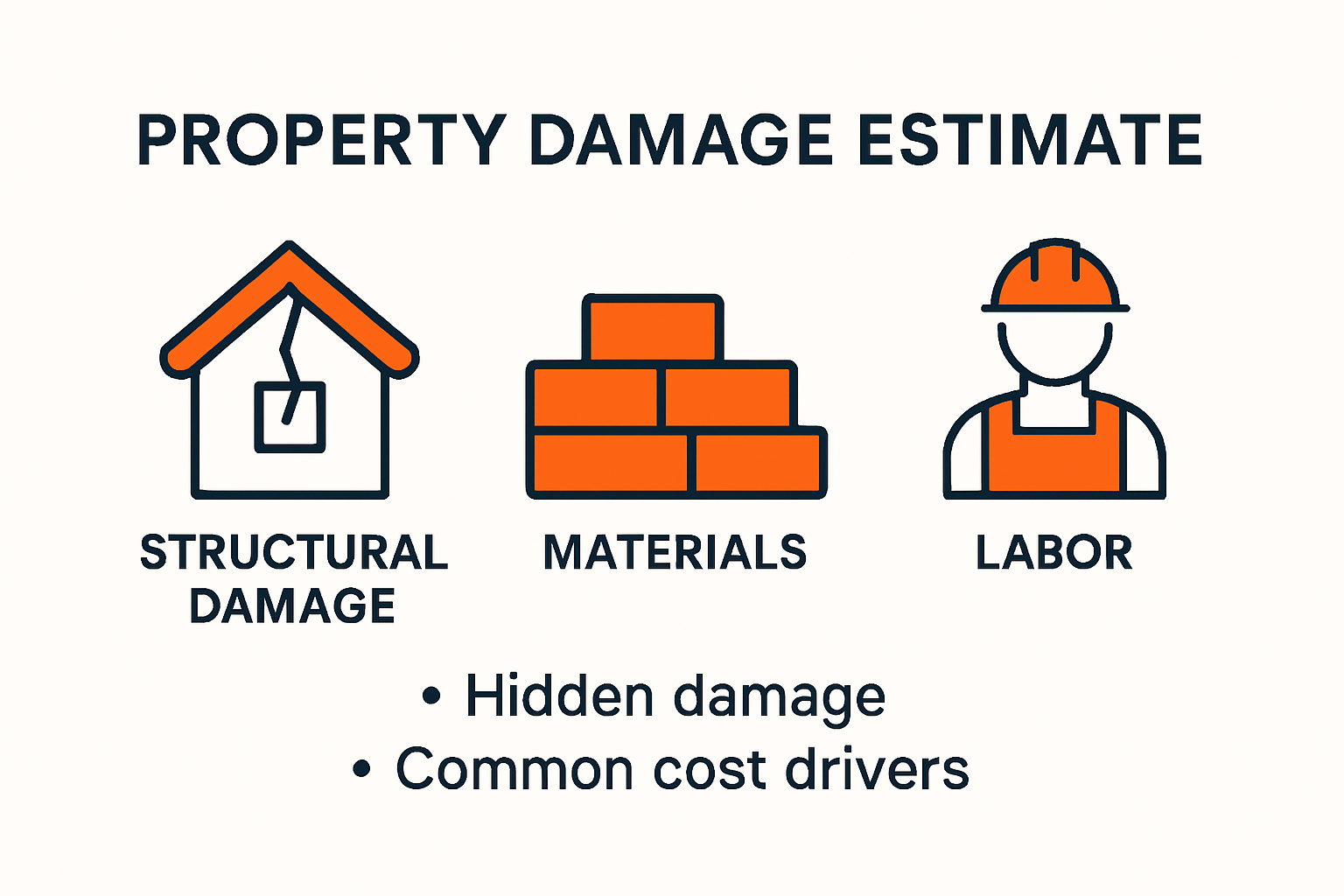
A professional property damage estimate involves a meticulous inspection and detailed documentation of all damage incurred. Experts from the National Association of Insurance Commissioners note that these estimates typically include a thorough breakdown of structural damage, material costs, labor expenses, and potential hidden damages that might not be immediately visible.
The process begins with a comprehensive on-site assessment where trained professionals examine every aspect of the property. They document damage through detailed photographs, measurements, and expert analysis. This documentation is crucial because it provides an objective record of the property’s condition before and after the damaging event. Insurance adjusters and restoration specialists rely on these precise estimates to determine the scope of necessary repairs and the associated financial requirements.
Factors Influencing Property Damage Estimates in Charlotte
Multiple unique factors impact property damage estimates in the Charlotte region. The North Carolina Department of Insurance highlights several critical considerations specific to the area:
- Weather Patterns: Charlotte’s susceptibility to severe storms, hurricanes, and occasional winter weather events significantly influences potential property damage risks.
- Building Age and Construction: Older properties or those with unique architectural features may require more specialized repair approaches.
- Local Building Codes: Compliance with Charlotte’s specific building regulations can affect repair and restoration strategies.
Professional estimators consider these local nuances when developing comprehensive property damage estimates. They understand that each property presents unique challenges that require specialized evaluation techniques. Read more about our detailed restoration approach.
Property owners should recognize that a professional property damage estimate is more than just a financial document. It represents a critical roadmap for recovery, providing clarity and direction during what can be an incredibly stressful experience. The estimate serves as a negotiation tool with insurance companies, a blueprint for restoration efforts, and a comprehensive assessment of the property’s condition post-damage.
Understanding the intricacies of property damage estimates empowers Charlotte property owners to navigate the complex landscape of insurance claims and restoration with confidence. By working with experienced professionals who understand local conditions and insurance requirements, property owners can ensure a thorough and fair assessment of their damage and subsequent restoration needs.
Key Steps in the Property Damage Assessment Process
The property damage assessment process is a systematic approach that requires precision, expertise, and thorough documentation to accurately evaluate the extent of damage and determine appropriate restoration strategies. Property owners in Charlotte must understand the critical steps involved to navigate insurance claims effectively and ensure comprehensive property recovery.
Initial Damage Documentation and Evaluation

Federal Emergency Management Agency (FEMA) guidelines emphasize the importance of immediate and systematic damage documentation. The first crucial step involves creating a comprehensive visual and written record of all damaged areas. Professional assessors recommend taking high-resolution photographs from multiple angles, capturing detailed images that demonstrate the full scope of damage.
Property owners should document everything before any cleanup or temporary repairs begin. This includes damaged structural elements, personal property, and any immediate safety hazards. The North Carolina Department of Insurance recommends maintaining a detailed inventory list that includes:
- Date of Damage: Exact date and time of the damaging event
- Damage Description: Precise details about the type and extent of damage
- Photographic Evidence: Clear, dated photographs showing damage from multiple perspectives
- Initial Cost Estimates: Preliminary assessment of potential repair or replacement costs
Below is a table summarizing the essential items to include in your initial damage documentation and evaluation process.
| Documentation Item | Description |
|---|---|
| Date of Damage | Record the exact date and time of the damaging event |
| Damage Description | Detailed notes on type and extent of damage |
| Photographic Evidence | Multiple, clear photos from different angles, including date stamps |
| Inventory List | Itemized list of damaged property, including quantities and descriptions |
| Initial Cost Estimates | Preliminary assessment of repair/replacement costs |
Professional Inspection and Comprehensive Assessment
After initial documentation, professional property damage assessors conduct a detailed on-site inspection. National Association of Independent Insurance Adjusters experts highlight that this stage involves specialized techniques to uncover both visible and hidden damage. Trained professionals use advanced diagnostic tools like moisture meters, thermal imaging cameras, and structural assessment equipment to identify potential issues not immediately apparent.
The comprehensive assessment goes beyond surface-level evaluation. Assessors examine structural integrity, potential water damage, electrical system impacts, and potential long-term consequences of the initial damage. Learn more about our detailed damage assessment approach.
Specialized professionals consider multiple factors during their assessment, including:
- Structural compromises
- Potential mold development
- Electrical and plumbing system damages
- Environmental and safety risks
Detailed Reporting and Insurance Claim Preparation
The final stage involves creating a comprehensive damage report that serves as the foundation for insurance claims and restoration planning. This document must be meticulously prepared, providing a clear, professional breakdown of all damages, recommended repairs, and associated costs.
Accurate reporting requires collaboration between property owners, damage assessment professionals, and insurance representatives. The report typically includes:
- Detailed damage descriptions
- Professional repair recommendations
- Estimated restoration costs
- Photographic and diagnostic evidence
- Potential long-term implications of the damage
Property owners in Charlotte should understand that a thorough, professionally prepared damage assessment report is their most powerful tool in navigating insurance claims and ensuring fair compensation for necessary repairs. By following these systematic steps and working with experienced professionals, property owners can effectively manage the complex process of property damage assessment and restoration.
Below is a table summarizing the key steps in the property damage assessment process and the main actions involved at each stage.
| Assessment Step | Main Actions |
|---|---|
| Initial Documentation & Evaluation | Take photographs, describe damage, create inventory, and record date |
| Professional Inspection | Utilize diagnostic tools, identify hidden damages, assess structural/electrical issues |
| Detailed Reporting & Claim Prep | Prepare comprehensive report with estimates, evidence, and repair recommendations |
Common Mistakes in Estimating Property Damage Costs
Navigating property damage cost estimation requires careful attention and strategic planning. Property owners in Charlotte often encounter significant challenges that can lead to substantial financial miscalculations if not addressed properly. Understanding these common pitfalls is crucial for accurate budgeting and successful property restoration.
Underestimating Hidden Damage Costs
Experts from the Construction Financial Management Association emphasize that one of the most critical mistakes property owners make is failing to account for hidden or indirect damage. Surface-level assessments can mask underlying structural issues that dramatically increase restoration expenses.
Typical hidden damage sources include:
- Moisture Penetration: Water damage that compromises structural integrity
- Electrical System Impacts: Subtle electrical damage not immediately visible
- Mold Development: Potential health hazards developing behind walls or under flooring
Forensic engineering studies reveal that overlooking these hidden damages can result in repair costs up to 300% higher than initial estimates. Property owners must invest in comprehensive diagnostic assessments that utilize advanced technologies like thermal imaging and moisture detection equipment.
Miscalculating Material and Labor Expenses
The National Institute of Building Sciences reports that inaccurate cost projections frequently stem from incomplete understanding of current material and labor market conditions. Charlotte’s dynamic construction landscape presents unique challenges in accurately estimating restoration expenses.
Common calculation errors include:
- Outdated Pricing: Relying on old cost estimates that don’t reflect current market rates
- Labor Rate Fluctuations: Failing to account for seasonal labor market changes
- Material Supply Chain Disruptions: Unexpected material cost increases
Read more about accurate damage restoration pricing to understand the complexities of modern property damage estimation.
Overlooking Comprehensive Risk Assessment
Risk management professionals highlight the critical importance of comprehensive risk assessment in property damage cost estimation. Property owners frequently underestimate the potential for additional complications that can exponentially increase restoration expenses.
Key risk factors to consider include:
- Potential structural compromise
- Regulatory compliance requirements
- Environmental remediation needs
- Potential long-term property value impacts
A thorough risk assessment goes beyond immediate repair costs. It requires a holistic approach that considers potential future implications and preventative measures. Professional estimators recommend including a contingency budget of 10-20% to address unforeseen complications.
Navigating property damage cost estimation is a complex process that demands expertise, attention to detail, and a comprehensive understanding of potential challenges. Charlotte property owners can protect themselves by working with experienced professionals who understand the nuanced local restoration landscape. By avoiding these common mistakes and approaching damage assessment strategically, property owners can ensure more accurate budgeting and more effective restoration efforts.
How to Maximize Your Property Damage Settlement
Navigating property damage insurance settlements requires strategic preparation and a comprehensive understanding of the claims process. Property owners in Charlotte can significantly improve their chances of receiving fair compensation by implementing carefully planned approaches that protect their financial interests and ensure thorough property restoration.
Comprehensive Documentation and Evidence Collection
The Insurance Information Institute emphasizes that meticulous documentation is the cornerstone of a successful property damage settlement. Property owners must create an exhaustive record of all damage, including detailed photographic evidence, written descriptions, and itemized lists of affected property.
Effective documentation should include:
- Dated Photographs: High-resolution images capturing damage from multiple angles
- Detailed Inventory: Comprehensive list of damaged items with estimated replacement costs
- Repair Estimates: Professional assessments from licensed contractors
- Maintenance Records: Historical documentation of property condition
Forensic claims experts recommend creating a digital and physical backup of all documentation, ensuring no critical evidence is lost during the claims process.
Strategic Communication with Insurance Providers
The National Association of Insurance Commissioners highlights the importance of professional and strategic communication with insurance adjusters. Property owners should approach the claims process with a clear, factual, and unemotional strategy that focuses on documented evidence and expert assessments.
Key communication strategies include:
- Prompt Reporting: Immediate notification of damage
- Detailed Documentation: Providing comprehensive evidence
- Professional Tone: Maintaining calm and factual interactions
- Thorough Follow-up: Consistent and organized communication
Learn more about navigating insurance claims effectively to understand the nuanced approach required for successful settlements.
Professional Support and Independent Evaluation
Insurance litigation experts recommend seeking professional support to maximize settlement potential. Independent assessments from licensed contractors and public adjusters can provide critical insights that strengthen your claim.
Consider engaging:
- Public Adjusters: Professionals who advocate for property owners
- Forensic Experts: Specialists who provide detailed damage assessments
- Legal Consultants: Attorneys specializing in insurance claims
These professionals can help identify hidden damages, challenge insufficient initial assessments, and ensure comprehensive compensation. Their expertise often uncovers additional damage aspects that insurance companies might overlook.
Maximizing a property damage settlement requires a proactive, well-documented, and professionally supported approach. Charlotte property owners who invest time in thorough preparation and seek expert guidance can significantly improve their chances of receiving fair and comprehensive compensation. By understanding the intricacies of the claims process and maintaining meticulous records, property owners transform from passive claimants to informed advocates for their financial recovery.
Frequently Asked Questions
What should I include in my property damage documentation?
Property damage documentation should include high-resolution photographs from multiple angles, detailed written descriptions of the damage, an itemized inventory list of affected items, and initial cost estimates for repairs or replacements.
How can I avoid underestimating hidden damage costs?
To avoid underestimating hidden damage costs, engage professional assessors who employ advanced diagnostic tools such as thermal imaging and moisture meters to uncover potential hidden issues that aren’t immediately visible.
What factors can influence my property damage estimate in Charlotte?
Factors influencing property damage estimates in Charlotte include local weather patterns, the age and construction type of the building, and adherence to local building codes. Each of these can affect the extent and cost of repairs.
How can I maximize my property damage settlement with insurance?
To maximize your property damage settlement, provide comprehensive documentation of all damages, maintain clear communication with your insurance provider, and consider hiring professionals like public adjusters or forensic experts for independent evaluations.
Take Control of Your Property Damage Estimate in Charlotte
Are you worried about hidden repair costs or missed claim opportunities after property damage? The article highlighted how property owners in Charlotte often face unexpected costs when estimating storm or disaster repairs. Inaccurate documentation and missed steps can result in insurance payouts that fall far short of what you need to fully restore your property. Trying to manage complex insurance claims without professional guidance leaves many owners frustrated and undercompensated.
Let National Insurance Claim Specialist (NICS) guide you with expert loss assessment, in-depth damage documentation, and proven insurance claim strategies tailored for the Charlotte area. Our licensed team uncovers hidden problems, prepares comprehensive claims, and negotiates directly with insurers to help you reclaim every dollar you’re owed.
Do not let small mistakes cost you thousands. Take the first step to a full recovery with a free consultation at National Insurance Claim Specialist. Or learn more about storm damage restoration and how to file a claim for roof damage on our website. Get the peace of mind and complete compensation you deserve. Act now before critical evidence is lost or deadlines pass.
Recommended
- Storm Damage Repair Costs: What to Expect in 2025 – Fire Damage Repair and Water Damage Repair Charlotte NC
- Charlotte Restoration: Find Top Disaster Recovery Services
- Patience Pays Off: How Long to Claim Hail Damage on Your Roof – Fire Damage Repair and Water Damage Repair Charlotte NC
- Mastering the Claim Process: How to File for Roof Damage – Fire Damage Repair and Water Damage Repair Charlotte NC
- Expert Fire Damage Restoration Services – Fire Damage Repair and Water Damage Repair Charlotte NC
- NIC’s Restoration: Your Trusted Restoration Experts