Article: # Local vs. National Hurricane Damage Restoration: How Do Costs, Speed, and Quality Compare?
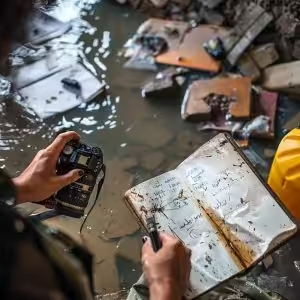
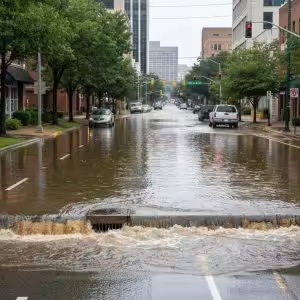
Hurricane damage restoration decisions hinge on cost transparency, rapid emergency response, and proven workmanship. Homeowners and business owners in Charlotte need clear guidance on how local repair services compare to national chains for hurricane damage restoration. This article examines key cost differences, response speed contrasts, quality metrics, additional benefits of local providers, drawbacks of large franchises, selection criteria, and emerging restoration technologies. Along the way, we highlight how Nics Restoration’s Charlotte‐based team leverages local expertise to secure fast, affordable, and high‐quality results while assisting with insurance claims.
What Are the Key Cost Differences Between Local and National Hurricane Damage Restoration?
Cost comparison in hurricane damage repair involves direct pricing, hidden fees, and claim assistance efficiencies. Transparent local pricing often undercuts national chains’ franchise and administrative overhead. Understanding these factors helps property owners budget repairs while leveraging local expertise to streamline insurance processes.
What Is the Average Cost of Hurricane Damage Restoration?
The average cost of hurricane damage restoration ranges from $2,700 to $22,000, depending on damage type and severity. Typical costs include:
- Wind damage repairs: $3,000–$7,000
- Water extraction and drying: $2,000–$5,000
- Structural rebuilds: $10,000–$20,000
| Damage Type | Cost Range | Comment |
|---|---|---|
| Wind and Roof Repair | $3,000–$7,000 | Includes tarping and shingle replacement |
| Water Extraction & Drying | $2,000–$5,000 | Covers moisture removal and dehumidification |
| Full Structural Restoration | $10,000–$20,000 | Involves framing, drywall, and finish work |
Average figures provide planning guidance and illustrate why local companies can offer competitive estimates using familiar suppliers and crews.
FEMA, “Cost Estimating Guide for the Construction of Buildings” (2025)
This source provides a framework for understanding the various cost components involved in property restoration after a hurricane.
Which Factors Influence Restoration Costs Locally and Nationally?
Several factors drive cost differences between local and national providers:
- Severity of property damage determines labor and material needs.
- Local labor rates and material sourcing affect hourly and supply costs.
- Permitting and code compliance fees vary by municipality.
- Distance and logistics impact travel and equipment mobilization fees.
- Insurance claim management efficiency shapes out‐of‐pocket expenses.
Local companies often minimize these expenses through established relationships, whereas national chains may pass higher overhead and transportation fees to customers.
How Do Local Companies Offer Transparent and Competitive Pricing?
Local restoration firms maintain lower overhead and direct supplier channels to deliver clear, itemized quotes. They: Local restoration
- Provide on‐site inspections with immediate cost estimates.
- Break down labor, materials, and cleanup expenses.
- Eliminate franchise and corporate administrative fees.
- Adjust pricing based on Charlotte’s specific building regulations.
Transparent estimates help homeowners understand exactly where each dollar is allocated, leading directly into smoother insurance negotiations.
What Hidden Costs Might National Chains Include in Their Pricing?
National chains sometimes include costs that can inflate final bills:
- Franchise royalties and corporate marketing surcharges.
- Centralized administration and dispatch fees.
- Mobile equipment transport and remote crew accommodations.
- Uniform pricing models that ignore local market rates.
Such hidden charges can surprise property owners after the initial quote, highlighting the value of local alternatives.
How Can Local Experts Help Navigate Insurance Claims Efficiently?
Local restoration specialists accelerate insurance approvals by:
- Documenting damage with Charlotte‐area photos and reports.
- Coordinating directly with regional adjusters familiar with local codes.
- Submitting detailed scopes of work that align with policy coverage.
- Advocating for fair settlements based on actual repair costs.
This expert guidance often reduces claim disputes and ensures faster claim payments, seamlessly transitioning from cost considerations to emergency response planning.
How Does Response Speed Compare Between Local Restoration Companies and National Chains?
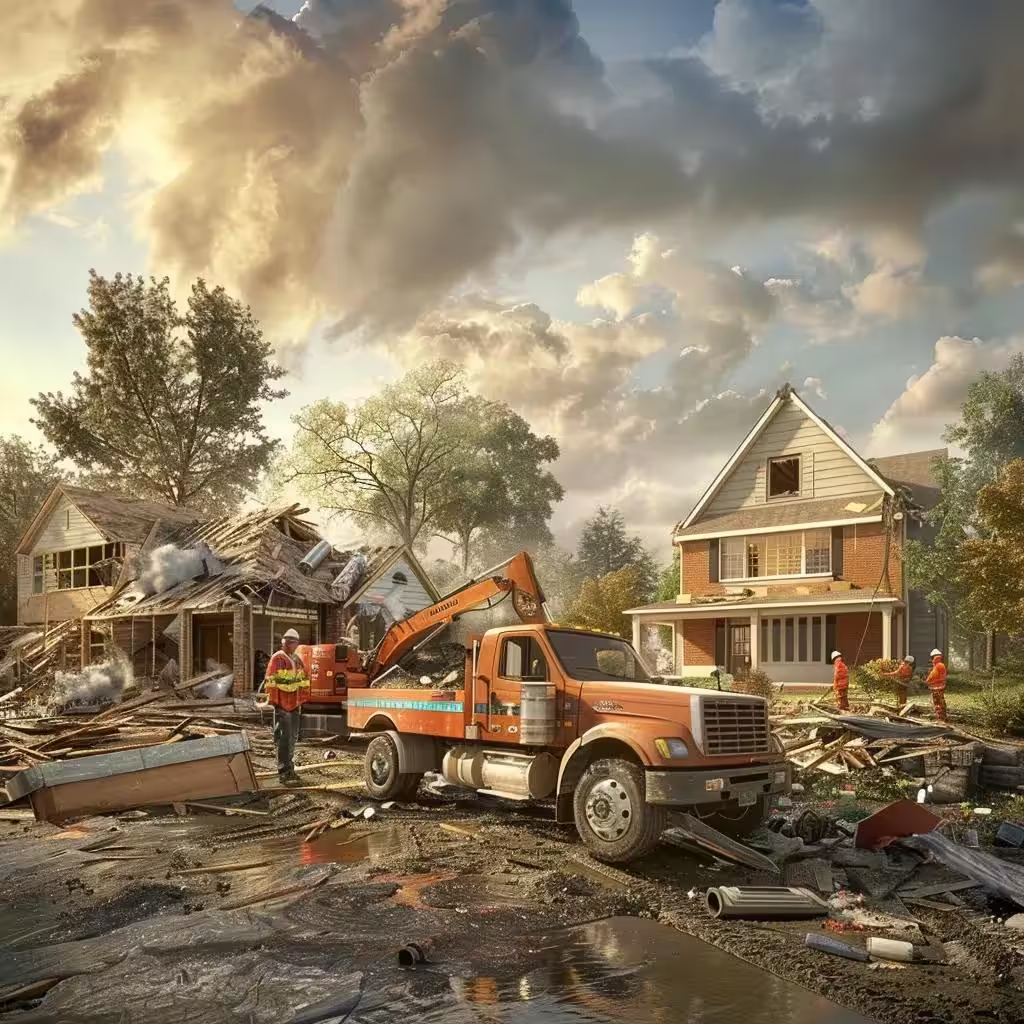
Immediate action after hurricane damage prevents mold growth, structural weakening, and secondary losses. Local repair services typically achieve on‐site presence within hours, whereas national chains may require days for equipment staging and crew deployment. Understanding these response dynamics informs urgent restoration decisions.
Why Is Rapid Emergency Response Critical After Hurricane Damage?
Rapid emergency restoration mitigates additional harm by:
- Extracting standing water before mold colonization.
- Stabilizing structures to prevent collapse.
- Protecting personal belongings from further deterioration.
- Maintaining indoor air quality through immediate ventilation.
National Hurricane Center, “Hurricane Preparedness Guide” (2024)
This citation underscores the critical role of prompt action in mitigating the adverse effects of hurricane damage, aligning with the article’s emphasis on the importance of quick response times.
Fast action preserves property value and occupant safety, setting the stage for detailed repair work.
How Do Local Companies Achieve Faster On-Site Presence and Dispatch?
Local restoration teams leverage proximity and dedicated resources to respond quickly:
- Maintain 24/7 on-call crews stationed within Charlotte.
- Deploy fully stocked vehicles within minutes of customer contact.
- Utilize established routes and local knowledge to avoid traffic delays.
- Coordinate with local suppliers for same-day material delivery.
These advantages ensure that initial mitigation begins the moment wind and flood damage occur.
What Are the Logistics Challenges for National Restoration Chains’ Response?
National franchises face logistical hurdles that can slow down response times:
- Centralized call centers distributing jobs to geographically distant crews.
- Equipment staging at regional hubs requiring transport to job sites.
- Uniform dispatch protocols that may not reflect local conditions.
- Limited local staffing levels during major storm events.
Such logistical constraints can delay critical mitigation and extend the timeline for permanent repairs.
How Does Charlotte’s Local Restoration Network Ensure 24/7 Emergency Services?
Charlotte’s local restoration providers build resilience through community integration:
- Rotate on-call schedules among multiple local crews.
- Partner with nearby subcontractors to scale capacity quickly.
- Establish dedicated emergency hotlines staffed by Charlotte-based personnel.
- Pre-position temporary flood pumps and tarps near high-risk zones.
This robust network guarantees rapid mobilization and continuous support through the full restoration process.
What Are the Quality Differences Between Local and National Hurricane Damage Restoration Services?
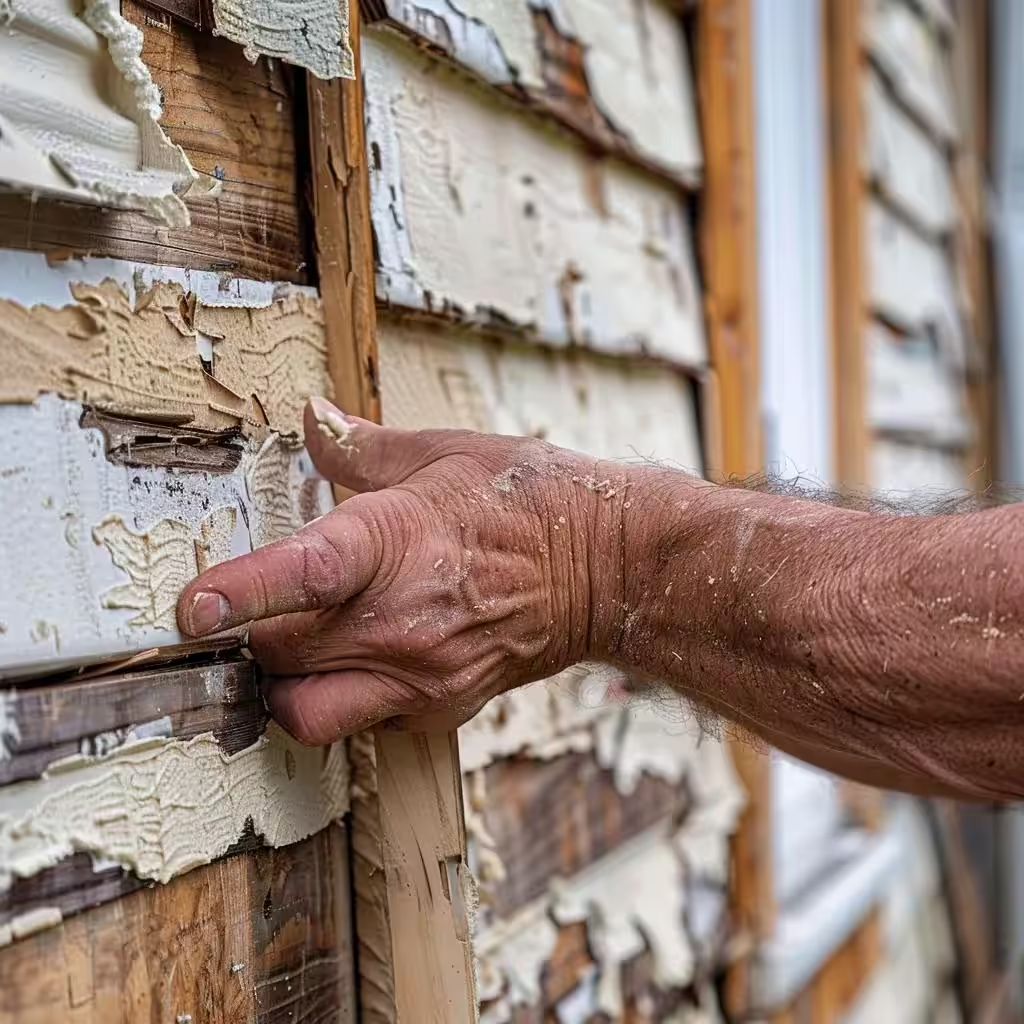
Quality in hurricane damage repair reflects certification standards, workmanship consistency, and long-term durability. Local craftsmanship often provides personalized oversight, while national chains rely on standardized procedures that can vary by franchise. Evaluating these quality factors helps property owners choose a restoration partner committed to lasting repairs.
How Is Quality Defined in Hurricane Damage Repair?
High-quality hurricane restoration combines professional standards with proven materials: hurricane restoration
- IICRC certification for water, fire, and mold remediation protocols.
- Trained technicians experienced in structural and finish repairs.
- Use of commercial-grade drying equipment and moisture meters.
- Durable materials matched to local climate and building codes.
Such standards ensure that repairs protect against future weather events and structural failures.
Why Does Local Craftsmanship Provide Personalized Attention and Accountability?
Local restoration contractors excel through hands-on involvement: Local restoration contractors
- Owners and managers oversee each project from start to finish.
- Technicians customize repair plans based on property specifics.
- Direct communication channels keep customers informed hourly.
- Reputation depends on community referrals and repeat business.
This personalized approach fosters trust and long-term accountability at every repair stage.
How Do National Brand Standards Compare to Local Contractor Accountability?
National franchise models enforce uniform procedures but may sacrifice local adaptability:
- Standard checklists and branded equipment ensure consistency.
- Local franchisees follow corporate protocols under remote oversight.
- Quality checks occur through centralized audits rather than on-site ownership reviews.
- Variability in individual franchise performance can affect outcomes.
Local firms supplement quality protocols with direct owner engagement and immediate course corrections as needed.
What Role Do Customer Testimonials and Local Reputation Play in Quality?
Online reviews and word-of-mouth references anchor quality assessments:
- Verified local testimonials highlight actual project timelines and results.
- Community forums and neighborhood groups share firsthand experiences.
- High local ratings on platforms like Google My Business reflect consistent performance.
- Case studies of Charlotte restoration projects demonstrate craftsmanship.
Social proof guides new customers toward partners who deliver enduring, high-quality repairs—and transitions naturally into exploring additional local benefits.
What Additional Benefits Do Local Charlotte Restoration Companies Offer Beyond Cost, Speed, and Quality?
Local restoration services bring specialized knowledge of Charlotte’s building codes, climate patterns, and community connections. These advantages translate into smoother permit approvals, tailored resilience solutions, and direct communication that enhances customer satisfaction.
How Does Local Knowledge of Building Codes and Climate Improve Restoration?
Understanding Charlotte’s regional requirements accelerates compliant repairs:
- Familiarity with Mecklenburg County permit processes reduces red tape.
- Insights into local humidity and temperature fluctuations guide material selection.
- Knowledge of historic district regulations ensures preservation standards.
- Tailored waterproofing details address flood-prone neighborhoods.
This expertise yields restoration outcomes aligned with both safety standards and local aesthetics.
Why Is Direct Communication and Accountability Easier with Local Teams?
Local contractors maintain single points of contact for project updates:
- Project managers provide daily progress summaries in person or by phone.
- Immediate site visits address emerging issues without scheduling delays.
- Clear escalation paths connect customers directly to company owners.
- Personalized service reduces misunderstandings and speeds resolution.
This direct approach fosters trust and sets realistic expectations for every phase.
How Does Choosing Local Support the Charlotte Economy and Community?
Investing in local restoration firms circulates resources within the community:
- Job creation for Charlotte-based technicians, contractors, and suppliers.
- Local tax revenue that funds public infrastructure and emergency services.
- Partnerships with regional charities aid storm survivors in need.
- Community reinvestment strengthens local resilience networks.
Supporting local businesses ensures that restoration efforts benefit the broader Charlotte area.
What Are the Advantages of Navigating Local Permits and Regulations with Local Experts?
Local experts expedite approvals by leveraging established relationships:
- Pre-approved vendor lists with municipal building departments.
- Familiarity with permit documentation and inspection scheduling.
- Direct communication with code enforcement officers to clarify requirements.
- Proactive identification of potential compliance issues before inspection.
This streamlined process avoids costly delays and keeps restoration timelines on track.
What Are the Common Disadvantages of National Hurricane Damage Restoration Chains?
National restoration chains provide scale and branding but often lack the personalized service and rapid local responsiveness that characterize community-based firms. Higher overhead and variable franchise performance can translate into inconsistent results and elevated costs.
How Can National Chains Provide Less Personalized Service?
Standardized corporate frameworks limit individualized solutions:
- Scripted customer interactions replace tailored consultations.
- Rotating crews may lack familiarity with specific property needs.
- Centralized call centers delay direct access to on-site managers.
- Uniform protocols may overlook unique local challenges.
Such practices erode the one-on-one focus that property owners often require after storm damage.
Why Might National Chains Have Slower Local Response Times?
Logistical complexities slow deployment in urgent situations:
- Equipment and crews travel from regional distribution centers.
- Corporate dispatch algorithms assign jobs based on proximity thresholds.
- High call volumes during storm events may overload national call centers.
- Limited in-market staffing can require external support.
This slower mobilization can allow secondary damage to escalate before mitigation begins.
How Do Higher Overhead and Franchise Fees Affect Customer Costs?
Franchise models and corporate structures introduce additional cost layers:
- National marketing assessments passed on to local customers.
- Corporate management fees embedded in hourly and material rates.
- Uniform pricing that fails to reflect local labor and supply markets.
- Equipment leasing and maintenance costs allocated across service calls.
Customers frequently pay premium rates without direct visibility into these surcharges.
What Inconsistencies Can Arise from Franchise Models in National Chains?
Variations in franchisee capabilities and training lead to mixed outcomes:
- Differences in technician certifications between locations.
- Local franchise management may lack corporate support resources.
- Inconsistent quality control standards across different markets.
- Franchise turnovers can disrupt continuity in customer relationships.
These inconsistencies underscore the importance of evaluating each provider’s local track record.
How Can Homeowners and Business Owners Choose the Right Hurricane Damage Restoration Company?
Selecting a restoration partner requires evaluating certifications, experience, local accountability, and proven performance. Understanding key selection criteria ensures that property owners make informed decisions that balance cost, speed, and quality.
What Should You Look for in a Qualified Restoration Company?
Key qualifications include:
- IICRC certification for water, fire, and mold remediation.
- Licensed and insured technicians familiar with local regulations.
- Documented experience in hurricane damage scenarios.
- Transparent, itemized estimates and clear service agreements.
These factors collectively safeguard restoration quality and customer satisfaction.
How Do IICRC Certifications Ensure Quality Restoration?
IICRC (Institute of Inspection, Cleaning and Restoration Certification) standards guarantee:
- Uniform training in mitigation, drying, and cleaning protocols.
- Industry-accepted best practices for safety and health compliance.
- Periodic re-certification to maintain technician competence.
- Consumer confidence through recognized third-party accreditation.
Such credentials signal a commitment to consistent, high-quality restoration.
Why Is Local Accountability Important When Selecting a Restoration Provider?
Local accountability fosters trust and ensures direct oversight:
- Company owners remain involved in project milestones.
- Immediate issue resolution without corporate bureaucracy.
- Community reputation motivates punctual and professional work.
- Personalized guarantees often exceed national brand warranties.
Choosing a locally accountable partner connects property owners directly to decision-makers.
How Can You Verify Speed and Quality Through Reviews and Case Studies?
Validating a provider’s performance involves:
- Reading verified customer reviews on Google and Yelp.
- Requesting case studies of recent Charlotte hurricane restorations.
- Examining before-and-after photo galleries demonstrating workmanship.
- Asking for references to confirm project timelines and outcomes.
This evidence-based approach identifies reputable firms equipped to deliver on promises and transitions into future restoration innovations.
What Are the Emerging Trends and Technologies in Hurricane Damage Restoration?
Innovative tools and sustainable practices are transforming how restoration professionals assess, mitigate, and rebuild after hurricanes. From drone-assisted inspections to eco-friendly materials, these advancements enhance accuracy, speed, and environmental responsibility.
How Are Drones and AI Improving Damage Assessment and Restoration Speed?
Drone and AI integrations provide:
- Aerial surveys for roof and structure damage mapping within hours.
- Automated image analysis to quantify areas of concern and estimate materials.
- Real-time data feeds that prioritize critical repair zones.
- Reduced risk to technicians by identifying unsafe areas remotely.
These technologies accelerate initial assessments and lay the groundwork for efficient field operations.
What Sustainability Practices Are Being Adopted in Restoration Services?
Eco-conscious restoration includes:
- Use of recycled or low-VOC building materials for interior rebuilds.
- Water reclamation systems that capture and reuse drying condensate.
- Energy-efficient equipment that reduces operational carbon footprints.
- Proper disposal and recycling of hazardous debris and materials.
Sustainable practices support healthier indoor environments and minimize environmental impact.
How Does Technology Impact Local vs. National Restoration Efficiency?
Technology adoption varies by provider scale:
- Local firms quickly integrate new tools through direct investment decisions.
- National chains may roll out standardized platforms over extended timelines.
- Regional data networks empower local teams with tailored AI insights.
- Centralized software systems support national logistics but may lack local granularity.
Understanding these differences helps property owners select a provider with the right technological capabilities.
Why Is Staying Updated on Industry Trends Important for Choosing a Restoration Company?
Staying informed ensures that restoration partners:
- Employ the latest safety protocols and remediation methods.
- Leverage advanced tools to reduce repair timelines and costs.
- Offer environmentally responsible solutions that align with modern standards.
- Demonstrate ongoing professional development and innovation.
Choosing a forward-looking company secures better outcomes and positions properties for long-term resilience.
Selecting a hurricane damage restoration partner involves weighing transparent pricing, emergency response speed, and craftsmanship quality. Nics Restoration’s Charlotte-based experts bring certified technicians, 24/7 rapid dispatch, and community-focused service to every project. Their local knowledge of codes, streamlined insurance coordination, and commitment to sustainable practices ensure affordable, timely, and reliable property recovery. Contact Nics Restoration today to schedule a free estimate and experience the difference that a dedicated local team can make.
Frequently Asked Questions
What should I do immediately after hurricane damage occurs?
After hurricane damage, prioritize safety by assessing your surroundings for hazards like downed power lines or unstable structures. If safe, document the damage with photos for insurance claims. Contact your insurance provider to report the damage and begin the claims process. It’s crucial to secure your property to prevent further damage, such as covering broken windows or tarping roofs. Finally, reach out to a local restoration company for immediate assistance to mitigate further risks and start the recovery process.
How can I ensure the restoration company I choose is reputable?
To verify a restoration company’s reputation, check for online reviews on platforms like Google and Yelp. Look for testimonials from previous clients that highlight their experiences regarding speed, quality, and customer service. Additionally, ask for references and case studies of similar projects they have completed. Ensure the company holds necessary certifications, such as IICRC, which indicates adherence to industry standards. Engaging with local community forums can also provide insights into their reliability and performance.
What types of insurance coverage should I have for hurricane damage?
Homeowners should consider comprehensive coverage that includes wind and flood insurance, as standard policies may not cover hurricane-related damages. Review your policy to ensure it includes coverage for structural damage, personal property, and additional living expenses if you need to relocate during repairs. It’s advisable to consult with your insurance agent to understand the specifics of your coverage and any exclusions that may apply, ensuring you are adequately protected against potential losses.
How long does the hurricane damage restoration process typically take?
The duration of hurricane damage restoration varies based on the extent of the damage and the type of repairs needed. Minor repairs may take a few days, while extensive structural damage can extend the process to several weeks or even months. Factors influencing the timeline include the availability of materials, the complexity of repairs, and the efficiency of the restoration team. A reputable local restoration company will provide a detailed timeline after assessing the damage, helping you set realistic expectations.
What are the benefits of using eco-friendly materials in restoration?
Using eco-friendly materials in restoration offers several benefits, including reduced environmental impact and improved indoor air quality. Sustainable materials often have lower levels of volatile organic compounds (VOCs), which can enhance the health of occupants. Additionally, eco-friendly practices can lead to energy savings through better insulation and efficiency. Choosing sustainable options also supports the growing demand for environmentally responsible construction, aligning with community values and potentially increasing property value in the long term. Nics Restoration
How can I prepare my home for future hurricanes?
To prepare your home for future hurricanes, start by reinforcing windows and doors with storm shutters or impact-resistant glass. Ensure your roof is in good condition and consider installing a hurricane strap system to secure the roof to the walls. Create an emergency plan that includes evacuation routes and a communication strategy with family members. Stock up on emergency supplies, such as food, water, and first-aid kits. Regularly review and update your insurance policy to ensure adequate coverage for hurricane-related damages.
What should I expect during the restoration process?
During the restoration process, expect an initial assessment where technicians evaluate the damage and outline a plan for repairs. This may include water extraction, structural repairs, and mold remediation. Communication is key; a project manager will keep you informed about progress and any changes to the timeline. You may also need to coordinate with your insurance company, as the restoration team will document the work for claims. Overall, the process aims to restore your property to its pre-damage condition efficiently and effectively.