Fire Damage Assessment for Insurance Claims
The restoration process after a fire can be overwhelming. For reliable fire damage restoration charlotte nc services, a comprehensive fire damage assessment ensures that insurance claims are properly documented so that homeowners and business operators receive fair compensation. This article explains what a fire damage assessment is, why it is critical for insurance claims, and outlines the inspection process. It also covers how different types of fire damage are evaluated, the claims process, and options for affordable assessments. With increasing fire-related disasters, understanding this process is essential for minimizing financial loss and ensuring a smooth restoration. For further assistance, contact us for more details.
A fire impacts not only property but also lives and business operations. Accurate evaluation of fire damage is essential for proper restoration and substantiating insurance claims. Insurance adjusters rely on detailed inspection reports to verify damages, and homeowners who are unfamiliar with the process may struggle to document losses accurately. This article provides clear, step-by-step insights into the assessment process while addressing common concerns about insurance claims.
Transitioning into the specifics, the following sections explain the key elements of a fire damage assessment and its critical role in insurance claims.
What Is a Fire Damage Assessment and Why Is It Important for Insurance Claims?
A fire damage assessment is a careful inspection of a property after a fire, documenting both structural and content losses. Its primary purpose is to serve as evidence during an insurance claim, detailing affected areas and necessary repairs. This documentation supports the insurer’s determination of fair compensation based on repair costs, loss of use, and other damages. For more information about restoration processes, visit fire damage restoration.
In practice, assessors evaluate visible damage as well as secondary issues such as smoke staining, water damage from firefighting, and structural weakening. The report is legally significant and helps protect homeowners from underinsurance and dispute over claim amounts. Beyond financial matters, these assessments guide restoration teams by identifying hazards like weakened structural elements or toxic residues, ensuring that repairs are both safe and effective.
What Does a Fire Damage Assessment Include?
A comprehensive assessment examines all elements of a property impacted by the fire. It begins with a visual inspection, where experts check for obvious issues like charred surfaces, damaged construction materials, and deterioration of finishes. They also note abstract factors such as smoke spread and water damage from firefighting efforts.
Assessors use diagnostic tools to detect hidden damage, including residue from combustion and smoke intrusion in walls and ceilings. The resulting report is supported by photographs, sketches, and detailed written descriptions. It covers every form of damage—from cracks in load-bearing walls to compromised insulation—and evaluates both the building’s structure and its contents, such as furniture, electronics, and personal belongings.
Finally, the report incorporates professional opinions to justify repair cost estimates and recommendations on whether certain areas require demolition or repair. This detailed documentation is essential for navigating the claims process confidently.
How Does Fire Damage Impact Insurance Claims?
Insurance claims rely heavily on a complete and accurate fire damage assessment. The report forms the foundation for calculating repair expenses, loss estimates, and compensation amounts. Insurers use the report in negotiations, and its completeness reduces the risk of underpayment or claim disputes.
If an assessment underestimates damage because only superficial issues were reported, the resulting claim may not cover all repair costs. In contrast, a thorough report that includes both visible and hidden damages (such as mold from water damage) helps ensure that the claim covers the full extent of the loss. Moreover, a complete report strengthens the policyholder’s credibility, decreases the risk of fraud accusations, and provides critical historical data for any future claims or legal issues.
Who Performs Fire Damage Assessments and What Qualifications Do They Have?
Fire damage assessments are conducted by experienced professionals who specialize in fire restoration and structural engineering. They often hold certifications from reputable organizations like the Institute of Inspection, Cleaning and Restoration Certification (IICRC) and sometimes have engineering degrees. Many assessors also work as public adjusters, equipping them with deep knowledge of insurance policies and claim procedures.
Their practical field experience, combined with up-to-date expertise in restoration techniques and safety regulations, enables them to identify both obvious and hidden damage. Their professional credentials and insurance protect both the assessor and the homeowner by ensuring an unbiased and reliable evaluation.
How Is the Fire Damage Assessment Process Conducted?
The assessment process is methodical and begins immediately after a fire. Initially, an on-site visit is made to conduct a thorough walkthrough of the property. During this phase, safety is paramount because the site may be unstable or contain hazardous materials.
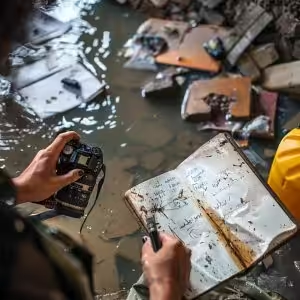
The assessor documents all visibly affected areas with high-resolution photographs and detailed notes. Advanced techniques like thermal imaging help uncover hidden damage behind walls or beneath floors. The inspector also creates a schematic diagram noting areas of concern, which later serves as the backbone of the assessment report.
After collecting visual data, the assessor performs physical measurements and may take samples for testing contaminants such as soot or chemicals. This quantitative information, combined with qualitative observations, is compiled into a comprehensive report that details damage descriptions, repair estimates, and recommended next steps. This report is then submitted to the insurance company.
What Are the Steps in a Fire Damage Inspection?
The fire damage inspection is broken into several clear steps:
- Visual Walkthrough: The assessor examines all areas to identify overt damage like charring, cracks, and discoloration.
- Documentation: Every affected area is photographed and annotated. Measurements are taken, and samples may be collected to analyze residue or chemical contamination.
- Advanced Testing: Tools such as thermal imaging and moisture meters are used to detect hidden damage and water intrusion.
- Data Analysis: The assessor reviews the data against restoration standards and repair guidelines to produce cost estimates.
- Report Compilation: All information is synthesized into a formal report with detailed photographs, diagrams, and clear repair recommendations.
This systematic approach ensures that even minor damages are documented, providing a defensible basis for insurance claims.
How Is Damage Documented and Reported?
Damage documentation combines visual records, written descriptions, and precise measurements. The process starts with extensive photography, including both close-up and wide-angle shots that capture the overall context. Each photograph is annotated with time stamps and location details.
Written descriptions outline the severity and nature of the damage, while technical measurements help quantify repair needs. Modern digital tools and software are used to create schematics and diagrams that mark areas of significant damage. These visuals and written elements are then combined into a structured report that is critical for insurance adjusters, ensuring every aspect of the damage is recorded accurately.
How Are Repair Costs Estimated During Assessment?
Repair cost estimation involves a detailed evaluation of both obvious and hidden damage. The assessor itemizes all damaged elements—from structural components to personal belongings—and assigns repair or replacement values based on industry-standard pricing and historical data.
Indirect costs, such as demolition and debris removal or additional water and mold remediation, are also factored in. Software tools may be used to compile data and calculate an itemized list of materials and labor costs. This comprehensive estimate informs insurance negotiations and ensures that the final settlement covers all necessary repairs. Future needs, like structural reinforcements, may also be considered to ensure long-term safety.
What Types of Fire Damage Are Assessed for Insurance Claims?
A fire damage assessment reviews several key areas:
– Structural Damage: Direct damage to the framework of the building. – Contents Damage: Impact on personal belongings, furniture, and electronics. – Secondary Damage: Issues such as smoke damage, soot, and water damage, which may not be immediately visible.
Each type is evaluated with specialized techniques and tools so that the full scope of loss is captured in the final report.
How Is Structural Fire Damage Evaluated?
Assessing structural fire damage involves a close examination of the building’s framework. Inspectors check load-bearing walls, beams, columns, and connection points for signs of charring, warping, or cracking due to high heat. Such damage may compromise the building’s integrity, sometimes necessitating localized repairs or even complete demolition.
Advanced methods, including non-destructive testing and thermal imaging, are employed to reveal hidden weaknesses. The resulting report not only documents the damage but also offers recommendations, such as temporary bracing, to prevent collapse. This careful evaluation is essential for determining repair costs and ensuring long-term safety.
What Is Included in Contents Fire Damage Assessment?
A contents fire damage assessment focuses on the effects of fire on personal property. Items such as furniture, electronics, documents, and decorative pieces are examined for direct heat, smoke, and water damage. Assessors document each item with photos and detailed descriptions, and when possible, include valuations or receipts.
Indirect effects like soot penetration and heat deterioration are also considered. The assessment results in a detailed inventory that establishes pre-fire values and determines salvageability. This information is pivotal for filing an insurance claim that accurately represents the losses suffered by the policyholder.
How Is Smoke and Soot Damage Assessed?
Smoke and soot damage is evaluated by inspecting surfaces for discoloration, residue build-up, and potential chemical degradation. Experts measure the extent of smoke penetration on walls, ceilings, and floors using visual inspection and specialized tests.
High-resolution photographs document the affected areas, and additional tests may be conducted to determine the composition of the soot. This analysis helps in recommending specific cleaning methods and restoration techniques. The final report details both the immediate and potential long-term effects of smoke damage, ensuring it is factored into the overall repair estimates.
What Are Common Causes of Fire Damage Affecting Assessments?
Common causes of fire damage include electrical malfunctions, cooking accidents, arson, and natural events like wildfires. Each has distinct characteristics; for example, electrical fires may damage outlets and appliances, while cooking accidents often affect the kitchen area. Arson typically shows unusual burn patterns and multiple points of origin, and natural fires can cause uniform exposure across a property.
Understanding the origin of the fire helps assessors interpret the damage correctly and may influence recommendations for future fire prevention measures. It also provides context for insurance claims by linking damage patterns to specific causes.
How Do You File and Manage an Insurance Claim After Fire Damage Assessment?
Once you receive the detailed fire damage assessment report, the next step is filing an insurance claim. Homeowners should submit this report along with the claim form to their insurance company. The report’s detailed documentation is essential to justify the claim and accelerate the claims process.
After submission, the insurance adjuster reviews the report and may conduct their own examination. Clear communication between the property owner, the assessor, and the adjuster is crucial to address any questions quickly. Claims are usually settled in phases—with initial funds for urgent repairs and further payments as renovation progresses—so maintaining records such as receipts and contractor invoices is vital.
What Is the Role of the Fire Damage Assessment Report in Filing Claims?
The fire damage assessment report is the cornerstone of filing an insurance claim. It provides an expert, detailed account of all damages, supported by photographs, technical measurements, and cost estimates. This document serves as both evidence and a negotiation tool with insurance companies.
Its comprehensive nature helps verify that all damages are legitimate and conform to industry standards. In cases of dispute, the report acts as expert testimony. Ultimately, the report ensures that both the insurer and the policyholder have a clear, agreed-upon understanding of the scope of damage and the required repairs.
How Do You Work Effectively With Insurance Adjusters?
Effective collaboration with insurance adjusters is key to a smooth and successful claim. Homeowners should provide the complete fire damage assessment report along with all supporting documentation, such as photographs and detailed repair estimates.
It is important to keep records of all correspondence and to be responsive to any queries from the adjuster. Preparing to discuss every aspect of the damage and the methodology behind the assessment can help resolve discrepancies quickly. In some cases, involving a public adjuster might be beneficial to ensure a fair settlement. Clear, transparent communication builds credibility and speeds up the claims process.
What Coverage Options Relate to Fire Damage and Loss of Use?
Fire damage coverage includes not only the physical repair of the property but also compensation for damage to contents. Additionally, loss of use coverage provides funds for living expenses if the property becomes uninhabitable due to the fire.
Homeowners should carefully review their insurance policies to understand which damages are covered. In some cases, extended coverage may be available for high-value items or specialized repairs. Working with an insurance agent can help identify any gaps in coverage and ensure that the policy fully addresses both direct and indirect losses.
How Long Does the Insurance Claim Process Take After Assessment?
The time it takes to settle an insurance claim after a fire damage assessment can vary. Typically, claims are resolved within 30 to 90 days, but more complex cases may require additional time. Factors influencing the timeline include the completeness of the report, the efficiency of the adjuster’s review, and the responsiveness of repair contractors.
Timely submission of all supplemental documentation—such as receipts and contractor estimates—along with proactive communication usually helps expedite the process. Insurance companies may release funds in stages as repairs progress, ensuring that work can begin promptly while staying within the agreed budget.
What Factors Influence the Cost of Fire Damage Assessment?
Several factors affect the cost of a fire damage assessment. These include the size of the property, the extent of the damage, and the complexity of its structural layout. Larger properties or those with extensive damage usually require more detailed inspections using advanced diagnostic tools.
Location is another factor; areas with higher labor costs or specialized service requirements may incur higher fees. The assessor’s credentials and experience also influence pricing. In some cases, additional costs may arise if hazardous materials like toxic residues or asbestos are present. Often, insurance policies cover these assessment costs, so it is important to check with your provider.
Are Fire Damage Assessments Covered by Insurance?
Many insurance policies include fire damage assessments as part of the overall claims process. When a fire occurs, professional evaluation costs are generally considered a necessary expense to document the damage and begin repairs. Some policies pay the assessment fees directly, while others may reimburse costs after submission of an approved report.
It is essential for homeowners to review their policy documents to determine what is covered and whether additional endorsements are needed to ensure comprehensive coverage. Confirming these details with the insurance provider can help prevent unexpected out-of-pocket expenses.
How to Get a Free or Low-Cost Fire Damage Assessment Estimate?
For homeowners concerned about costs, several options exist to obtain free or low-cost fire damage assessments. Many restoration companies offer initial inspections at no charge to quickly evaluate the extent of the damage. Local government programs or community initiatives may also help subsidize assessment costs in areas prone to fires.
Additionally, some insurance providers include free assessment services as part of their claims support. It is advisable to compare estimates from reputable providers and confirm that the assessors are certified and experienced. This research helps ensure that the final assessment is both cost-effective and comprehensive.
What Are Fire Damage Restoration Services and How Do They Relate to Assessments?
Fire damage restoration services encompass the repair, cleaning, and rebuilding of a property after a fire. These services rely on the detailed fire damage assessment, which serves as a roadmap for the restoration work.
The assessment report identifies all damaged areas and outlines the necessary steps for repair, including debris removal and structural stabilization. Restoration companies use this information to prioritize repairs, estimate timelines, and secure funding from insurers. In essence, the evaluation process and restoration work are closely integrated, ensuring that the property is returned to its pre-fire condition as efficiently as possible.
How Does Restoration Begin After the Assessment?
Once the assessment is complete and the report is finalized, the restoration process begins immediately. First, the property is secured to prevent further loss—this may involve boarding up windows, covering damaged roofs, and removing hazardous debris.
A detailed job plan is then formulated based on the assessment report, outlining which areas need immediate attention and which can be restored gradually. The restoration company works closely with the insurance provider to align the repair work with the claim. Priority is given to mitigating secondary damages such as water damage and mold, ensuring that the property is safe and stable throughout the restoration process.
What Are Common Fire Damage Restoration Techniques?
Restoration techniques used after a fire include specialized cleaning, structural repair, and refurbishment. For instance, dry cleaning and dry ice blasting are effective for removing soot and smoke residue without causing additional damage with water.
Structural repairs might involve replacing compromised beams, reinforcing load-bearing walls, or even demolition of irreparable sections. Restoration experts may also use water extraction methods alongside dehumidifiers and mold remediation treatments to tackle secondary water damage.
Each technique is selected based on the severity and type of damage documented in the assessment report, ensuring that restoration is both thorough and efficient while restoring the property to a safe condition.
When Is Water Damage or Mold Remediation Needed After Fire Damage?
Water damage and mold remediation become necessary when firefighting efforts leave excessive water in a structure. Wet materials can quickly become breeding grounds for mold, which not only damages the property further but also poses health risks.
Experts use moisture meters and thermal imaging to assess the extent of water penetration. If significant water damage is detected, immediate drying, dehumidification, and antimicrobial treatments are required. In severe cases, compromised materials such as drywall may need to be removed and replaced. Addressing these issues promptly helps to safeguard structural integrity and minimizes long-term repair costs.
What Are Common Questions About Fire Damage Assessment for Insurance Claims?
Property owners often have questions about the fire damage assessment process. Common concerns include:
How Long Does a Fire Damage Assessment Take?
The duration depends on the property’s size and damage extent; assessments can take a few hours for smaller properties and up to a full day for larger or severely damaged structures.
What Is the Difference Between a Fire Damage Assessment and a Restoration Estimate?
An assessment documents and quantifies the damage, while a restoration estimate provides a detailed breakdown of repair costs and specific procedures required. Both are critical for a comprehensive insurance claim.
Who Should You Contact for Fire Damage Assessment Services Near You?
It is important to engage licensed and certified fire damage restoration experts or public adjusters with proven expertise and positive local reviews to ensure an accurate evaluation.
How Can You Prepare Your Property for a Fire Damage Assessment?
Before the assessment, secure the property, gather any pre-fire repair records, and provide clear access to all areas. Pre-assessment documentation of the property condition can help the assessor produce a comprehensive report.
Frequently Asked Questions
Q: What should I do immediately after a fire occurs? A: Evacuate the property, call emergency services, secure the site if possible, and document visible damages to help support your insurance claim and plan for restoration.
Q: How does a fire damage assessment affect my insurance claim? A: The assessment provides a detailed, expert evaluation that insurance adjusters use to verify the claim and determine the appropriate settlement amount, ensuring that you receive fair compensation.
Q: Can I conduct the fire damage assessment myself? A: While you can document visible damage, professional assessments are recommended because experts use specialized tools to detect hidden issues and accurately estimate repair costs.
Q: What happens if my insurance claim is disputed after the assessment? A: A comprehensive fire damage report can serve as crucial evidence in negotiations or legal proceedings. A public adjuster or legal expert may be consulted to help resolve disputes.
Q: How do restoration companies use the assessment report? A: Restoration companies rely on the report to prioritize repairs, estimate necessary costs, and coordinate project timelines, ensuring that all documented damages are addressed during the restoration process.
Final Thoughts
This article has outlined the critical aspects of fire damage assessments and how they form the backbone of a successful insurance claim. Comprehensive assessments ensure every element of damage is documented, guiding both the restoration process and claim negotiations. Effective communication with insurance adjusters and partnering with certified experts are key to a smooth, accurate restoration and claim management process. Ultimately, a thorough fire damage assessment is vital for immediate recovery and long-term property safety.
| Assessment Component | Documentation Method | Restoration Impact | Benefit for Claim Process |
|---|---|---|---|
| Structural Damage | Photographs, Diagrams | Informs necessary repairs | Validates repair costs and damage extent |
| Contents Damage | Itemized Inventory, Photos | Guides replacement/restoration | Supports claim for personal property loss |
| Smoke and Soot Damage | Detailed Visuals, Testing | Highlights cleaning needs | Ensures comprehensive claim processing |
| Water Damage | Moisture Meters, Imaging | Prevents mold and further decay | Improves overall claim accuracy |
| Hidden Damage | Thermal Imaging, Sampling | Reveals non-visible issues | Provides a complete loss picture |
Before finalizing restoration, review this checklist to ensure every aspect of the fire damage is addressed.
| Restoration Technique | Primary Purpose | Application Example | Estimated Impact on Recovery |
|---|---|---|---|
| Dry Ice Blasting | Soot Removal | Cleaning walls and floors | High efficiency, minimal water use |
| Structural Repair | Rebuilding damaged areas | Replacing charred beams | Restores integrity |
| Water Extraction | Mitigating water damage | Removing water from damaged ceilings | Prevents mold growth |
| Thermal Imaging | Detecting hidden damage | Identifying concealed wall damage | Enhances repair accuracy |
| Mold Remediation | Eliminating mold growth | Treating areas with moisture-induced mold | Improves long-term property safety |
By comparing these techniques, property owners can better understand how each process contributes to effective recovery and strengthens their insurance claim.
This concise guide has provided in-depth insights into fire damage assessments—from initial inspection to final insurance claim management. With accurate documentation, clear communication, and expert restoration techniques, homeowners and business operators can navigate the recovery process with confidence, ensuring a quicker return to normalcy while protecting their investments.