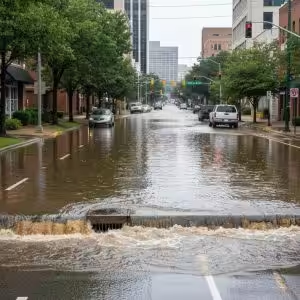
Charlotte property owners are facing a rising threat. Flash floods in the city can cause millions of dollars in property damage, with over 28% of flood claims coming from homes outside high-risk zones. Most people focus on flashy flood maps and insurance plans. The real difference comes from a few smart strategies that dramatically lower risk long before disaster hits. Here is where most get it wrong and what you need to know next.
Table of Contents
- Understanding Flood Risks In Charlotte, NC
- Essential Flood Damage Mitigation Strategies
- Planning And Funding Flood Protection Projects
- Working With Insurance And Legal Professionals
Quick Summary
| Takeaway | Explanation |
|---|---|
| Assess Your Flood Risk | Review official Flood Insurance Rate Maps to understand your property’s flood zone classification and risk level. This assessment includes evaluating your property’s elevation and historical flooding data. |
| Implement Structural Protections | Elevate critical systems and modify your home’s structure with waterproof sealants, drainage slopes, and flood barriers to reduce vulnerability to flood damage. |
| Secure Comprehensive Flood Insurance | Obtain specialized flood insurance policies that provide coverage beyond standard home insurance, considering local flood zone requirements and maintaining detailed documentation of your property. |
| Engage in Community Flood Initiatives | Participate in local neighborhood groups and workshops to collaborate on flood mitigation strategies and share resources for improved community resilience. |
| Consult Insurance and Legal Experts | Work with professionals to navigate complex insurance policies, understand legal property rights regarding flood history, and establish a proactive risk management strategy. |
Understanding Flood Risks in Charlotte, NC
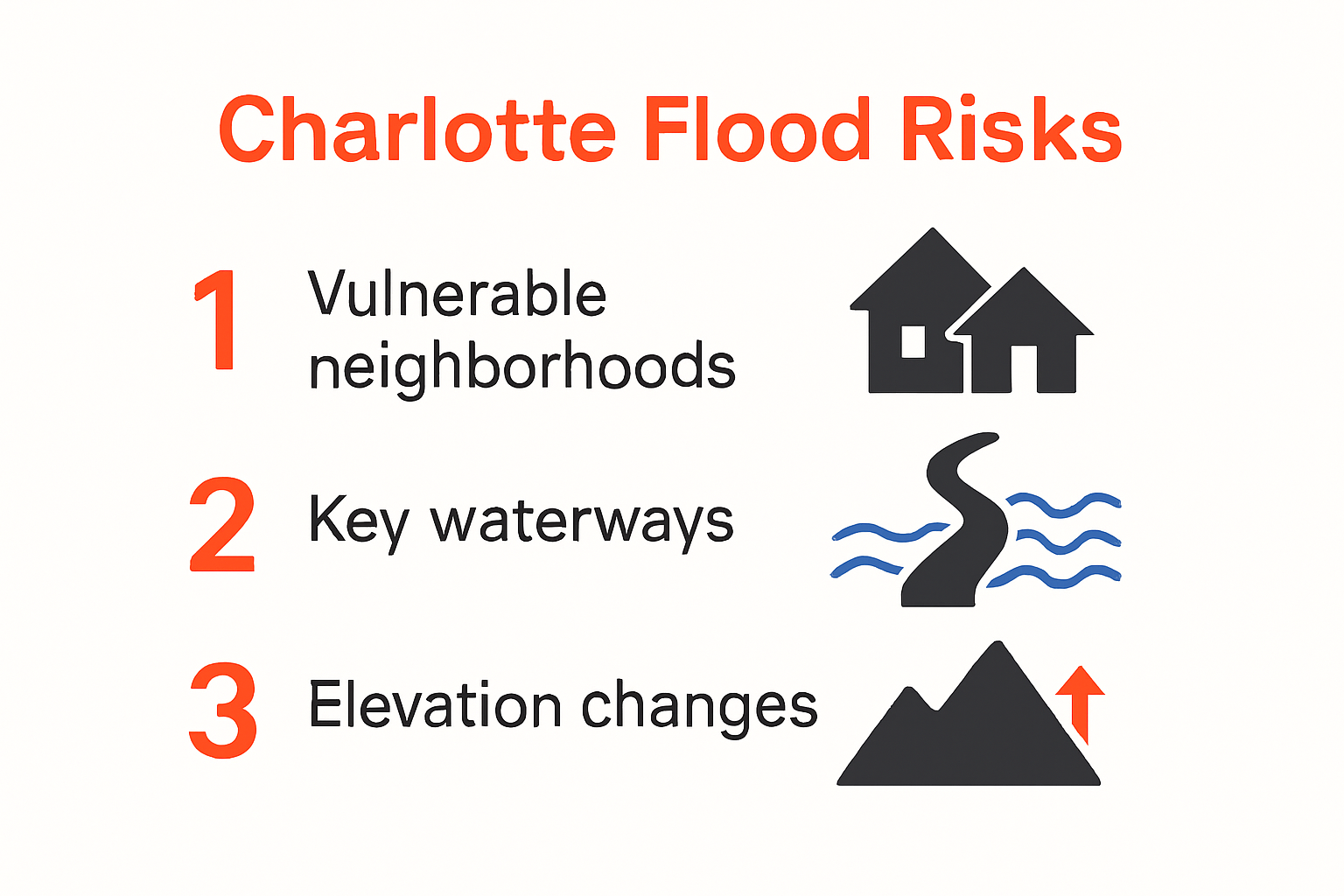
Flood risks in Charlotte, NC represent a critical challenge for property owners, with the city’s unique geographical and meteorological characteristics creating substantial vulnerability to water-related damage. The metropolitan area sits within a complex hydrological landscape, where multiple waterways and changing climate patterns intersect to create potential flooding scenarios.
Geographic Vulnerability and Water Systems
Charlotte’s topography makes it particularly susceptible to flood events. The city is situated in the Piedmont region, characterized by rolling terrain and numerous streams that can quickly overflow during intense rainfall. Learn more about local flood recovery strategies to understand the comprehensive approach needed for property protection.
According to Charlotte Mecklenburg Storm Water Services, the region’s flood risks are dynamically mapped and regularly updated to reflect changes in land development, rainfall patterns, and topographic shifts. These official flood insurance rate maps provide critical insights into potential water inundation zones, helping property owners understand their specific risk levels.
Climate and Precipitation Patterns
Charlotte experiences significant rainfall throughout the year, with an average annual precipitation of approximately 43 inches. Summer months frequently bring intense thunderstorms and tropical systems that can rapidly generate flood conditions. The combination of urban development, impermeable surfaces, and robust precipitation creates perfect conditions for flash flooding.
Key flood risk factors in Charlotte include:
- Watershed Dynamics: Multiple creeks and tributaries traverse the urban landscape
- Urban Development: Increased concrete and asphalt surfaces reduce natural water absorption
- Storm Intensity: Rising frequency of extreme weather events due to climate changes
Risk Assessment and Preparedness
Property owners must proactively assess their flood risks by reviewing official Flood Insurance Rate Maps. These comprehensive documents categorize areas into specific flood zone classifications, indicating potential water depth, frequency of flooding, and associated insurance requirements.
Understanding your property’s precise flood risk involves examining several critical factors:
- Elevation relative to nearby water bodies
- Historical flooding data for your specific neighborhood
- Local drainage infrastructure capabilities
- Proximity to streams, rivers, and low-lying areas
By comprehensively analyzing these elements, Charlotte property owners can develop targeted flood damage mitigation strategies that protect their investments and ensure long-term resilience against water-related threats.
Essential Flood Damage Mitigation Strategies
Flood damage mitigation requires a strategic and comprehensive approach for Charlotte property owners, encompassing proactive planning, structural modifications, and financial protection. The goal is not just surviving a flood event but minimizing potential economic and structural losses before water becomes a destructive force.
Structural Protection and Home Modifications
Property owners can implement critical structural modifications to reduce flood vulnerability. Elevating critical systems like electrical panels, HVAC equipment, and water heaters above potential flood levels represents a primary defensive strategy. The North Carolina Department of Environmental Quality recommends elevation techniques that can significantly reduce potential water damage.
Additional structural protection strategies include:
- Foundation Reinforcement: Installing waterproof sealants and creating proper drainage slopes
- Barrier Installation: Constructing flood walls or temporary flood barriers around critical property areas
- Landscaping Modifications: Creating swales and grading that direct water away from structural foundations

Advanced Flood Mitigation Technologies
Technological innovations provide sophisticated flood damage mitigation solutions for Charlotte property owners. Learn more about comprehensive restoration techniques to understand cutting-edge protective measures. Modern flood mitigation technologies include smart water sensors, automated sump pump systems, and real-time flood monitoring applications that provide early warning signals.
According to Charlotte-Mecklenburg Storm Water Services, advanced technologies combined with strategic property assessments can reduce potential flood damage by up to 70% in high-risk areas.
Insurance and Financial Preparedness
Financial protection represents a critical component of comprehensive flood damage mitigation. The Federal Emergency Management Agency recommends specialized flood insurance policies that provide coverage beyond standard homeowners insurance. Charlotte property owners should carefully evaluate their specific flood zone classification and corresponding insurance requirements.
Key financial preparedness strategies include:
- Obtaining comprehensive flood insurance
- Maintaining an emergency repair and replacement fund
- Documenting property assets and maintaining digital backups of critical records
- Understanding local disaster recovery resources and assistance programs
By implementing these strategic approaches, Charlotte property owners can create a robust flood damage mitigation framework that protects their investments and ensures rapid recovery in the event of water-related emergencies. Proactive planning, technological integration, and financial preparedness form the cornerstone of effective flood risk management.
Planning and Funding Flood Protection Projects
Flood protection projects require strategic planning and sophisticated financial approaches that go beyond traditional property management strategies. For Charlotte property owners, navigating the complex landscape of flood mitigation funding demands a comprehensive understanding of available resources, grant opportunities, and collaborative community initiatives.
Grant and Funding Opportunities
Property owners and local communities have multiple avenues for securing financial support for flood protection projects. The North Carolina Department of Environmental Quality is currently accepting proposals for flood mitigation projects, with grants potentially covering up to 66.67% of construction costs. Learn more about comprehensive restoration strategies to understand how these funding mechanisms can be effectively utilized.
Key funding sources include:
- State-Level Grants: North Carolina Flood Resiliency Blueprint programs
- Federal FEMA Mitigation Grants: Pre-disaster and post-disaster funding options
- Local Municipal Assistance Programs: Charlotte-specific flood mitigation incentives
- Private Sector Resilience Funding: Insurance company risk reduction programs
Project Planning and Assessment
Successful flood protection projects demand meticulous planning and comprehensive risk assessment. According to North Carolina Agricultural and Consumer Services, the state has allocated nearly $19.5 million to the Streamflow Rehabilitation Assistance Program (StRAP), supporting approximately 280 flood-reduction projects across various communities.
Critical steps in project planning include:
- Comprehensive property risk assessment
- Detailed engineering and hydrological studies
- Cost-benefit analysis of proposed mitigation strategies
- Alignment with local and state flood management guidelines
Community and Collaborative Approaches
Flood protection is not an individual endeavor but a collaborative community effort. Charlotte property owners can maximize their mitigation strategies by engaging with local stakeholders, participating in community flood management initiatives, and leveraging collective resources.
Recommended collaborative strategies include:
- Joining neighborhood flood mitigation groups
- Participating in local emergency preparedness workshops
- Coordinating with municipal storm water management departments
- Sharing resources and knowledge with adjacent property owners
By adopting a proactive, well-researched approach to flood protection project planning and funding, Charlotte property owners can develop robust strategies that not only protect individual properties but contribute to the broader community’s resilience against water-related risks. Strategic funding, thorough planning, and collaborative engagement form the foundation of effective flood damage mitigation in 2025 and beyond.
Working with Insurance and Legal Professionals
Navigating flood damage recovery and mitigation requires strategic collaboration with insurance and legal professionals who understand the complex landscape of property protection in Charlotte, NC. Property owners must develop a comprehensive approach that combines expert guidance, thorough documentation, and proactive risk management.
Insurance Coverage and Claims Strategy
Understanding flood insurance nuances is critical for effective property protection. Learn more about comprehensive restoration support to better comprehend the intricacies of insurance claims. Interestingly, 28% of flood insurance claims annually originate from areas outside high-risk floodplains, emphasizing the importance of comprehensive coverage.
Key insurance considerations include:
- Policy Type Selection: Differentiating between standard homeowners and specialized flood insurance
- Coverage Limits: Ensuring adequate protection for structural and personal property damages
- Claim Documentation: Maintaining detailed records of property condition and damage
- Rapid Response Protocols: Understanding immediate steps following flood events
Legal Protection and Property Rights
Legal professionals play a crucial role in protecting property owners during flood-related challenges. North Carolina’s new flood disclosure law requires sellers to provide comprehensive information about a property’s flood history, including:
- Designated flood hazard zone status
- Previous flood damage incidents
- Existing flood insurance policies
- FEMA elevation certificates
- Historical flood damage claims
Property owners should consult legal experts to:
- Review and understand complex insurance policy language
- Negotiate fair compensation for flood-related damages
- Protect against potential liability issues
- Ensure compliance with local and state flood mitigation regulations
Proactive Risk Management
Charlotte-Mecklenburg officials recommend early hurricane preparation for the 2025 hurricane season, which is predicted to have above-average named storms. This guidance underscores the importance of developing a comprehensive risk management strategy with professional support.
Effective risk management involves:
- Regular property risk assessments
- Continuous insurance coverage review
- Maintaining updated property documentation
- Developing emergency response plans
- Consulting with multiple professional experts
By strategically engaging insurance and legal professionals, Charlotte property owners can create a robust defense against potential flood-related financial and structural risks. The combination of expert guidance, thorough documentation, and proactive planning forms the cornerstone of effective flood damage mitigation in 2025 and beyond.
Frequently Asked Questions
What are the flood risks for property owners in Charlotte, NC?
Flood risks in Charlotte are influenced by the city’s topography, rainfall patterns, and the presence of multiple waterways. Property owners should review official Flood Insurance Rate Maps to understand their specific flood zone classification and associated risk levels.
How can I mitigate flood damage to my property in Charlotte?
To mitigate flood damage, property owners should consider structural modifications such as elevating critical systems, installing flood barriers, and creating proper drainage slopes. Engaging in advanced flood mitigation technologies like smart sensors can also enhance protection.
What types of flood insurance should homeowners in Charlotte consider?
Homeowners in Charlotte should obtain specialized flood insurance policies that cover damages beyond standard homeowners insurance. It is essential to evaluate specific flood zone requirements and maintain detailed documentation of the property for insurance claims.
Are there funding opportunities for flood protection projects in Charlotte?
Yes, property owners can explore various funding sources for flood protection projects, including state-level grants, federal FEMA mitigation grants, and local municipal assistance programs. Engaging in community collaborative approaches can also enhance funding opportunities.
Ready to Protect Your Charlotte Property From Flooding?
Charlotte homeowners know that even a few inches of floodwater can mean months of repairs, insurance stress, and financial loss. The article above highlights real concerns—outdated flood maps, confusing insurance policies, and the feeling that your home or business could be vulnerable with little warning. Whether it’s elevating HVAC systems, managing complex insurance claims, or finding the smartest way to restore what matters most, these problems require expert hands and local insight.
Don’t let uncertainty and risk keep you up at night. NICS specializes in disaster recovery and insurance claims services tailored to Charlotte’s unique climate and property risks. Our team steps in before and after disaster strikes, helping you understand your coverage, fight for your full compensation, and restore your property efficiently and ethically.
Visit National Insurance Claim Specialist now to schedule a free flood resilience assessment or urgent storm recovery support. Start securing your home with the experience and care you deserve—contact us today for peace of mind when it matters most.