Essential Documentation for Hurricane Insurance Claims: Complete Insurance Claim Documentation Checklist and Guide
Every year hurricanes damage countless homes and businesses, leaving policyholders racing to collect the right paperwork for their insurance claim. A clear insurance claim documentation checklist empowers homeowners and business owners to improve claim accuracy and speed up settlements. This guide shows you which documents to gather, how to document different damage types, prepare and submit evidence, handle denials, leverage local Charlotte, NC expertise, and use technology for stronger claims. You’ll learn:
- What essential records you need before and after a hurricane
- How to document water, roof, structural, and personal property damage
- Steps to file, communicate, and organize a successful claim
- Strategies for appeals and when to get professional help
- Regional considerations for Charlotte homeowners
- Technology and structured data techniques that bolster your evidence
- Ongoing tips for maintaining organized documentation
Follow this hurricane insurance claim documentation checklist to enhance your claim’s strength and reduce stress during recovery.
What Essential Documents Do You Need for a Hurricane Insurance Claim?
Hurricane insurance claim documentation consists of specific records that prove your loss, support your coverage, and promote faster claim processing. Gathering these materials in advance and immediately after a storm reduces delays and prevents underpayment.
Importance of Documentation in Insurance Claims
Proper documentation is crucial for a successful insurance claim, as it provides evidence of the loss and supports the claim’s validity. Detailed records, including photographs, videos, and receipts, help expedite the claims process and ensure accurate assessment of damages.
National Association of Insurance Commissioners, “Filing an Insurance Claim” (2024)
This research supports the article’s emphasis on the necessity of thorough documentation for insurance claims.
Which Insurance Policy Documents Should You Gather?
Your insurance policy forms the contractual foundation for any hurricane claim. Collecting complete policy documents clarifies your coverage limits, deductibles, and endorsements before filing prevents surprises when you submit.
- Declarations Page – Lists policy period, covered locations, limits, and deductibles.
- Policy Contract – Contains coverage definitions, exclusions, and conditions.
- Endorsements and Riders – Details flood, windstorm, or ordinance coverage amendments.
- Coverage Summary – Offers a concise overview of dwelling, personal property, and additional living expense coverage.
Gathering these policy documents ensures you understand what your insurer will cover and guides your repair estimates and proof-of-loss form completion.
How to Create a Comprehensive Home Inventory Checklist Before a Hurricane
A pre-loss home inventory documents personal property in case of total loss. Creating this checklist in advance supports precise valuation and accelerates settlement.
Begin by listing each room and its contents, noting serial numbers, purchase dates, and approximate values. For electronics, appliances, furniture, and valuables, include receipts or photos when available.
Home Inventory Checklist (EAV Format)
| Entity | Attribute | Value / Example |
|---|---|---|
| Television | Serial Number | “SN123456789” |
| Dining Table | Purchase Date | “July 2019” |
| Jewelry | Estimated Value | “$2,500” |
| Laptop | Invoice | “Receipt 2021-05-10” |
| Artwork | Photograph | “Living room wall painting” |
This inventory table provides an organized record of your belongings and lays the groundwork for swift claim valuation and proof-of-loss accuracy.
What Types of Photographs and Videos Are Required for Hurricane Damage?
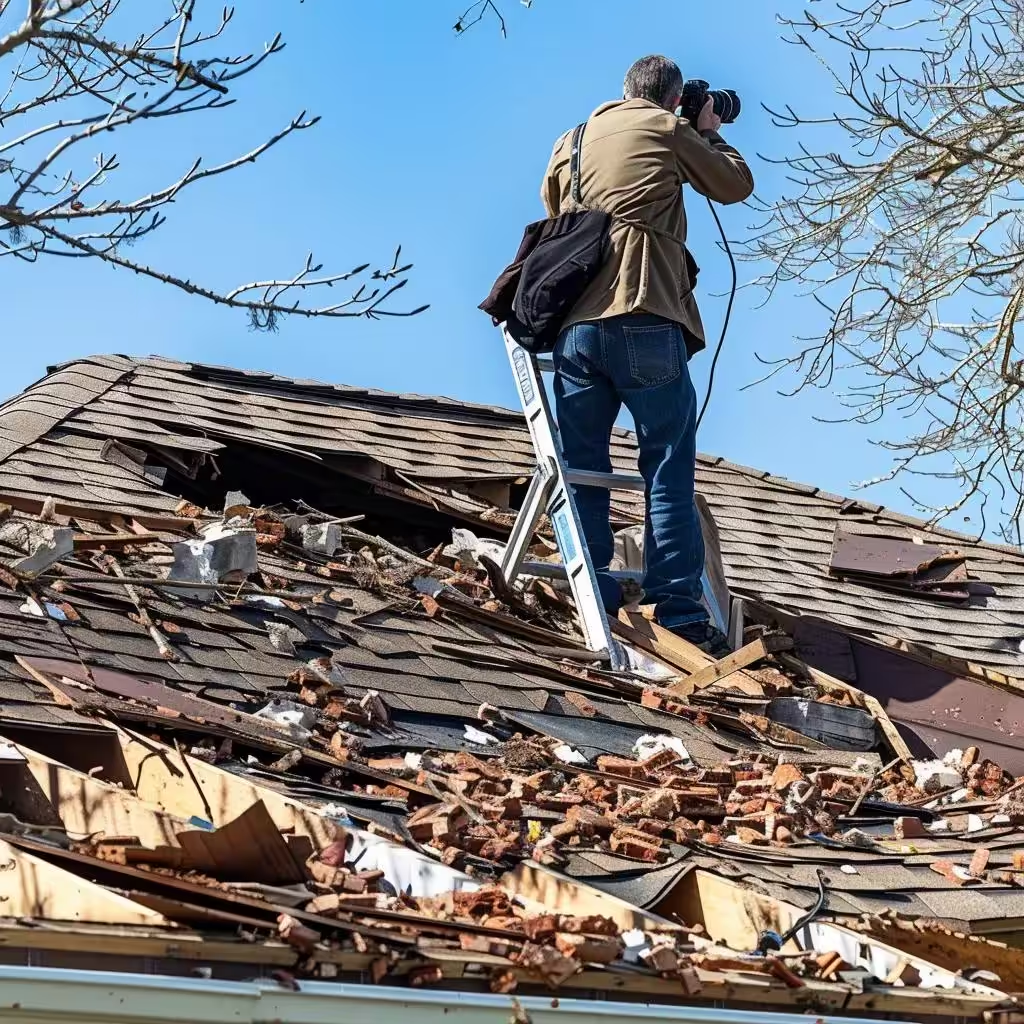
Visual evidence establishes the severity and location of hurricane property damage. High-resolution photographs and timestamped videos strengthen your claim by showing precise details.
Before creating media, note date, location, and context. After the storm, capture damage from multiple angles, focusing on structural, interior, and personal property losses.
| Entity | Attribute | Value / Example |
|---|---|---|
| Roof | Wide-angle Shot | “Full roof view showing missing shingles” |
| Interior Walls | Close-up Photo | “Water stains around window frame” |
| Flooring | Video Clip | “Room-by-room damage walkthrough” |
| Personal Belongings | Detail Photo | “Damaged electronics with serial numbers” |
| Exterior Structure | Geotag | “Geo-coordinates embedded in the file” |
Structured media files provide indisputable proof of roof damage, water intrusion, and debris fields. This level of detail directly supports repair estimates and your proof-of-loss form.
Why Are Receipts and Repair Estimates Critical for Your Claim?
Receipts and professional repair estimates document incurred expenses and projected restoration costs. They prove both the financial impact of the storm and the scope of work required to restore your property.
- Receipts verify temporary repairs (e.g., tarping, boarding).
- Repair Estimates from contractors detail labor, materials, and timelines.
- Additional Living Expense Bills show costs for hotels or rental homes.
Including these documents in your claim package increases transparency and demonstrates the necessity of each expense. Clear expense evidence promotes full compensation rather than partial payment.
What Is a Proof of Loss Form and How Do You Complete It?
A Proof of Loss is a sworn statement summarizing your claim amount and supporting documentation. Completing this form accurately is essential for claim processing and final settlement.
- Record your claim number, policy information, and date of loss.
- List each damaged property item with estimated values.
- Attach supporting documentation: receipts, photos, videos, and contractor estimates.
- Sign and notarize the declaration to validate its legal standing.
Submitting a fully completed Proof of Loss form prevents claim delays and signals your commitment to thorough documentation.
How Do You Document Different Types of Hurricane Property Damage?
Accurate damage documentation aligns each type of loss with the correct evidence, boosting your insurance claim’s credibility.
How to Document Water Damage for Hurricane Insurance Claims
Water intrusion often leads to mold and structural decay. Documenting water damage promptly preserves evidence and supports mold remediation coverage.
- Inspect ceilings, walls, and floors for discoloration and warping.
- Photograph moisture lines and pooling water at floor junctions.
- Record interior humidity readings and mold growth areas with time-stamped photos.
Capturing these details shows the causal link between the hurricane’s flooding and the resulting water damage restoration.
What Is the Best Way to Photograph and Record Roof Damage?
Roof damage from wind uplift and debris impacts affects the entire property. Proper roof documentation demonstrates the need for full roof repair or replacement.
Below is a detailed EAV table to structure your roof documentation:
| Entity | Attribute | Value / Example |
|---|---|---|
| Roof Edge | Damage Type | “Lifted shingles and exposed decking” |
| Attic | Interior Photo | “Light visible through storm-torn roof” |
| Gutter | Debris Photo | “Clogged with fallen branches” |
| Shingle Area | Close-up Photo | “Missing granules and water pooling” |
| Roof Slope | Angle Shot | “Wide view showing overall damage extent” |
This table ensures every roof section and damage type is clearly documented, supporting accurate repair estimates.
How to Capture Structural Damage and Debris for Your Claim
Structural damage affects load‐bearing walls, foundations, and framing. Recording this damage highlights safety hazards and the need for professional restoration.
- Photograph cracks in foundations, beams, and interior walls.
- Video entire property exterior to capture fallen trees and debris fields.
- Note debris locations with geotags and timestamps for precise evidence.
Thorough structural documentation builds a chain of proof from the hurricane event to the required structural repairs.
How to Inventory and Document Damaged Personal Property
Damaged personal property inventory quantifies loss and streamlines the review process. Itemize each damaged article with descriptions, values, and evidence.
- List item name, purchase date, serial number, and estimated value.
- Attach photographs showing damage details and context.
- Organize items by category (electronics, furniture, clothing) in a spreadsheet.
This granular approach ensures the insurer can quickly verify each claim item and accelerates your reimbursement.
How Should You Prepare and Submit Documentation to Your Insurance Company?
Organizing and delivering your documentation in a clear, systematic manner improves claim acceptance and expedites settlement.
What Are the Steps to File a Hurricane Insurance Claim Successfully?
Filing a hurricane claim involves a series of organized actions that reduce errors and speed processing.
- Contact your insurance agent to report the loss and obtain a claim number.
- Complete the Proof of Loss form and compile all essential documents.
- Submit media files, receipts, and estimates via email or your insurer’s portal.
- Follow up to confirm receipt and address any additional information requests.
Executing these steps in order promotes complete file submissions and timely claim reviews.
How to Communicate Effectively with Your Insurance Adjuster
Clear, documented communication with your adjuster builds trust and prevents misinterpretation of your evidence.
- Maintain a written log of phone calls with dates, names, and discussion points.
- Share organized folders or links to your documentation, labeled by damage type.
- Clarify any coverage questions in writing to create a verifiable record.
Consistent, transparent dialogue ensures your adjuster understands the full scope of your loss.
When and How Should You Make Temporary Repairs and Document Them?
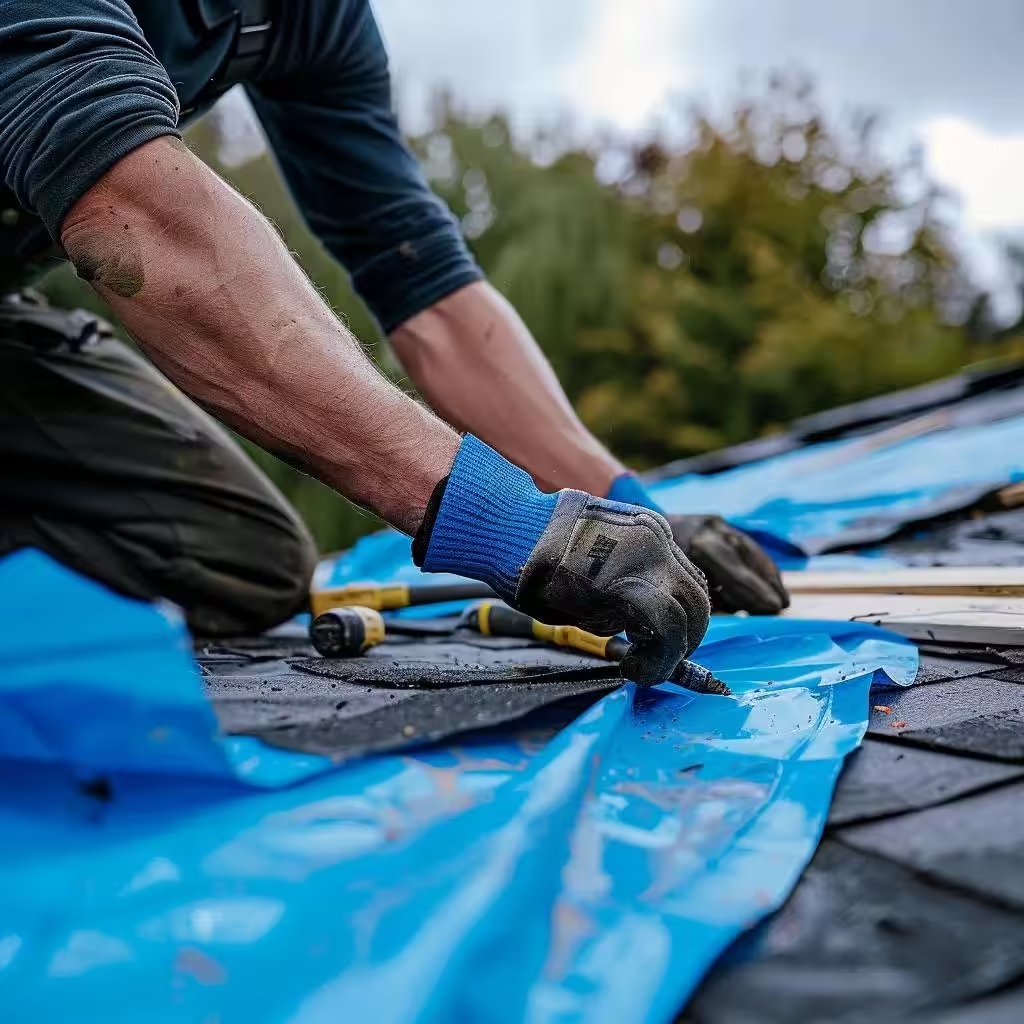
Temporary repairs prevent further damage and demonstrate mitigation efforts required by most insurance policies.
Before repair work, photograph pre-repair damage. After completion:
- Take photos of tarps, boards, or sealed areas.
- Save receipts for materials and labor.
- Log repair dates and contractor details in a simple spreadsheet.
This evidence shows you acted responsibly to limit your loss while awaiting permanent repairs.
How to Organize and Submit Your Documentation for Maximum Claim Approval
A well-structured claim folder or digital directory presents your evidence logically and makes adjuster review efficient.
- Create folders by category: Policy Docs, Photos & Videos, Receipts, Estimates, Proof of Loss.
- Use clear file names with dates and descriptions (e.g., “2023-09-10_Roof_Damage_Wide.jpg”).
- Zip and upload larger files or share via secure cloud links.
A systematic submission reduces overlooked documents and reinforces the completeness of your claim.
What Are Common Challenges and How Do You Appeal a Denied Hurricane Insurance Claim?
Denied or underpaid claims often result from missing evidence or misinterpreted policy language. An effective appeal corrects these gaps.
What Are the Most Common Reasons for Claim Denial or Underpayment?
Insurance denials typically stem from documentation errors or coverage misunderstandings.
- Missing or incomplete Proof of Loss forms.
- Lack of clear photographic evidence for specific damage types.
- Policy exclusions or unmet coverage conditions (e.g., neglecting temporary repairs).
Identifying these pitfalls guides your appeal strategy and ensures you provide the missing proof.
How to Prepare an Effective Appeal for a Denied Hurricane Insurance Claim
An appeal reframes your evidence and addresses the insurer’s stated reasons for denial.
- Obtain a written denial letter and note the stated reasons.
- Collect any omitted documents—additional photos, estimates, or expert reports.
- Draft an appeal letter that references policy sections and attaches the new evidence.
- Submit via certified mail and follow up to confirm receipt.
This structured approach highlights your commitment to complete and accurate documentation.
When Should You Seek Professional Help for Your Insurance Claim?
Complex claims with structural failures, severe water intrusion, or legal disputes benefit from professional assistance.
- If your claim involves extensive mold remediation or engineering assessments.
- When underpayment exceeds 20% of your documented loss.
- If communication with your insurer stalls or becomes adversarial.
Role of Professional Help in Insurance Claims
In complex situations, such as those involving structural damage or legal disputes, seeking professional assistance can significantly benefit policyholders. Experts like public adjusters and restoration specialists can provide technical expertise and legal guidance, strengthening the claim and ensuring fair compensation.
Insurance Information Institute, “How to File an Insurance Claim” (2023)
This research reinforces the article’s advice on when to seek professional help for insurance claims.
How Can Local Charlotte, NC Homeowners Prepare for Hurricane Insurance Claims?
Regional knowledge of Charlotte’s climate and regulations enhances your preparedness and documentation accuracy.
What Are the Most Common Hurricane Damage Types in Charlotte, NC?
Charlotte properties often face the following storm impacts:
- Wind Damage – Shingle loss and broken windows from gusts over 70 mph.
- Flood Intrusion – Basement flooding and foundation seepage near rivers.
- Fallen Debris – Tree limbs damaging roofs and siding.
Recognizing these patterns helps you target your pre-storm inventory and post-storm inspections.
How Does Local Expertise Improve Your Documentation and Claim Process?
Partnering with a Charlotte-based restoration company ensures timely assessments and region-specific knowledge.
- Experts know local building codes and permit requirements for repairs.
- Rapid 24/7 emergency response limits secondary damage from water and mold.
- Local professionals provide detailed, fair repair estimates accepted by area insurers.
National Insurance Claim Specialist’s Charlotte team leverages this local expertise to support accurate documentation and maximize claim value.
What Local Resources and Regulations Affect Hurricane Insurance Claims in Charlotte?
North Carolina statutes and local agencies influence claim procedures and building approvals.
- The North Carolina Department of Insurance issues consumer bulletins on storm claims.
- Mecklenburg County requires permits for structural repairs over $30,000.
- FEMA and NFIP guidelines apply to flood coverage separate from windstorm insurance.
Awareness of these rules ensures your claim aligns with state and local requirements.
How Can You Use Technology and Structured Data to Strengthen Your Hurricane Insurance Claim?
Digital tools and structured metadata increase the trustworthiness and accessibility of your evidence.
What Are Best Practices for Using Date Stamps, Geotagging, and Cloud Storage?
Timestamp and geotag your photos and videos to prove when and where they were captured.
- Enable automatic date and location metadata on your smartphone.
- Store originals in secure cloud folders with version control.
- Share read-only links to avoid file corruption.
This digital trail creates an unbroken chain of evidence from loss occurrence to claim submission.
How Do Infographics, Checklists, and Videos Enhance Your Claim Documentation?
Multimedia elements clarify complex information and guide insurers through your evidence package.
- Infographics visually map damage types to required documents.
- Interactive checklists ensure no step is missed in your submission.
- Short videos demonstrate property-wide damage context and scope.
These aids make your file review efficient and reinforce the completeness of your documentation.
How Does Structured Data Markup Improve Insurance Claim Processing?
Embedding structured data like schema markup in digital claim portals enables quicker parsing by insurers.
- Tag file names with clear descriptors (e.g., “ImageObject,” “DateCreated”).
- Use JSON-LD for online claim forms to label attachments semantically.
- Include metadata fields for “ClaimNumber,” “LocationAffected,” and “DamageType.”
Structured data markup supports automated triage and speeds up claim validation workflows.
What Are the Key Tips for Maintaining Organized and Effective Hurricane Insurance Claim Documentation?
Ongoing record-keeping before, during, and after hurricane season ensures you’re always claim-ready.
How to Keep Track of Receipts, Estimates, and Communication Logs
A centralized log streamlines retrieval and cross-referencing of your documentation.
- Use a spreadsheet with columns for Date, DocumentType, Amount, and Notes.
- Scan physical receipts and attach them to digital entries.
- Append communication logs with adjuster call summaries and email threads.
This tracking system maintains chronological order and ensures no detail is overlooked.
What Are Common Mistakes to Avoid When Documenting Hurricane Damage?
Avoiding record-keeping errors prevents claim delays and rejections.
- Failing to date-stamp photos or videos.
- Mixing personal notes with official documents.
- Omitting contractor contact information in repair estimates.
Steering clear of these mistakes keeps your claim clear, concise, and credible.
How to Update Your Documentation After Each Hurricane Season
Regularly reviewing and refreshing your records maintains readiness for future events.
- Add new purchases and updated valuations to your home inventory.
- Replace expired estimates with current contractor quotes.
- Archive prior claims documentation in a separate “Completed Claims” folder.
Keeping your files current ensures you can act immediately when the next storm approaches.
Homeowners and business owners who follow this complete insurance claim documentation checklist reduce claim friction and improve settlement outcomes. By gathering essential policy papers, visual evidence, receipts, and professional estimates, you establish a robust proof‐of‐loss package. Organized submission, appeal strategies, local expertise, and digital enhancements further strengthen your position. For expert assistance with damage assessments, restoration work, and insurance navigation in Charlotte, NC, explore National Insurance Claim Specialist’s 24/7 storm response and documentation support services.
Frequently Asked Questions
What should I do immediately after a hurricane to prepare for my insurance claim?
Immediately after a hurricane, prioritize safety and assess your property for damage. Document any visible damage with photographs and videos, ensuring to capture the date and context. Make temporary repairs to prevent further damage, such as tarping a roof or boarding up windows, and keep receipts for these expenses. Contact your insurance agent to report the loss and obtain a claim number. This proactive approach lays the groundwork for a smoother claims process.
How can I ensure my home inventory is accurate and comprehensive?
To create an accurate home inventory, systematically document each room and its contents. List items with details such as serial numbers, purchase dates, and estimated values. Use photographs to visually support your inventory, capturing both the item and its condition. Regularly update this inventory, especially after significant purchases or changes. Consider using inventory management apps that can help organize and store this information securely, making it easily accessible when needed.
What steps should I take if my insurance claim is denied?
If your insurance claim is denied, first review the denial letter to understand the reasons provided. Gather any additional evidence that addresses these reasons, such as more detailed photographs, repair estimates, or expert opinions. Draft a formal appeal letter that clearly outlines your case and includes the new evidence. Submit this appeal promptly, and consider following up with your insurer to ensure it is being reviewed. Persistence and thorough documentation are key to a successful appeal.
How can I leverage local resources in Charlotte for my hurricane claim?
Utilizing local resources in Charlotte can significantly enhance your hurricane claim process. Engage with local restoration companies that understand regional building codes and insurance practices. They can provide accurate repair estimates and timely assessments. Additionally, familiarize yourself with local regulations and resources, such as the North Carolina Department of Insurance, which offers guidance on storm claims. Local expertise can streamline your documentation and improve your chances of a successful claim.
What technology tools can help me document my hurricane damage effectively?
Several technology tools can enhance your documentation process for hurricane damage. Use your smartphone to take timestamped photos and videos, ensuring you capture the extent of the damage. Cloud storage services allow you to organize and securely store your documentation, making it easily accessible. Consider using apps designed for home inventory management, which can help you catalog your belongings and their values. These tools create a comprehensive digital record that supports your insurance claim.
How often should I update my insurance documentation and inventory?
It’s advisable to update your insurance documentation and home inventory at least once a year or after significant changes, such as major purchases or renovations. Regularly review and refresh your records to ensure they accurately reflect your current situation. After each hurricane season, assess any new damages or repairs and adjust your documentation accordingly. Keeping your files current ensures you are always prepared for potential claims and can act quickly when needed.
What are the benefits of hiring a public adjuster for my hurricane claim?
Hiring a public adjuster can provide significant benefits when navigating a hurricane insurance claim. Public adjusters are licensed professionals who advocate on behalf of policyholders, ensuring that claims are accurately assessed and documented. They have expertise in evaluating damages, negotiating with insurance companies, and understanding policy language. This can lead to higher settlements and a smoother claims process, especially for complex cases involving extensive damage or disputes with insurers.