Best Materials for Hurricane Roofing: Top Choices for Maximum Protection and Durability

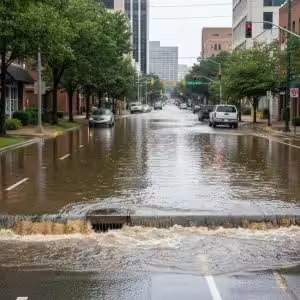
Hurricane-force winds can exceed 150 mph along the Carolinas’ coast, tearing off conventional roofing and allowing water intrusion in seconds. Homeowners and business owners in Charlotte, NC need the best materials for hurricane roofing to guard against wind uplift, flying debris, and torrential driving rain. This guide explains why robust hurricane-resistant roofing is essential in coastal areas, compares top-performing materials, examines roof design factors, outlines installation best practices, and covers post-storm restoration steps. It also highlights how National Insurance Claim Specialist provides 24/7 emergency roof tarping, comprehensive storm damage recovery, and insurance-claim support to keep your property safe and sound.
Why Is Hurricane-Resistant Roofing Essential for Charlotte, NC and Coastal Areas?
Hurricane-resistant roofing is a specialized system designed to withstand extreme wind pressures and prevent water intrusion, ensuring long-term structural integrity and reducing repair costs. Charlotte’s proximity to Gulf and Atlantic storms means roofs face intense uplift forces and wind-driven rain that standard roofing cannot repel. Investing in a wind-rated, impact-resistant roof helps homes and businesses avoid catastrophic leaks, interior damage, and expensive mold remediation. Understanding local hurricane risks leads directly into selecting the right materials and construction methods.
How Do Hurricanes Cause Wind and Water Damage to Roofs?
Hurricanes generate powerful uplift forces that pull roofing materials away from the deck while driving rain penetrates gaps, leading to leaks and rot. Roof repair is often necessary after such damage occurs.
- Wind uplift: Rapid pressure changes beneath shingles or tiles can create negative suction up to 150 psf.
- Water intrusion: Wind-driven rain can seep under loose underlayment, saturating sheathing and insulation.
- Debris impact: Flying branches and construction fragments puncture and crack roof coverings.
When wind and water combine, they undermine structural connections and accelerate secondary issues like mold growth and drywall damage.
What Are the Common Roofing Failures During Hurricanes?
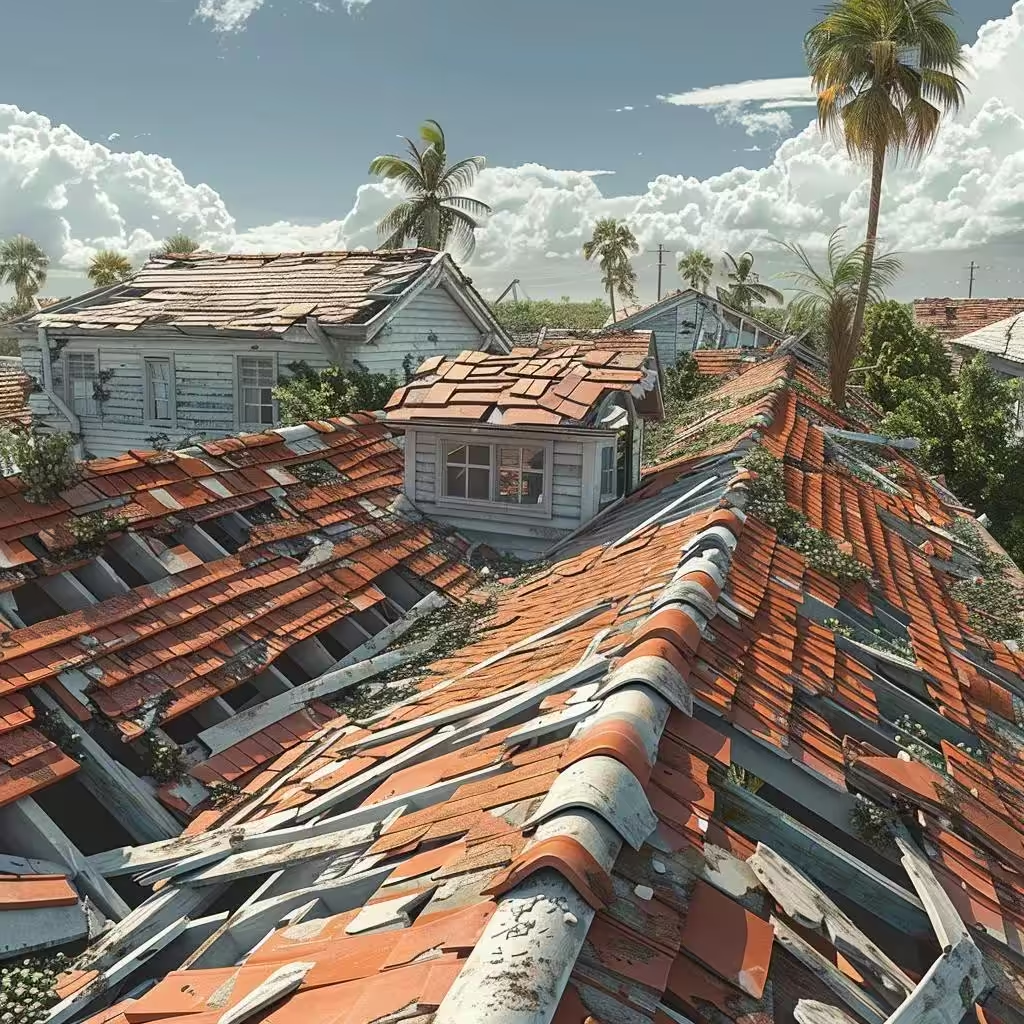
Roofing failures often stem from component weaknesses or installation errors under extreme stress:
- Shingle blow-off at eaves and ridges where fastening is minimal.
- Tile displacement when anchoring clips or mortar fail under uplift.
- Underlayment tearing, exposing sheathing to moisture.
- Rafter-to-wall connection failures without hurricane straps.
Addressing these failure modes during design and installation significantly enhances overall roof resilience against future storms.
How Do Local Building Codes and Insurance Influence Hurricane Roofing?
Local building codes in Charlotte, NC require wind-resistant roofing assemblies meeting at least 110 mph design speeds, while insurers often mandate Class 4 impact ratings for premium discounts. Newer ordinances align with FEMA guidelines to reduce claims costs and improve community resilience. Complying with these regulations not only prevents code violations but also maximizes insurance reimbursements and lowers deductibles after storm damage.
What Are the Top Roofing Materials for Hurricane Protection?
Selecting the right roofing material is critical for maximum wind and impact resistance. The table below compares key options and their performance metrics to guide material selection for hurricane-prone areas.
| Material | Wind Resistance (mph) | Impact Rating |
|---|---|---|
| Metal Roofing | 140–160 | Not Applicable |
| Clay or Concrete Tile | 100–150 | Class 3–4 |
| Impact-Resistant Shingles | 130 | Class 4 |
| Slate | 90–110 | Class 4 |
| Modified Bitumen | 120–140 | Class 4 |
These attributes frame deeper exploration into each material’s advantages and installation considerations.
Why Is Metal Roofing Considered the Gold Standard for Wind Resistance?
Metal roofing provides exceptional wind uplift resistance through interlocking panels and concealed fasteners, delivering long-term durability and minimal maintenance.
- Superior wind protection – Standing seam profiles resist up to 160 mph uplift pressures.
- Longevity – A lifespan exceeding 50 years with corrosion-resistant coatings.
- Low weight – At 50–150 lb per square, metal exerts less structural load than tile.
| Metal Type | Coating | Lifespan | Typical Wind Rating |
|---|---|---|---|
| Aluminum | PVDF | 40–60 years | 140 mph |
| Galvalume Steel | Zinc-Aluminum | 50 years | 160 mph |
| Copper | Patina | 70+ years | 150 mph |
Wind Resistance of Metal Roofing
Metal roofing, particularly standing seam profiles, is known for its exceptional wind resistance due to interlocking panels and concealed fasteners. These features allow metal roofs to withstand high wind uplift pressures, providing long-term durability and minimal maintenance. Different types of metal, such as aluminum, galvalume steel, and copper, offer varying lifespans and wind resistance capabilities.
This supports the article’s claim that metal roofing is the “gold standard” for wind resistance.
Choosing metal roofing aligns with code requirements and investor priorities for resilient, long-lasting structures.
How Do Tile Roofs (Clay, Concrete, Composite) Perform in Hurricane Zones?
Tile roofs resist wind and impacts through their mass and secure anchoring systems, offering durable protection when installed correctly. Roof repair services can ensure that your tile roof maintains its integrity and longevity.
- Clay tiles weigh 900–1,100 lb per square, anchoring firmly but requiring strong framing.
- Concrete tiles deliver similar resistance at 1,000–1,200 lb per square, often rated for 130 mph winds.
- Composite tiles mimic clay durability at 600–800 lb per square with corrosion-resistant understructures.
Tile’s inherent weight and interlocking design slow wind uplift, though proper clip installation and underlayment are essential to prevent water damage under severe conditions.
What Makes Impact-Resistant Asphalt Shingles a Cost-Effective Hurricane Solution?
Impact-resistant asphalt shingles combine affordability with tested performance under flying debris and high winds, delivering Class 4 protection at a fraction of tile or metal costs. roofing
- Advanced fiberglass matting resists shingle tears and splits.
- Granule bonding techniques reduce erosion from hail and wind abrasion.
- Compatible with standard roof pitches and installation methods.
Installing these shingles with code-compliant fastening methods achieves up to 130 mph wind resistance and earns insurance credits for storm-prone regions.
Impact Resistance of Roofing Materials
Impact-resistant asphalt shingles are a cost-effective solution for hurricane protection, combining affordability with tested performance against flying debris and high winds. These shingles often feature advanced fiberglass matting and granule bonding techniques to resist tears, splits, and erosion. They can achieve a Class 4 impact rating, which can lead to insurance credits in storm-prone regions.
This citation supports the article’s discussion of impact-resistant shingles and their benefits.
Which Other Roofing Materials Offer Hurricane Resilience?
Beyond metal, tile, and asphalt, specialized options can enhance storm protection in specific contexts: storm damage restoration.
- Slate: Natural stone tiles rated Class 4 for impact but heavier and costlier.
- Modified bitumen: Built-up membranes with reinforced layers that resist up to 140 mph winds.
- Synthetic underlayments: Self-adhered membranes that seal edges and penetrations against wind-driven rain.
Integrating these materials into a full roofing assembly fortifies every layer against the combined forces of wind and water.
How Does Roof Design Affect Hurricane Resistance?
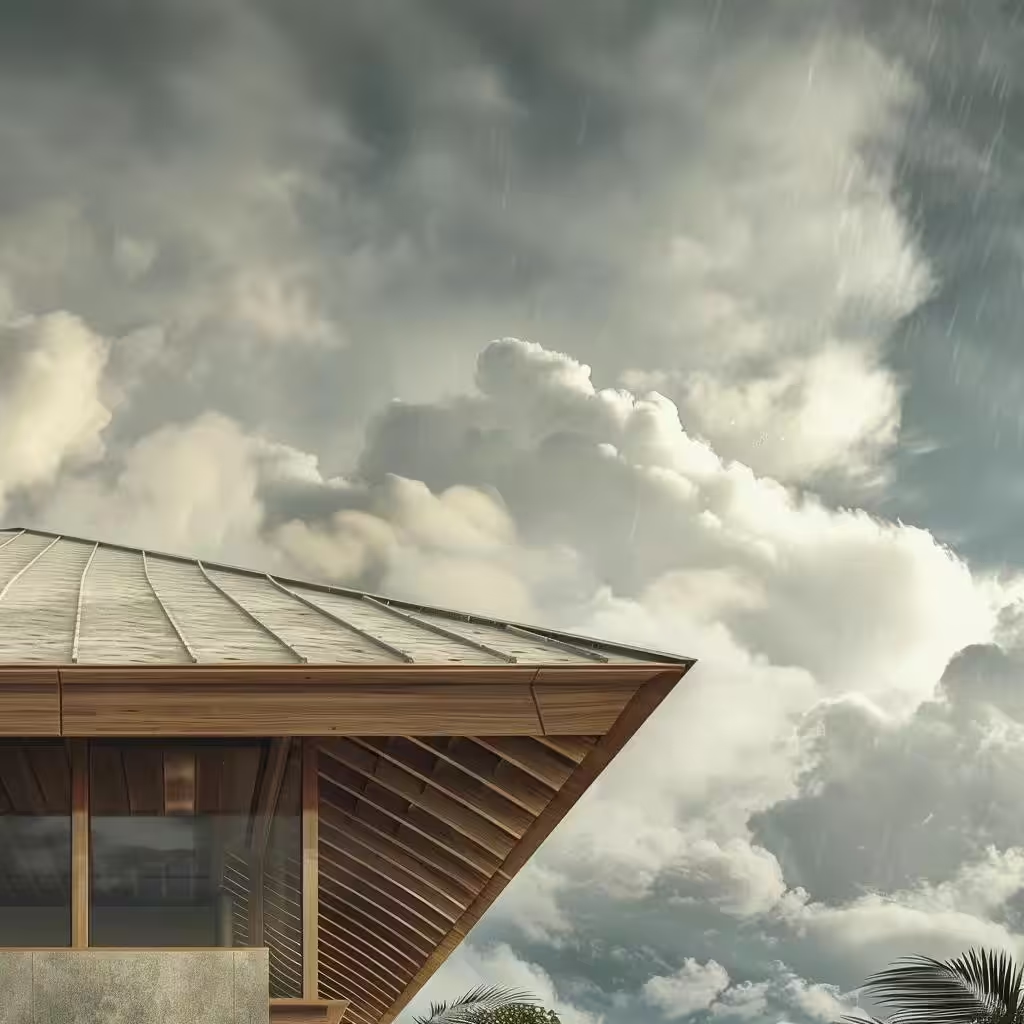
Effective hurricane-resistant roofing merges material performance with aerodynamic design and structural reinforcement to reduce uplift and deflection.
Why Are Hip Roofs the Best Shape for High Wind Protection?
Hip roofs provide optimal wind deflection by sloping on all four sides, dissipating pressure and minimizing uplift at eaves and ridges. storm damage restoration
- Wind flows smoothly over uniform slopes, reducing vortex formation.
- Four-side slope balance lateral forces, lowering stress on individual panels.
- Ridge caps and hip irons further secure connections against extreme gusts.
This aerodynamic benefit integrates seamlessly with metal panels or interlocking tiles to create one of the strongest roof forms for hurricane zones.
What Role Do Roof Pitch and Overhang Play in Storm Durability?
Moderate roof pitches (4:12 to 6:12) balance uplift reduction and water runoff efficiency, while minimal overhangs prevent lever-action forces on eaves.
- Shallow pitches reduce wind pressure areas beneath tiles or shingles.
- Proper drainage angles shed water quickly, avoiding ponding during heavy rain.
- Overhangs less than 12 inches limit lever arm torque on roof edge connections.
Optimizing pitch and eave length works in tandem with high-performance materials to maintain weatherproof sealing under duress.
How Do Hurricane Straps and Clips Reinforce Roof Structures?
Hurricane straps are galvanized steel connectors that tie rafters or trusses directly to wall plates, ensuring the entire roof structure resists uplift as a unified system. For more information on related services, visit storm damage restoration.
- Straps secure rafter tails to top plates with high-strength nails or screws.
- Roof-to-wall clips attach sheathing and framing for continuous load transfer.
- Proper spacing and fastening patterns meet 180 mph uplift requirements when installed per code.
Importance of Hurricane Straps and Clips
Hurricane straps and clips are crucial for reinforcing roof structures by directly connecting rafters or trusses to wall plates. These connectors ensure the entire roof resists uplift as a unified system, preventing roof assembly separation during peak gusts. Proper spacing and fastening patterns are essential to meet wind uplift requirements.
This citation reinforces the article’s emphasis on the importance of hurricane straps and clips in roof construction.
Reinforcing connections at every structural junction prevents roof assembly separation during peak gusts. Roof repair is essential for maintaining the integrity.
Why Is Proper Underlayment Critical for Water and Wind Protection?
Synthetic and self-adhered underlayments seal roof decks and valleys against wind-driven rain, acting as a watertight barrier beneath outer coverings.
- Synthetic fabrics resist tearing under uplift and walking traffic.
- Self-adhered membranes bond directly to decking, closing gaps around fasteners.
- Secondary water shedding reduces interior moisture intrusion even if outer materials fail.
A robust underlayment system provides insurance against unexpected breaches during severe weather events.
What Are the Best Practices for Installing Hurricane-Resistant Roofing Materials?
Installation quality is as important as material selection in achieving certified wind and impact ratings. Follow these best practices for each roofing type.
How Should Metal Roofs Be Installed for Maximum Wind Resistance?
Use concealed-fastener standing seam systems with continuous clips and high-strength screws to anchor panels to the deck.
- Lay synthetic underlayment and metal drip edge along eaves and rakes.
- Install continuous seam clips 12–16 inches on center.
- Engage edges of each panel with snap-lock seams requiring no exposed fasteners.
This method creates a unified metal envelope that resists uplift and eliminates vulnerable fastener holes.
What Are the Key Installation Tips for Tile Roofing in Hurricane Areas?
Secure tiles with manufacturer-approved clips or straps, and install a reinforced underlayment system before setting heavy clay or concrete units.
- Apply self-adhered underlayment in valleys and eaves.
- Fasten each tile with corrosion-resistant clips and stainless-steel screws.
- Add bead mortar or foam closures at ridges to prevent wind infiltration.
Proper fastening patterns and underlayment layers ensure tiles remain locked in place during extreme uplift events.
How Does Nailing vs. Stapling Impact Asphalt Shingle Performance?
Nailing provides higher pull-out strength and consistent embedment depth compared to stapling, directly improving wind uplift resistance.
- Use 12-gauge steel ring-shank roofing nails with 1 in. heads.
- Fasten four nails per standard shingle and six nails for high-wind applications.
- Align nails in the manufacturer’s designated nail zone above the seal strip.
Correct nailing practices prevent shingle blow-off and maintain the Class 4 impact rating under hurricane winds.
What Should Homeowners Do After Hurricane Roof Damage?
Assessing and stabilizing a damaged roof quickly prevents secondary damage, mold growth, and structural decay.
How Does Emergency Roof Tarping Protect Your Home?
Temporary roof tarping provides an immediate water barrier that prevents leaks from exacerbating interior damage and mold development. For professional assistance, visit our service.
- Cover exposed sheathing with heavy-duty polyethylene tarps.
- Secure edges with 2×4 wood battens and screws through the roof deck.
- Apply sealant at penetrations and tarp overlaps to block wind-driven rain.
Rapid tarping limits interior water exposure, preserving insulation and finishes until permanent repairs begin.
When Is Roof Repair Enough, and When Is Replacement Necessary?
Minor shingle loss or single-area leaks may be repairable, while widespread damage to decking, underlayment, or structural connections typically necessitates full replacement.
- Repair when damage is confined to less than 25% of surface area and deck integrity remains intact.
- Replace when multiple components—shingles, underlayment, fasteners—compromise waterproofing or wind ratings.
- Consult certified inspectors for professional damage assessment.
Understanding repair thresholds ensures cost-effective solutions without risking future failures.
How Can National Insurance Claim Specialist Help With Insurance Claims for Roof Damage?
National Insurance Claim Specialist documents damage with detailed reports and photographs, preparing insurance submissions that maximize claim approval and minimize homeowner out-of-pocket costs. home damage restoration
- Provide 24/7 emergency response to secure your property.
- Offer full damage assessments, cost estimates, and claim forms.
- Advocate on your behalf to negotiate fair settlements with insurers.
Expert claim assistance removes administrative burdens and expedites funds for timely roof restoration.
What Are Common Secondary Issues After Roof Damage, Like Mold and Water Intrusion?
Unaddressed roof leaks often lead to mold growth, structural rot, and HVAC inefficiency as moisture accumulates in attics and walls.
- Mold can spread within 24–48 hours in damp insulation and wood framing.
- Prolonged water exposure weakens sheathing and framing connections.
- Insulation saturation reduces energy efficiency and indoor comfort.
Timely roof repair and interior drying mitigate these secondary hazards and safeguard occupant health.
Why Choose National Insurance Claim Specialist for Hurricane Roofing Solutions in Charlotte, NC?
National Insurance Claim Specialist combines local knowledge, rapid response, and comprehensive storm damage capabilities to restore resilience after every hurricane event.
What Emergency Roof Repair Services Does NICS Offer 24/7?
NICS crews deploy within hours to tarp roofs, board up openings, and stabilize structures to prevent escalating interior damage. Using commercial-grade tarps and hurricane-rated fasteners, teams secure your roof until permanent repairs can be scheduled.
How Does NICS Manage Comprehensive Storm Damage Restoration?
From initial inspection through structural repairs and final finish work, National Insurance Claim Specialist oversees every step:
- Damage assessment and mitigation plan.
- Structural deck and framing repairs.
- Material replacement with code-compliant, wind-rated products.
- Interior restoration and final quality inspection.
This end-to-end process ensures your roof and property return to pre-loss condition with maximum durability.
How Does NICS Support Homeowners Through Insurance Claims?
National Insurance Claim Specialist partners with adjusters to submit detailed documentation, cost breakdowns, and compliance information, reducing claim disputes and accelerating payouts. Their insurance specialists guide clients through policy terms, coverage limits, and deductible options for a smoother recovery experience.
What Are the Most Frequently Asked Questions About Hurricane Roofing?
Homeowners often seek clarity on material performance, wind ratings, roof shapes, reinforcement methods, and maintenance intervals. Common concerns include which roofing type best withstands 150 mph winds, how hip roofs compare to gable profiles, the function of hurricane straps, and recommended inspection schedules. Understanding these key topics helps property owners make informed decisions that safeguard homes and investments for years to come.
Choosing the right combination of materials, design, and professional installation prevents most hurricane-related roofing failures and supports rapid recovery with expert restoration services.
Investing in hurricane-resistant roofing materials like metal panels, impact-resistant shingles, and interlocking tiles, paired with robust design features and skilled installation, provides peace of mind when storms strike. With National Insurance Claim Specialist’s local expertise in Charlotte, NC, and full-service storm damage solutions, property owners can protect their roofs against the next hurricane season and ensure swift, insured recoveries whenever damage occurs.