Tornadoes rip through Charlotte faster than most people can react, destroying homes and shattering storefronts in a matter of minutes. Here is something that might shock you. As many as 1,200 tornadoes touch down in the United States each year, and North Carolina ranks in the top 10 states for tornado risk. Most people think recovery is all about patching roofs and sweeping up debris. The truth is, what you do in the first hour after the storm can make or break your entire insurance claim, your safety, and even your legal rights.
Table of Contents
- Immediate Steps After Tornado Damage
- Restoring Homes And Businesses Safely
- Handling Insurance Claims For Tornado Damage
- Legal And Professional Help In Recovery
Quick Summary
| Takeaway | Explanation |
|---|---|
| Prioritize Personal Safety | Ensure all family members are unharmed and move carefully through damaged areas, looking out for hazards like gas leaks and fallen power lines. |
| Document Damage for Insurance | Take comprehensive photographs and videos of destruction. Create a detailed inventory of all damaged property to support your insurance claims. |
| Engage Professionals for Assessment | Hire licensed engineers or certified inspectors to carry out a thorough structural assessment and identify necessary repairs to ensure long-term safety and compliance. |
| Navigate Insurance Claims Methodically | Prepare a detailed timeline of events and all relevant documentation to enhance your claim process, clarifying any ambiguities with your insurance provider. |
| Consider Legal and Professional Assistance | Engage public insurance adjusters and disaster recovery attorneys to advocate for your rights and maximize your recovery outcomes through expert negotiation and legal support. |
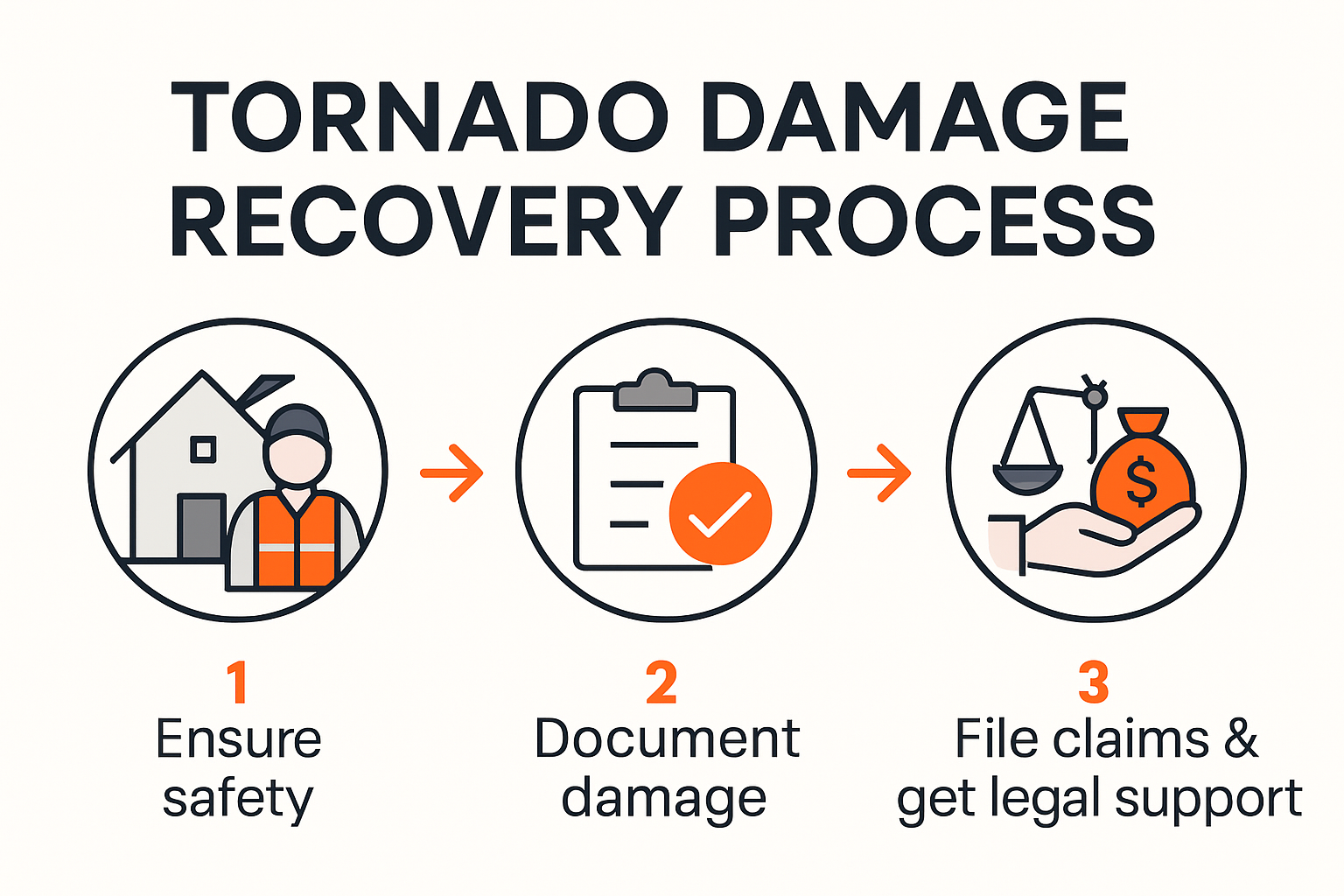
Immediate Steps After Tornado Damage
Tornado damage can be overwhelming and disorienting. Your immediate actions in the critical moments and hours following a tornado can significantly impact your safety, property preservation, and insurance claim process.
Personal Safety First
Immediate personal safety is paramount after a tornado strikes. Before assessing property damage, conduct a rapid self and family safety check. According to the Centers for Disease Control and Prevention, you should first ensure all family members are unharmed and accounted for. If anyone is injured, call emergency medical services immediately.
Carefully exit damaged structures, watching for potential hazards like unstable floors, exposed electrical wires, or gas leaks. Occupational Safety and Health Administration recommends wearing sturdy shoes, long sleeves, and protective gloves when navigating debris-filled areas. Avoid walking through areas with fallen power lines or potential electrical hazards.
Emergency Documentation and Communication
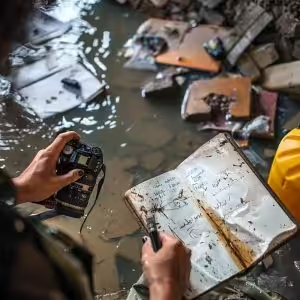
Documenting tornado damage becomes crucial for insurance claims and potential recovery assistance. Take comprehensive photographs and videos of the destruction from multiple angles, capturing both structural damage and personal property losses. These visual records serve as critical evidence for insurance adjusters and potential disaster relief claims.
Contact your insurance provider immediately to initiate the claims process. Many insurance companies have dedicated emergency hotlines for disaster-related claims. Be prepared to provide initial damage assessments and documentation. If phone lines are congested, use email or the insurance company’s mobile app to start your claim.
Temporary Protection and Mitigation
Prevent additional damage by taking immediate protective measures. Cover broken windows with plywood or tarps to prevent water intrusion. If roof damage is present, use heavy-duty plastic sheeting to create temporary waterproof barriers. National Weather Service emphasizes that these interim protective steps can significantly reduce secondary damage from exposure.
Locate and secure important documents like identification, insurance policies, and medical records. Store these in a waterproof container or digital backup. If possible, move valuable undamaged items to a secure location to prevent potential further loss.
For residents seeking comprehensive support through this challenging process, learn more about our disaster recovery guidance.
Remember, while property can be repaired or replaced, human life cannot. Prioritize safety, remain calm, and systematically address the aftermath of tornado damage with careful, methodical steps.
Restoring Homes and Businesses Safely
Restoring your property after tornado damage requires a strategic and methodical approach that prioritizes safety, structural integrity, and comprehensive recovery. Understanding the complex process of rebuilding involves multiple critical considerations that extend far beyond simple repairs.
Structural Assessment and Professional Evaluation
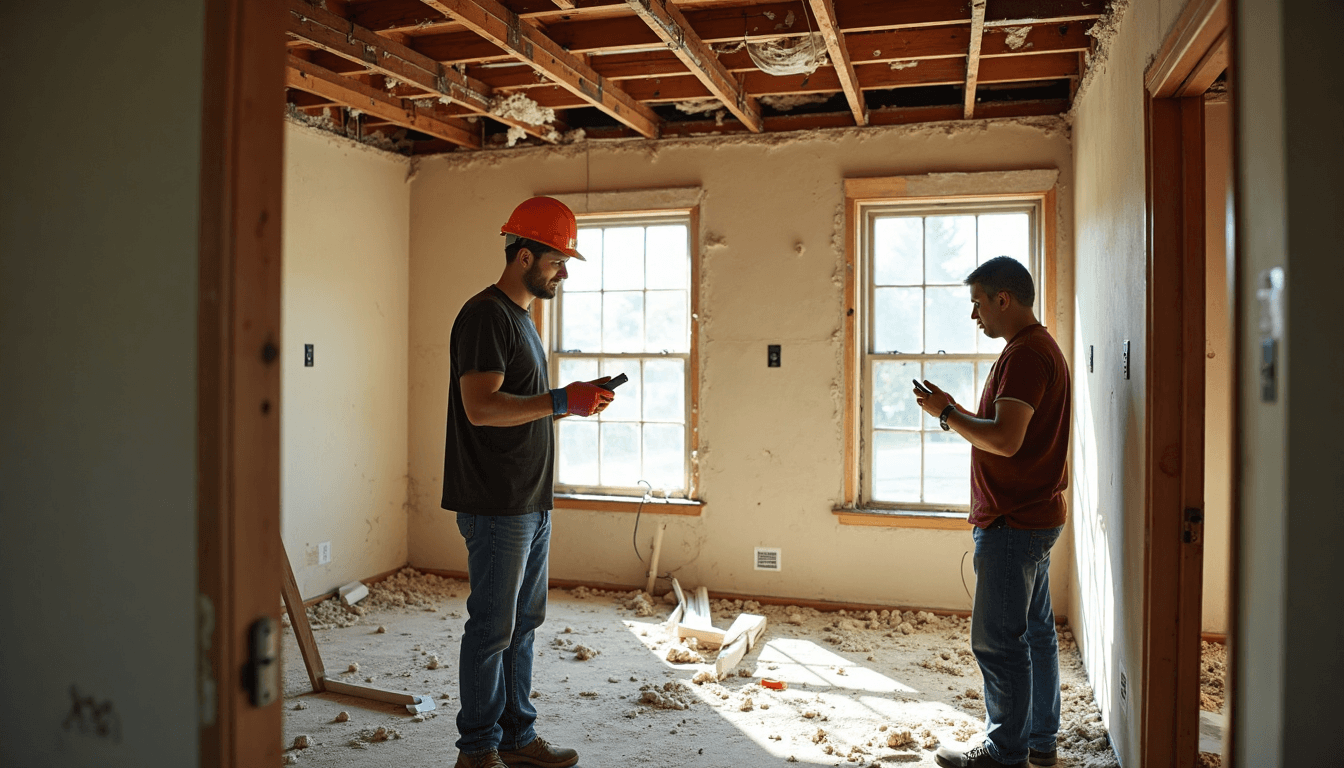
Before commencing any restoration efforts, a comprehensive professional structural assessment is crucial. Occupational Safety and Health Administration guidelines emphasize the importance of engaging licensed engineers and certified inspectors who can thoroughly evaluate potential risks. These professionals will examine critical structural elements including foundation stability, roof integrity, wall strength, and potential hidden damage that might compromise long-term building safety.
The assessment should meticulously document every aspect of tornado damage, creating a detailed report that serves multiple purposes. This documentation becomes essential for insurance claims, potential disaster relief applications, and developing a precise restoration strategy. Professionals will identify whether partial reconstruction or complete rebuilding represents the most prudent approach.
Environmental and Health Hazard Mitigation
Tornado damage often introduces significant environmental and health risks that require immediate professional intervention. Environmental Protection Agency recommendations highlight the critical need for thorough contamination assessment and remediation. Water damage can quickly lead to mold growth, structural deterioration, and potential health complications if not addressed promptly.
Key mitigation strategies include comprehensive water extraction, thorough drying processes, sanitization of affected areas, and potential hazardous material removal. Professionals use specialized equipment to detect moisture levels, identify potential mold growth zones, and implement targeted remediation techniques. For historic or older structures, careful preservation techniques become paramount to maintain architectural integrity while ensuring safety.
Phased Restoration and Professional Coordination
Successful property restoration after tornado damage requires coordinated efforts across multiple professional domains. Learn more about our comprehensive restoration approach to understand the intricate process of rebuilding. This involves seamless collaboration between structural engineers, insurance adjusters, restoration specialists, and local building authorities.
The restoration process typically follows a structured phasing approach. Initial stages focus on emergency stabilization and preventing further damage. Subsequent phases involve detailed repairs, structural reinforcement, and potential upgrades to improve future disaster resilience. Professionals will help property owners navigate complex insurance claims, secure necessary permits, and develop a transparent restoration timeline.
Understanding that each tornado damage scenario presents unique challenges, property owners must remain flexible and patient. Professional restoration teams will provide guidance, technical expertise, and compassionate support throughout the rebuilding journey. The goal extends beyond physical reconstruction to helping individuals and businesses recover their sense of security and normalcy.
Here is a table summarizing the typical phases, key actions, and responsible professionals involved in the tornado damage restoration process:
| Restoration Phase | Key Actions | Responsible Professionals |
|---|---|---|
| Emergency Stabilization | Secure structure, prevent further damage, tarping | Restoration specialists, structural engineers |
| Damage Assessment & Documentation | Inspect, photograph, and report all damage | Certified inspectors, engineers |
| Mitigation | Water extraction, mold prevention, debris removal | Environmental specialists, contractors |
| Repair & Rebuilding | Structural repairs, code compliance upgrades | Licensed contractors, engineers |
| Final Inspection | Safety checks, restoration assessment | Local building authorities, inspectors |
Handling Insurance Claims for Tornado Damage
Navigating insurance claims after tornado damage requires strategic preparation, meticulous documentation, and a comprehensive understanding of your policy’s specific provisions. The complexity of tornado damage recovery demands a systematic approach to ensure maximum compensation and minimal financial strain.
Initial Claim Preparation and Documentation
Documenting tornado damage is the cornerstone of a successful insurance claim. According to the North Carolina Department of Insurance, property owners should create a comprehensive inventory of all damaged property. This inventory should include detailed descriptions, estimated values, and photographic evidence of each damaged item.
Prepare a chronological record of the tornado’s impact, including the exact date and time of the event. Collect all relevant documentation such as police reports, weather service records, and professional damage assessment reports. Federal Emergency Management Agency recommends maintaining a detailed file that includes receipts for emergency repairs, temporary housing expenses, and any immediate mitigation efforts undertaken to prevent further damage.
Navigating Policy Complexities
Understanding your insurance policy’s specific coverage is crucial. Most standard homeowners and business insurance policies include tornado damage, but the extent of coverage can vary significantly. Learn more about maximizing your insurance claim process to ensure you receive comprehensive compensation.
Carefully review your policy’s provisions for wind damage, structural repairs, personal property replacement, and additional living expenses. Pay close attention to deductibles, especially those specific to wind or hurricane damage. Some policies have separate, higher deductibles for tornado-related claims. Contact your insurance agent to clarify any ambiguous terms and understand the full scope of your coverage.
Professional Support and Claim Negotiation
Insurance claims for tornado damage can be complex and emotionally challenging. Consider engaging a public insurance adjuster who can professionally assess the damage and negotiate on your behalf. These professionals understand the intricate details of insurance policies and can help maximize your claim’s potential.
Be prepared for the claims process to take time. Insurance companies often face numerous claims following a widespread disaster. Maintain open communication with your insurance provider, promptly respond to all requests for information, and keep detailed records of all interactions.
Document all communication with insurance representatives, including names, dates, and summaries of conversations. If you encounter challenges or feel the initial settlement offer is insufficient, do not hesitate to challenge the assessment. Seek independent professional evaluations of the damage to support your claim.
Remember that the goal is not just financial compensation but comprehensive recovery. Patience, thorough documentation, and a proactive approach will help you navigate the complex process of tornado damage insurance claims. Each step you take brings you closer to rebuilding and restoring your property to its pre-tornado condition.
Here’s a table outlining the key insurance claim steps and associated documentation recommended during the tornado recovery process:
| Step | Description | Example Documentation |
|---|---|---|
| Report Damage | Contact insurance provider immediately | Claim initiation confirmation |
| Inventory and Assess Losses | Create list of damaged property and value estimates | Photos, videos, itemized inventory |
| Gather External Records | Collect police, weather, and professional reports | Police/whether reports, damage assessments |
| Document Expenses | Record emergency repairs, temporary housing, mitigation | Receipts, invoices, housing agreements |
| Communicate and Negotiate | Stay in touch, respond to requests, negotiate settlement | Email logs, call records, correspondence |
Legal and Professional Help in Recovery
Tornado damage recovery extends beyond physical restoration and insurance claims. Navigating the complex landscape of legal and professional support becomes crucial for property owners seeking comprehensive recovery and protection of their rights.
Understanding Legal Resources and Support
After a tornado, legal assistance can be instrumental in protecting your interests. The North Carolina Bar Association offers specialized disaster legal services designed to support tornado survivors. These services typically include guidance on insurance claim disputes, contractor negotiations, and potential legal challenges arising from property damage.
Legal Aid of North Carolina provides critical support for individuals facing complex legal challenges after natural disasters. Their services often include helping residents understand their rights, assisting with FEMA appeals, resolving insurance claim conflicts, and addressing potential disputes with contractors or restoration companies.
Professional Advocacy and Claim Representation
Engaging professional advocates can significantly improve your recovery outcomes. Public insurance adjusters specialize in evaluating property damage, documenting losses, and negotiating with insurance companies to ensure fair compensation. These professionals understand the intricate details of insurance policies and can often secure more comprehensive settlements than individual property owners might achieve independently.
Attorneys specializing in disaster recovery and insurance law can provide additional layers of protection. They can review insurance contracts, challenge inadequate settlement offers, and represent your interests in potential litigation. Learn more about navigating professional recovery services to understand the full spectrum of support available.
Comprehensive Recovery Strategy
Developing a holistic recovery strategy requires coordination between legal professionals, insurance experts, and restoration specialists. This multidisciplinary approach ensures that every aspect of tornado damage recovery is thoroughly addressed. Consider assembling a professional team that includes:
- A public insurance adjuster to maximize your claim
- A disaster recovery attorney to protect your legal rights
- Certified restoration professionals with experience in tornado damage
- Financial advisors familiar with disaster recovery funding
Maintain detailed documentation of all interactions, communications, and professional assessments. This comprehensive record becomes crucial if legal disputes arise or additional compensation becomes necessary.
Remember that professional help is not just about financial recovery but also about restoring your sense of security and peace of mind. Each professional you engage brings specialized expertise designed to guide you through the complex tornado damage recovery process, ensuring you receive the support and compensation you deserve.
Frequently Asked Questions
What should I do immediately after a tornado in Charlotte, NC?
You should prioritize personal safety by checking for injuries and avoiding damaged areas. Document the damage thoroughly with photos and videos, and contact your insurance provider to start the claims process.
How can I effectively document tornado damage for my insurance claim?
Take comprehensive photographs and videos from multiple angles, create a detailed inventory of damaged items, and keep all related records, including receipts for emergency repairs.
Do I need a professional for structural assessments after tornado damage?
Yes, engaging licensed engineers or certified inspectors for a professional evaluation is essential. They can assess structural integrity and identify necessary repairs to ensure safety and compliance.
How can legal assistance help with tornado recovery?
Legal professionals can guide you through insurance disputes, contractor negotiations, and help address potential legal challenges. They ensure that your rights are protected and that you receive fair compensation.
Regain Control and Rebuild Stronger After Tornado Damage
When the storm passes and you are left staring at what remains of your home or business, it is hard to know where to start. This guide has shown that what you do in those first hours matters for your safety, your insurance claim, and the full scope of your recovery. If you are worried about navigating complex insurance details, documenting damage, or finding a service you can trust for full restoration, you are not alone. Many in Charlotte share your frustration with slow insurance responses and the overwhelming stress of getting a fair settlement after tornado damage.
Let National Insurance Claim Specialist (NICS) remove the uncertainty. As a licensed general contracting firm, we handle disaster recovery, insurance claims, and storm restoration every step of the way. Our team knows how to fight for the compensation you deserve while restoring your property quickly and safely. If you want to maximize your claim, avoid paperwork headaches, and bring your property back to pre-storm standards, start your recovery journey with NICS. Ready to protect your rights and peace of mind? Contact us now for personalized, expert help. Your recovery is too important to wait.
Recommended
- Charlotte Restoration: Find Top Disaster Recovery Services
- Storm Damage Repair Costs: What to Expect in 2025 – Fire Damage Repair and Water Damage Repair Charlotte NC
- Patience Pays Off: How Long to Claim Hail Damage on Your Roof – Fire Damage Repair and Water Damage Repair Charlotte NC
- Expert Fire Damage Restoration Services – Fire Damage Repair and Water Damage Repair Charlotte NC
- Mastering the Claim Process: How to File for Roof Damage – Fire Damage Repair and Water Damage Repair Charlotte NC
- Rebuilding Lives: Understanding the Significance of Restoration Services After a Disaster – Fire Damage Repair and Water Damage Repair Charlotte NC