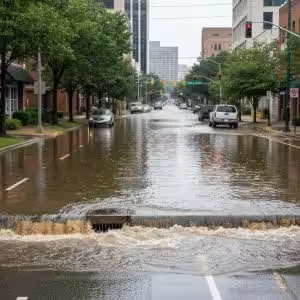
Storms are shaking up the property market in Charlotte in a way most homeowners never expected. Property values can drop by as much as 30% after a major storm, and insurance headaches often make things even worse. Yet, some neighborhoods are actually turning these challenges into opportunities for long term resilience and smarter investments. Here’s what most people are missing about how storms are reshaping property risk and value in 2025.
Table of Contents
- How Storms Affect Property Value In Charlotte
- Common Types Of Storm Damage In North Carolina
- Insurance And Legal Concerns For Property Owners
- Preventive Steps To Minimize Storm Impact
Quick Summary
| Takeaway | Explanation |
|---|---|
| Storms Decrease Property Values | Property values in Charlotte can decline by 10% to 30% as a result of storm damage, affecting homeowner equity and marketability. |
| Insurance Challenges | After storms, insurance premiums may increase, and properties with a history of storm damage may face coverage restrictions, complicating recovery efforts. |
| Invest in Resilience Strategies | Homeowners should consider investing in structural reinforcements and improved water management systems to enhance property resilience and protect against future storm impacts. |
| Document Damage Thoroughly | Maintaining detailed records of storm damage, including photos and assessment reports, is essential for effectively negotiating with insurance providers and pursuing claims. |
| Preparedness is Key | Developing a comprehensive emergency response plan that includes communication protocols and technological protections can significantly reduce storm-related damage risks. |
How Storms Affect Property Value in Charlotte
Storms in Charlotte create significant financial challenges for property owners, dramatically impacting real estate values through multiple complex mechanisms. The region’s vulnerability to severe weather events translates into substantial economic risks that extend far beyond immediate structural damage.
Direct Storm Impact on Property Valuation
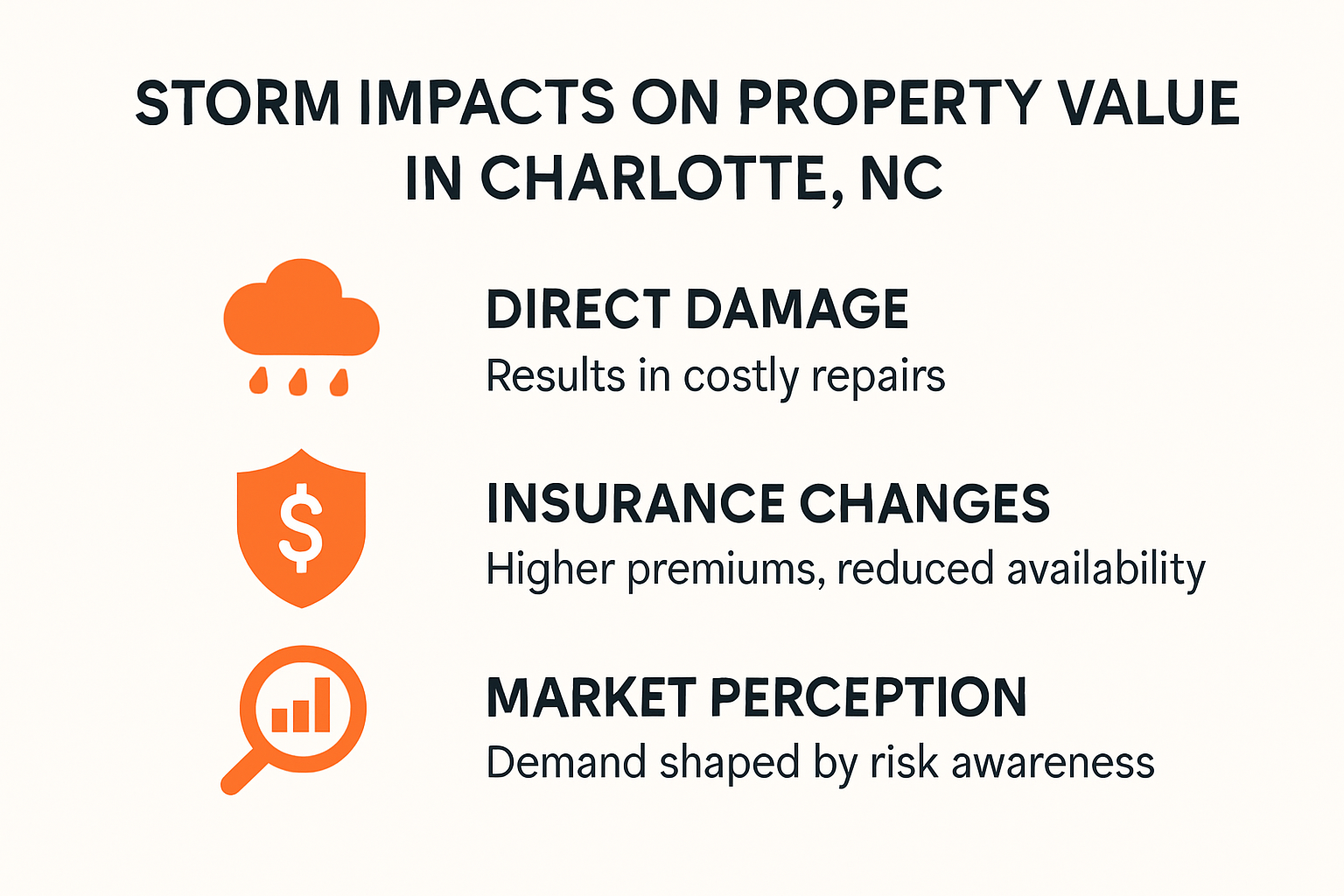
Property values in Charlotte experience immediate and long term devaluation following severe storm events. Research from the University of North Carolina at Chapel Hill estimated potential financial risks approaching $562 million from hurricane related damages, demonstrating the profound economic consequences of storm events.
When storms strike, property assessments can drop dramatically. Repeated storm damage creates a compounding effect where insurance premiums increase, potential buyers become hesitant, and the overall marketability of properties diminishes. Homes in frequently impacted zones might see value reductions ranging from 10% to 30% depending on the severity and frequency of storm events.
Insurance and Market Perception Challenges
Insurance dynamics play a critical role in property valuation after storm events. Insurers reassess risk profiles for specific geographic areas, which can lead to higher premiums or even coverage restrictions. Charlotte Mecklenburg Storm Water Services has proactively addressed this challenge by purchasing over 450 flood prone properties since 1999, converting more than 185 acres into public open space and preventing an estimated $25 million in potential losses.
Properties with documented storm damage history become less attractive to potential buyers. The stigma of previous storm impacts can create longer market listings, reduced buyer interest, and ultimately lower sale prices. Real estate professionals often note that storm damaged properties require significant investment to restore market competitiveness.
Long Term Economic Resilience Strategies
Mitigating storm related property value decline requires strategic approaches. Homeowners can invest in protective infrastructure, such as improved drainage systems, storm resistant roofing, and reinforced structural elements. These investments not only protect against future damage but can also help stabilize and potentially increase property values.
Local governments and community organizations play a crucial role in developing comprehensive resilience strategies. By implementing advanced flood management techniques, updating building codes, and creating comprehensive disaster response plans, Charlotte can help property owners protect their most significant financial asset.
Learn more about storm damage recovery strategies that can help protect and potentially enhance property values in storm prone regions. Understanding these complex dynamics allows property owners to make informed decisions about protection, insurance, and long term investment strategies in Charlotte’s challenging weather environment.
Common Types of Storm Damage in North Carolina
North Carolina experiences a diverse range of storm damage that can devastate residential and commercial properties. Understanding these potential risks is crucial for property owners seeking comprehensive protection and preparedness strategies.
Wind and Tornado Damage
Research from North Carolina State University Extension reveals that the state averages approximately 29 tornadoes annually, predominantly occurring in April and May. These storms can generate wind speeds approaching 300 miles per hour, causing catastrophic structural damage. Wind related destruction encompasses roof tear offs, window breakage, structural frame compromises, and landscape devastation.
Tornadoes and high wind events can create multiple damage scenarios. Residential properties might experience roof shingle displacement, siding detachment, and structural frame weakening. Commercial buildings face additional risks including exterior cladding destruction, window frame failures, and potential complete structural collapse in extreme scenarios.
Flooding and Water Intrusion
Scientific research published in the Atmospheric Sciences journal indicates that flooding accounts for approximately 40% of total damage from tropical cyclones in North Carolina. Water intrusion presents complex and multifaceted property damage risks that extend far beyond immediate visual destruction.
Flood damage encompasses several critical damage categories. Initial water penetration can compromise building foundations, cause electrical system failures, and create immediate structural instability. Secondary damage risks include mold proliferation, wood rot, insulation degradation, and potential long term structural compromises. Flood waters often carry contaminants that further complicate restoration efforts and increase health risks.

Hail and Severe Storm Impacts
Hailstorms represent another significant storm damage category in North Carolina. These events can cause rapid and extensive property destruction across multiple surfaces. Roof systems are particularly vulnerable, with hailstones capable of creating punctures, granule loss, and structural membrane damage. Exterior surfaces like siding, windows, and external infrastructure also suffer substantial deterioration.
Vehicles and outdoor equipment face considerable risks during hail events. Automotive body panels, windshields, and exterior components can sustain significant damage requiring extensive repairs. Agricultural and industrial equipment stored outdoors become equally susceptible to hail related destruction.
Learn more about comprehensive storm damage repair strategies that can help property owners navigate the complex landscape of storm related property restoration. Understanding these damage mechanisms allows for more effective preventative planning and quicker recovery processes.
Here’s an overview table summarizing the most common types of storm damage in North Carolina, their typical effects, and main affected property areas:
| Type of Storm Damage | Typical Effects | Main Affected Property Areas |
|---|---|---|
| Wind & Tornado | Roof tear off, window breakage, structural frame compromise | Roofs, windows, structural frames |
| Flooding & Water Intrusion | Foundation damage, electrical failure, mold, wood rot | Foundations, walls, electrical systems |
| Hail | Roof punctures, granule loss, exterior surface deterioration | Roofs, siding, windows, vehicles |
Insurance and Legal Concerns for Property Owners
Property owners in Charlotte face increasingly complex insurance and legal challenges related to storm damage. The evolving landscape of climate risks and insurance policies demands a proactive and strategic approach to property protection and financial recovery.
Insurance Coverage Complexities
Research from the Kenan Institute at the University of North Carolina highlights the fragmented nature of North Carolina’s property insurance system. The low flood insurance uptake creates significant financial vulnerabilities for property owners. Recent data reveals a stark reality: in disaster declared counties, only a minimal percentage of households maintain comprehensive storm damage coverage.
Insurance policies often contain intricate clauses that can complicate claim processes. Homeowners must carefully review their policies to understand specific storm damage coverage, including distinctions between wind damage, water intrusion, and flood related destruction. Certain policies may exclude specific types of storm damage or impose stringent documentation requirements that can challenge property owners during recovery efforts.
Legal Protections and Property Rights
Legal frameworks in North Carolina provide specific protections for property owners experiencing storm damage. State regulations mandate certain insurance practices and offer mechanisms for dispute resolution. Research from FEMA documentation indicates that property owners have multiple legal avenues to pursue comprehensive damage recovery.
Navigating the legal landscape requires strategic documentation. Property owners should maintain detailed records of storm damage, including photographic evidence, professional assessment reports, and comprehensive repair estimates. These documentation practices become critical when negotiating with insurance providers or pursuing legal recourse for inadequate compensation.
Financial Risk Management
Storm related financial risks extend beyond immediate property damage. Data from recent hurricane impact studies demonstrate the potential for long term economic challenges. Only 0.8% of households in disaster declared counties maintained comprehensive flood insurance policies, exposing property owners to significant financial vulnerabilities.
Property owners can mitigate these risks through proactive strategies. This includes maintaining comprehensive insurance coverage, implementing preventative property improvements, and establishing emergency financial reserves. Professional risk assessments can help identify potential vulnerabilities and develop targeted protection strategies.
Learn more about navigating complex insurance claims to ensure comprehensive protection and financial recovery. Understanding these intricate legal and insurance dynamics empowers property owners to make informed decisions and protect their most significant financial assets.
Preventive Steps to Minimize Storm Impact
Minimizing storm impact requires a comprehensive and proactive approach to property protection. Property owners in Charlotte can implement strategic measures to reduce potential damage and enhance structural resilience against severe weather events.
Structural Reinforcement Strategies
Research from North Carolina Emergency Management recommends systematic property inspections and targeted reinforcement techniques. Homeowners should prioritize roof maintenance, ensuring no loose or missing shingles exist. Regular roof assessments can prevent catastrophic structural failures during high wind events.
Window and exterior protection represent critical defensive measures. Installing storm shutters or impact resistant glass provides substantial protection against flying debris and extreme wind pressures. These interventions can significantly reduce the risk of structural penetration and interior damage during severe storms. Additional reinforcement techniques include securing external architectural elements like satellite dishes, decorative fixtures, and potential projectile objects that could become dangerous during storm conditions.
Water Management and Drainage Systems
Effective water management represents a fundamental prevention strategy. Drainage experts recommend comprehensive gutter and downspout maintenance to prevent water accumulation around building foundations. Proper drainage systems redirect water flow, minimizing potential flooding risks and protecting structural integrity.
Landscape design plays a crucial role in storm water management. Property owners should consider grading techniques that promote water runoff away from structural foundations. Installing French drains, creating strategic landscape contours, and maintaining clear drainage paths can substantially reduce water intrusion risks. Professional landscape assessments can identify potential water accumulation zones and recommend targeted interventions.
Emergency Preparedness and Response Planning
Comprehensive emergency planning transcends physical property modifications. Developing a detailed storm response strategy involves creating communication protocols, establishing emergency supply reserves, and understanding local evacuation procedures. Property owners should maintain updated insurance documentation, establish digital and physical backup systems for critical records, and develop clear family or business continuity plans.
Technological innovations offer additional protection mechanisms. Smart home systems with moisture detection sensors, automated shutdown capabilities, and real time monitoring can provide early warning signals and minimize potential damage. These systems enable proactive responses during emerging storm scenarios, potentially preventing extensive property destruction.
Explore comprehensive storm damage prevention strategies to protect your most valuable asset. Understanding and implementing these preventive measures can significantly reduce financial risks and enhance property resilience in Charlotte’s challenging weather environment.
To help property owners better compare preventive strategies, here’s a table summarizing main preventive steps, their purpose, and example actions based on the information above:
| Preventive Step | Main Purpose | Example Actions |
|---|---|---|
| Structural Reinforcement | Strengthen key areas against wind/windborne debris | Roof maintenance, install storm shutters, secure exteriors |
| Water Management & Drainage Systems | Prevent flooding and water intrusion | Gutter/downspout upkeep, grading, French drains |
| Emergency Preparedness & Planning | Ensure readiness and minimize overall impact | Document insurance, emergency supplies, communication plans |
| Smart Home Technology | Early detection and automatic response | Moisture sensors, real-time monitoring, automated shutdowns |
Frequently Asked Questions
How do storms affect property values in Charlotte, NC?
Storms can cause property values in Charlotte to drop significantly, with declines ranging from 10% to 30% due to damage and increased insurance costs.
What types of storm damage are common in North Carolina?
Common types of storm damage in North Carolina include wind and tornado damage, flooding and water intrusion, and hail impacts, each affecting various property areas.
How can property owners mitigate storm damage?
Property owners can mitigate storm damage by investing in structural reinforcements, improving drainage systems, and developing emergency preparedness plans.
What are the insurance challenges for property owners after a storm?
After a storm, property owners may face increased insurance premiums, coverage restrictions, and complex claim processes, making recovery efforts more difficult.
Secure Peace of Mind After Storms in Charlotte – Expert Help for Every Step
If you are worried about falling property values, denied insurance claims, or repeated storm damage in Charlotte, you are not alone. As highlighted in the article, storms can drop your home’s value by up to 30 percent, spike your premiums, and leave you struggling with confusing insurance paperwork. The anxiety of seeing your most valuable asset threatened by unpredictable hurricanes, floods, or tornadoes is real—and so is the need for a trusted, experienced advocate on your side.
Take control of your home’s future and avoid costly mistakes with guidance from the specialists at National Insurance Claim Specialist (NICS). Our team is dedicated to helping you navigate complicated insurance claims, secure maximum compensation, and restore your property with integrity and efficiency. If you want peace of mind and a fair recovery process, now is the time to discover our comprehensive storm damage restoration solutions. Visit nicsrestoration.com today and make sure your property—and your peace of mind—are truly protected before the next storm strikes.
Recommended
- Storm Damage Repair Costs: What to Expect in 2025 – Fire Damage Repair and Water Damage Repair Charlotte NC
- Charlotte Restoration: Find Top Disaster Recovery Services
- NIC’s Restoration: Your Trusted Restoration Experts
- Patience Pays Off: How Long to Claim Hail Damage on Your Roof – Fire Damage Repair and Water Damage Repair Charlotte NC
- Expert Fire Damage Restoration Services – Fire Damage Repair and Water Damage Repair Charlotte NC
- Rebuilding Lives: Understanding the Significance of Restoration Services After a Disaster – Fire Damage Repair and Water Damage Repair Charlotte NC