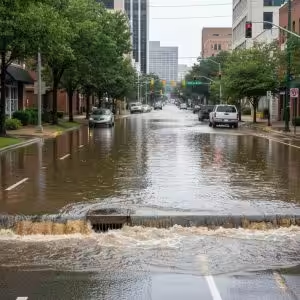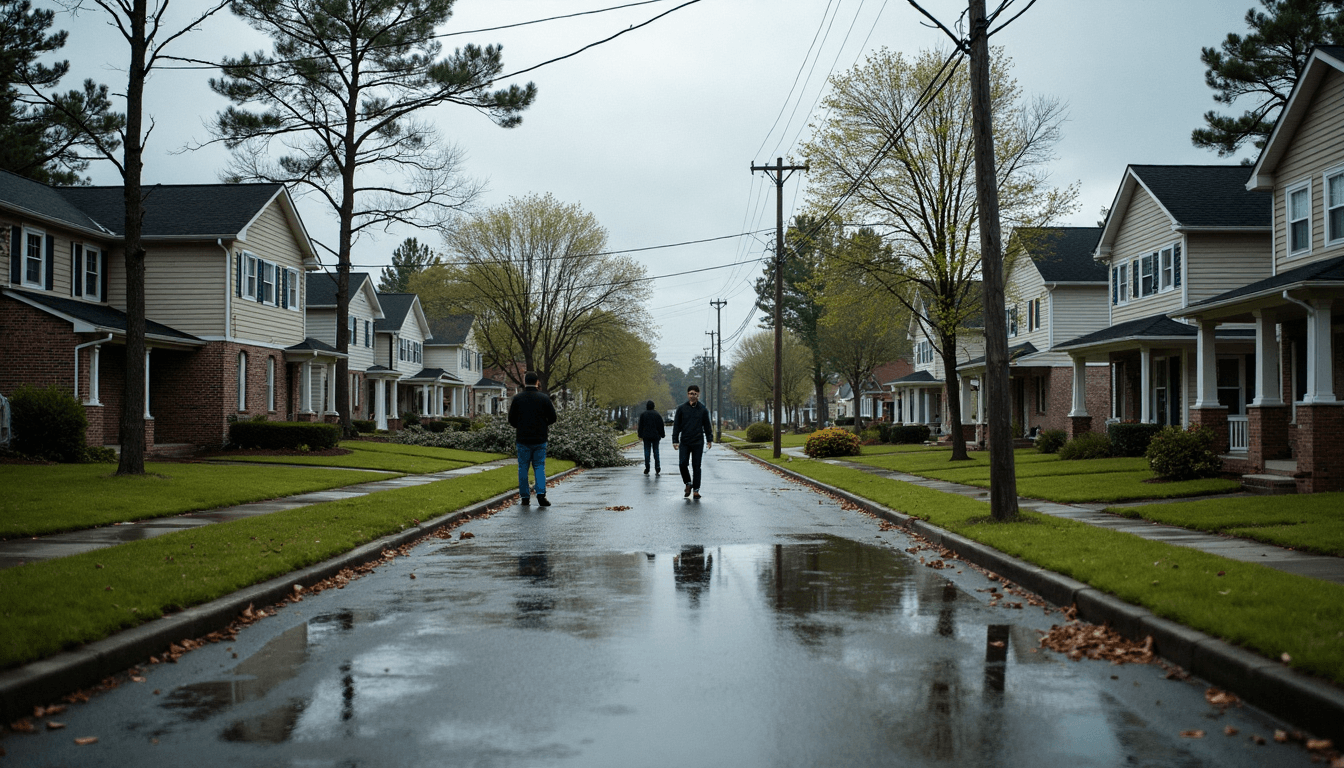
Charlotte’s storms can turn a quiet street into a financial headache overnight. You might expect the cleanup to cost a few hundred dollars, but storm damage can slash property values in the city by as much as 25 percent. That number alone is enough to make anyone look twice, but here’s what most people miss. The most telling signs of costly storm damage often hide in plain sight—meaning you could walk past a huge problem and not even know it yet.
Table of Contents
- Common Storm Damage Signs To Watch For
- How Storm Damage Impacts Charlotte Properties
- Steps To Document And Report Damage For Claims
- Tips For Fast Storm Damage Recovery
Quick Summary
| Takeaway | Explanation |
|---|---|
| Promptly inspect for storm damage | Look for exterior signs like cracked or missing shingles, dented gutters, and damaged siding, as these indicate potential structural issues. |
| Document all damage thoroughly | Capture time-stamped photos and videos of affected areas before discarding any items to support your insurance claims. |
| Engage professionals for assessment | Hire certified inspectors to evaluate damage accurately and provide documentation that strengthens your insurance claims. |
| Take immediate emergency actions | Implement safety measures such as covering damaged areas with tarps and quickly removing water to prevent additional damage. |
| Develop a recovery plan | Coordinate with insurance providers and restoration professionals to ensure a well-organized approach to property repairs. |
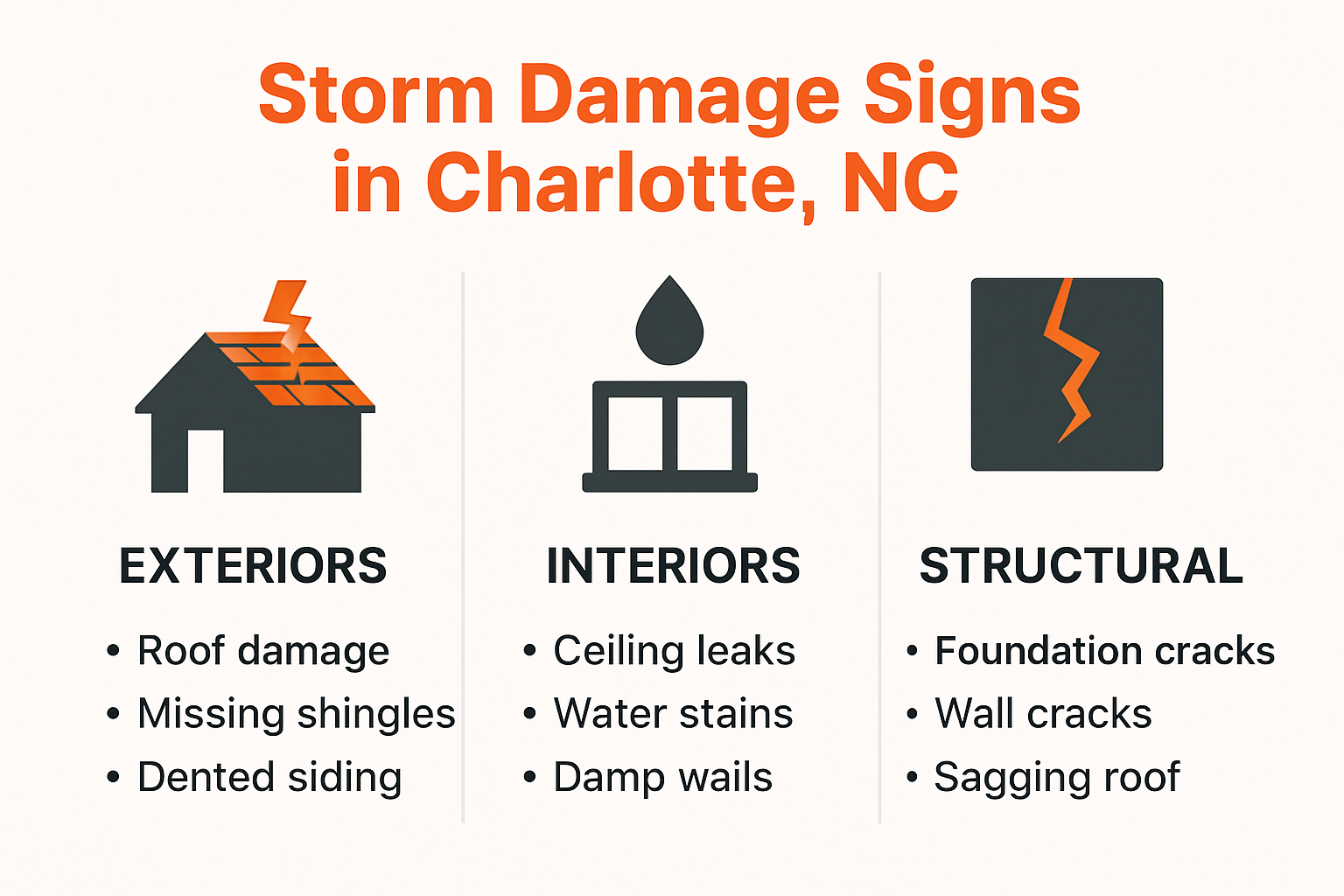
Common Storm Damage Signs to Watch For
Storm damage in Charlotte can strike quickly and silently, potentially compromising your property’s structural integrity and safety. Recognizing early warning signs helps homeowners and property managers take swift action to prevent extensive and costly repairs.
Exterior Structural Damage Indicators
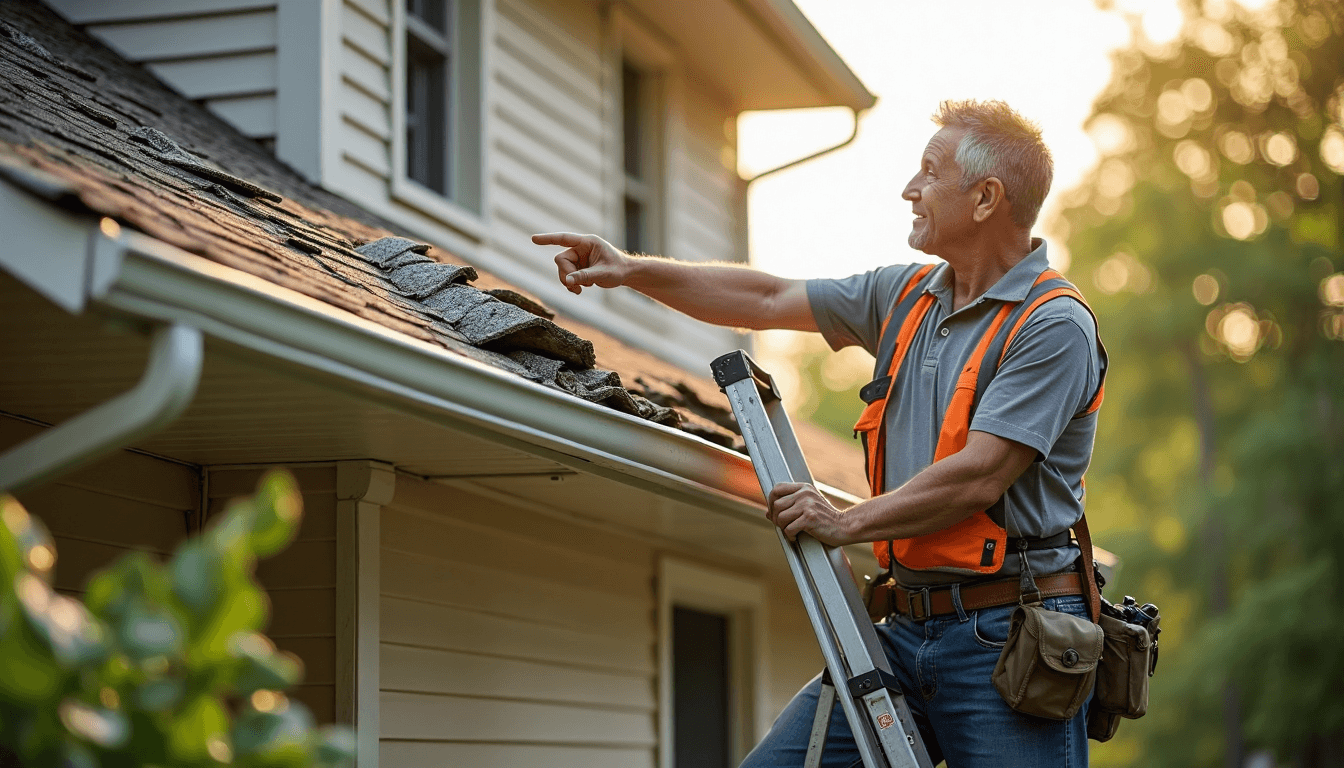
Storm damage often manifests first on a property’s exterior. Roofs bear the brunt of severe weather, making them a critical area for inspection. Research from the National Roofing Contractors Association reveals that missing or damaged shingles are primary indicators of potential structural compromise. Professional inspectors recommend a thorough examination of roofing materials after any significant weather event.
Visible signs of exterior damage include:
- Cracked or Missing Shingles: Exposed roof areas signal immediate vulnerability
- Dented Gutters and Downspouts: Metal deformation indicates potential impact damage
- Damaged Siding: Cracks, holes, or warped exterior materials suggest severe weather impact
Interior Water Damage Warning Signs
Water intrusion represents a serious consequence of storm damage that can rapidly escalate into more significant problems. According to the Insurance Institute for Business & Home Safety, even small undetected leaks can lead to substantial structural deterioration and mold growth. Homeowners should vigilantly monitor for telltale moisture indicators.
Critical interior water damage signs include:
- Water Stains on Ceilings and Walls: Discolored patches often indicate roof or wall penetration
- Musty Odors: Persistent dampness suggests hidden moisture accumulation
- Peeling Paint or Wallpaper: A clear signal of moisture infiltration behind surfaces
Structural Integrity Red Flags
Beyond surface-level damage, storms can compromise a property’s fundamental structural elements. Research from the National Home Inspectors Association highlights critical indicators of potential foundational or structural issues that demand immediate professional evaluation.
Significant structural damage warning signs include:
- Foundation Cracks: Horizontal or vertical fissures suggesting significant stress
- Shifting Walls: Visible lean or separation from standard vertical alignment
- Stuck Doors and Windows: Potential indication of structural movement or frame distortion
If you notice any of these storm damage signs, immediate professional assessment becomes crucial. Learn more about comprehensive storm damage repair strategies to protect your property and understand potential restoration approaches.
Remember, early detection and prompt action can significantly minimize long-term damage and reduce overall repair costs. Professional inspections remain the most reliable method for comprehensive storm damage assessment.
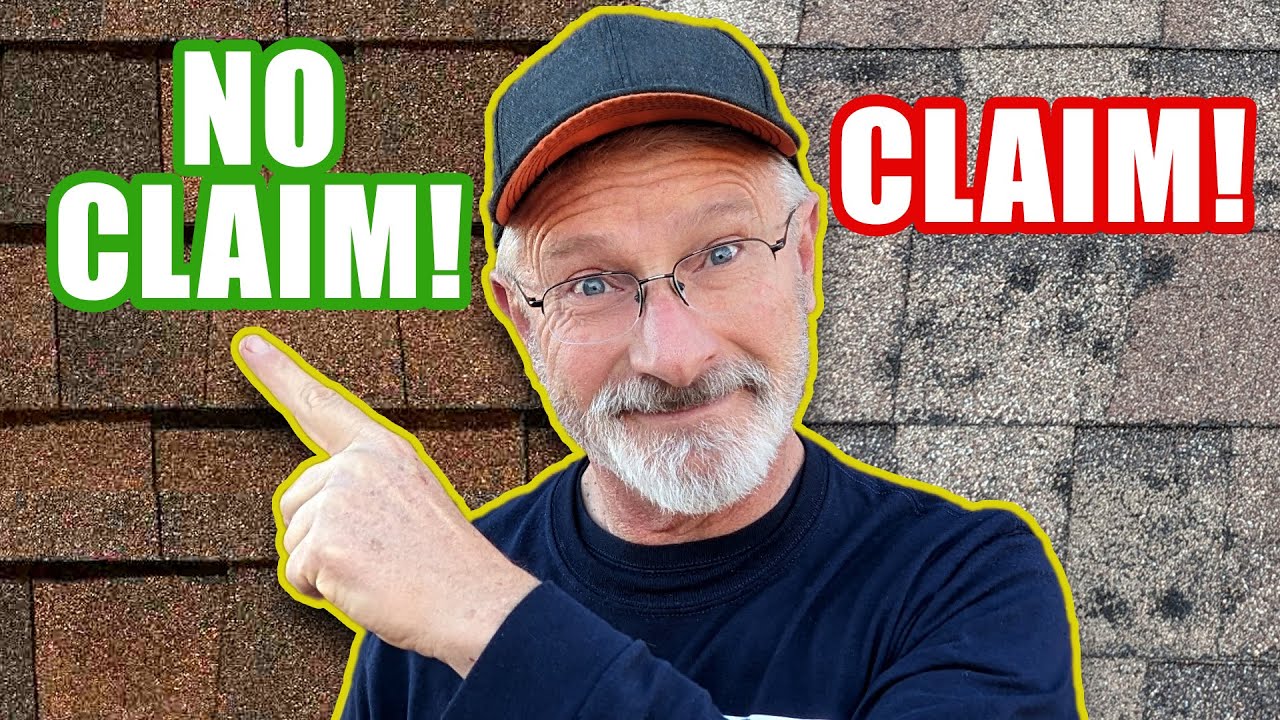
How Storm Damage Impacts Charlotte Properties
Storm damage in Charlotte presents a complex and multifaceted challenge for property owners, transforming the landscape of residential and commercial real estate with potentially devastating economic and structural consequences. Understanding the comprehensive impact requires a nuanced examination of financial, structural, and long-term implications.
Economic Devastation and Property Value Decline
Research from the North Carolina Department of Insurance reveals that storm-related damages can dramatically reduce property values. In Charlotte, the economic ripple effects extend far beyond immediate repair costs. When a property sustains significant storm damage, its market value can plummet by 10-25%, creating substantial financial strain for homeowners and investors.
The economic impact manifests through multiple channels:
- Immediate Repair Expenses: Substantial out-of-pocket costs for restoration
- Insurance Premium Increases: Higher risk assessments lead to elevated insurance rates
- Reduced Marketability: Damaged properties become less attractive to potential buyers
Structural Vulnerability and Long-Term Degradation
According to the City of Charlotte’s Resilience Assessment, storm damage initiates a progressive deterioration process that compromises structural integrity. What begins as minor damage can rapidly escalate into catastrophic structural failure. Professional assessments indicate that unaddressed storm damage can reduce a property’s expected lifespan by up to 30%, creating significant long-term risks.
Key structural vulnerability indicators include:
- Foundation Weakening: Repeated water intrusion compromises foundational stability
- Material Degradation: Continuous exposure accelerates material breakdown
- Cumulative Structural Stress: Each storm incrementally damages building components
Community and Infrastructure Disruption
Research from the Urban Land Institute highlights that storm damage extends beyond individual properties, creating broader community-wide disruptions. Charlotte has experienced significant infrastructure challenges, with recent storm events causing widespread utility interruptions, transportation network breakdowns, and economic productivity losses.
Community-level storm damage consequences include:
- Utility Infrastructure Damage: Electrical grid and water system disruptions
- Transportation Network Impairment: Road and bridge damage limiting mobility
- Economic Productivity Losses: Business interruptions and reduced regional economic activity
Discover comprehensive strategies for managing storm damage recovery to mitigate these complex challenges. Understanding the multifaceted impact of storm damage empowers Charlotte property owners to develop proactive protection and restoration strategies, minimizing potential long-term consequences.
Professional assessment and rapid response remain the most effective methods for managing storm damage risks, protecting both individual properties and the broader Charlotte community infrastructure.
To help compare the economic, structural, and community-level impacts of storm damage in Charlotte, the following table summarizes their distinct features and consequences:
| Impact Type | Key Features / Risks | Consequences |
|---|---|---|
| Economic Devastation | Immediate repair costs, insurance premiums, reduced property value | Financial strain, less marketability |
| Structural Vulnerability | Foundation weakening, material breakdown, cumulative stress | Shortened property lifespan, instability |
| Community & Infrastructure | Utility outages, transport impairment, productivity loss | Widespread disruption, economic losses |
Steps to Document and Report Damage for Claims
Navigating the insurance claims process after storm damage requires systematic documentation and strategic reporting. Property owners in Charlotte must understand the critical steps to ensure maximum compensation and smooth claim resolution.
Initial Damage Documentation
According to the North Carolina Department of Insurance, proper documentation forms the foundation of a successful storm damage claim. Immediate and comprehensive evidence collection is crucial. Homeowners should begin by creating a detailed visual record of all damage using high-resolution photographs and videos.
Key documentation strategies include:
- Time-Stamped Visual Evidence: Capture clear images of all damaged areas
- Systematic Room-by-Room Assessment: Document damage methodically
- Preserve Damaged Items: Do not discard damaged property before documentation
Professional Damage Assessment
Research from the Insurance Information Institute emphasizes the importance of professional damage evaluation. Certified inspectors provide critical third-party documentation that strengthens insurance claims. These professionals offer comprehensive assessments that identify both visible and hidden damage, creating a robust foundation for your claim.
Critical professional assessment elements include:
- Detailed Written Inspection Report: Comprehensive damage documentation
- Expert Damage Valuation: Accurate cost estimation for repairs
- Structural Integrity Analysis: Identifying potential long-term damage risks
Navigating the Claims Process
The National Association of Insurance Commissioners outlines a strategic approach to filing storm damage claims. Prompt and precise communication with your insurance provider is essential. Property owners must understand their policy details and follow specific reporting protocols.
Essential claims process steps include:
- Immediate Notification: Contact your insurance provider within 24-48 hours
- Detailed Claim Submission: Provide comprehensive documentation
- Follow-Up Communication: Maintain regular contact with claims adjuster
Learn more about mastering the claim process for roof damage to ensure you receive maximum compensation. Understanding these critical steps can significantly impact your ability to recover financially from storm-related property damage.
Remember that thorough documentation, professional assessment, and timely reporting are your most powerful tools in navigating the complex insurance claims landscape. Each piece of evidence you collect represents a critical step toward full property restoration and financial recovery.
The following table outlines the main steps to properly document and report storm damage for insurance claims, along with their objectives and tips for success:
| Step | Objective | Tips for Success |
|---|---|---|
| Initial Damage Documentation | Record all visible damage | Use high-res photos, time-stamps, keep all evidence |
| Professional Assessment | Validate and detail damage for claim | Hire certified inspector for full report |
| Claims Process Navigation | Submit and communicate with insurer | Notify insurer fast, track all communications |
Tips for Fast Storm Damage Recovery
Storm damage recovery requires strategic planning, rapid response, and systematic approaches to minimize long-term property damage and financial strain. Charlotte property owners must understand the critical steps to expedite recovery and restore their properties efficiently.
Immediate Emergency Response Strategies
According to the Federal Emergency Management Agency, immediate action is crucial in mitigating storm damage. Property owners should prioritize safety while implementing emergency protective measures to prevent further deterioration.
Critical immediate response actions include:
- Temporary Structural Protection: Cover damaged roof areas with waterproof tarps
- Water Removal: Quickly extract standing water to prevent secondary damage
- Electrical Safety: Shut off power in affected areas to prevent potential hazards
Professional Damage Mitigation
Research from the National Institute of Building Sciences emphasizes the importance of professional damage assessment and mitigation. Certified restoration professionals can rapidly identify and address potential long-term structural risks that may not be immediately apparent.
Key professional mitigation strategies include:
- Comprehensive Damage Assessment: Detailed evaluation of structural and hidden damage
- Moisture Detection: Advanced technology to identify potential mold growth areas
- Specialized Drying Techniques: Preventing secondary water damage and structural degradation
Strategic Recovery Planning
The Insurance Information Institute recommends a comprehensive approach to storm damage recovery. Successful restoration requires careful coordination between property owners, insurance providers, and restoration professionals.
Essential recovery planning components include:
- Detailed Documentation: Comprehensive records of damage and repair efforts
- Insurance Coordination: Proactive communication with insurance providers
- Prioritized Repair Approach: Addressing critical structural issues first
Explore detailed insights into storm damage repair costs to help you develop a more informed recovery strategy. Understanding these critical steps can significantly reduce recovery time and minimize potential long-term property damage.
Time is of the essence in storm damage recovery. Quick, strategic action can mean the difference between minor repairs and extensive reconstruction. Property owners who respond promptly and systematically can significantly mitigate the financial and structural impacts of storm damage.
Frequently Asked Questions
What are the most common signs of storm damage in Charlotte, NC?
Common signs include cracked or missing shingles, water stains on ceilings and walls, dented gutters, and foundation cracks. It’s important to conduct thorough inspections after a storm to catch these issues early.
How can storm damage affect property value in Charlotte?
Storm damage can reduce property values by as much as 25%. Immediate repair costs, increased insurance premiums, and decreased marketability all contribute to this decline in value.
How should I document storm damage for insurance claims?
Document all damage with time-stamped photos and videos, perform a systematic room-by-room assessment, and ensure to preserve damaged items until they have been documented properly.
What steps should I take for immediate storm damage recovery?
For immediate recovery, prioritize safety by covering damaged areas, removing standing water, and shutting off electrical power in affected areas. Engaging professional restoration services can also expedite the recovery process.
Take Control of Storm Damage Before It Takes Control of You
Reading about storm damage signs in Charlotte is the first step—but what happens when you spot cracked shingles, water stains, or shifting walls in your own home? The article highlighted how quickly storm damage can destroy your property value and peace of mind. Rising repair costs, frustrating insurance hurdles, and the fear of hidden structural issues are every homeowner’s worst nightmare, especially right after a major storm.
Let the experts at National Insurance Claim Specialist (NICS) turn worry into relief. Our specialists handle every step, from expert inspection and insurance claim guidance to complete storm restoration. We know how overwhelming it feels to document everything, chase your insurance provider, and protect your family’s investment. Protect your home and your finances—contact us today for a fast, no-obligation consultation and let NICS restore your property and your confidence. Get started now with NICS and make storm damage recovery easier, faster, and worry-free.
Recommended Articles
- Storm Damage Repair Costs: What to Expect in 2025 – Fire Damage Repair and Water Damage Repair Charlotte NC
- Charlotte Restoration: Find Top Disaster Recovery Services
- Patience Pays Off: How Long to Claim Hail Damage on Your Roof – Fire Damage Repair and Water Damage Repair Charlotte NC
- Mastering the Claim Process: How to File for Roof Damage – Fire Damage Repair and Water Damage Repair Charlotte NC
- Expert Fire Damage Restoration Services – Fire Damage Repair and Water Damage Repair Charlotte NC
- NIC’s Restoration: Your Trusted Restoration Experts