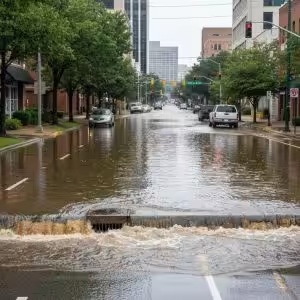
Restoration trends in Charlotte are shifting fast. Around 11 percent of buildings now face a high risk of flooding, and nearly every property in the area is exposed to some form of wildfire threat. Think flooding is rare here? Actually, the chance of experiencing a foot and a half of water damage within thirty years is almost fifty-fifty. Here’s the twist. While disasters are on the rise, breakthrough tools like artificial intelligence and smart sensors are quietly transforming how properties are protected and restored—often before owners even spot the first sign of trouble.
Table of Contents
- How Technology Is Changing Restoration In 2025
- Local Disaster Risks Facing Charlotte Properties
- Insurance And Legal Impacts For Charlotte Residents
- Best Practices For Home And Business Owners In 2025
Quick Summary
| Takeaway | Explanation |
|---|---|
| Embrace Technological Advancements | Property owners should adopt AI and IoT technologies to enhance damage assessment, risk monitoring, and proactive prevention measures, ensuring faster recovery and more efficient management of property risk. |
| Proactive Maintenance is Essential | Regular property inspections and the implementation of preventative maintenance schedules are crucial to identifying vulnerabilities before they escalate into significant problems. |
| Understand Insurance Dynamics | Familiarizing oneself with evolving insurance claims processes and legal compliance requirements is vital for property owners to navigate disaster recovery effectively and ensure they are adequately protected. |
| Develop Comprehensive Emergency Plans | Creating detailed emergency response plans, including documented protocols and communication systems, is necessary to prepare for potential disaster scenarios, ensuring prompt and effective action when needed. |
| Integrate Smart Technologies | Utilizing advanced technologies for real-time monitoring and predictive maintenance will empower property owners to enhance the resilience of their properties against environmental threats. |
How Technology Is Changing Restoration in 2025
Technology is transforming the restoration industry at an unprecedented pace, creating innovative solutions that will revolutionize how property owners manage and recover from disaster scenarios. By 2025, technological advancements will fundamentally reshape how restoration professionals assess, respond, and repair damaged properties.
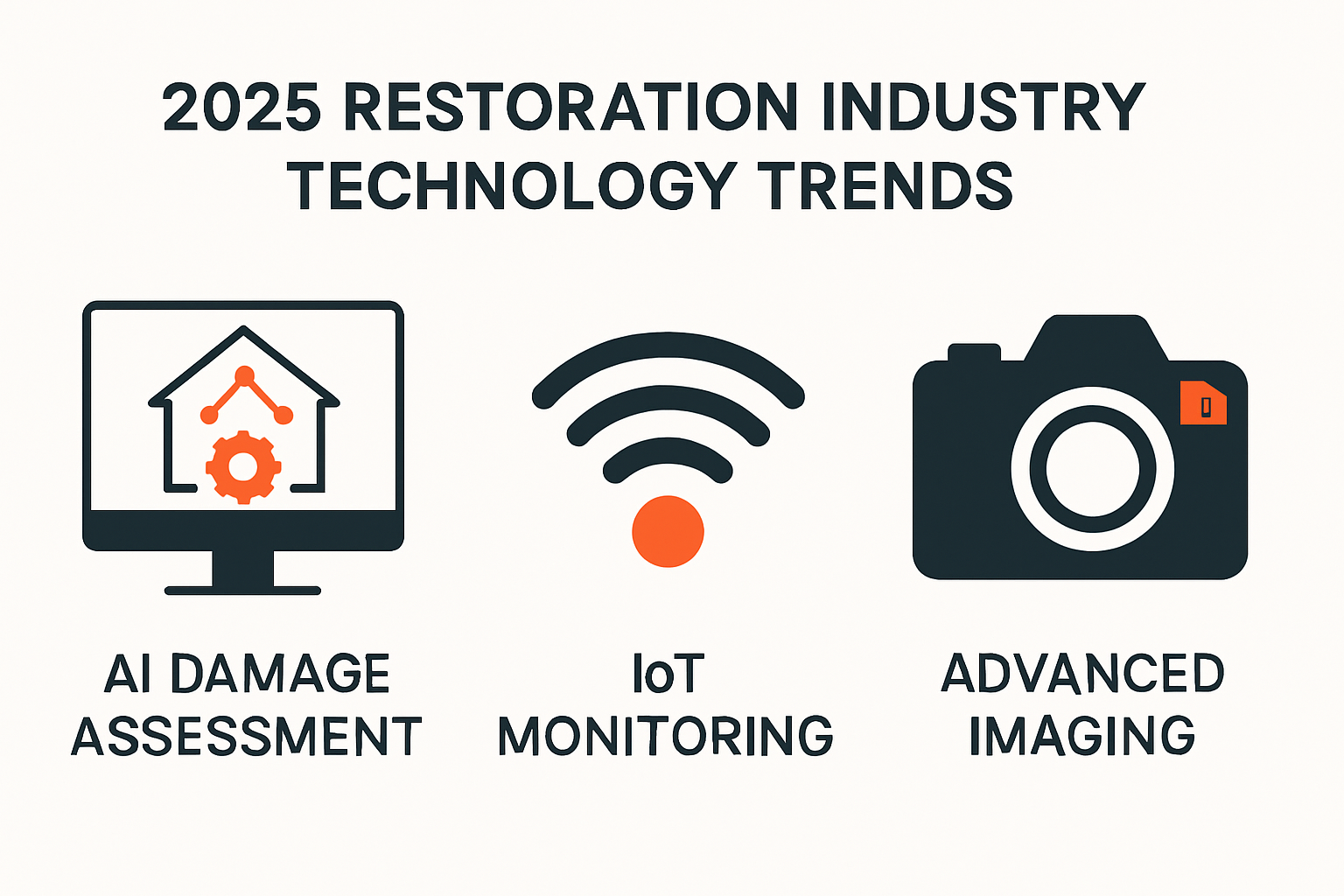
Artificial Intelligence: The New Restoration Frontier
Artificial intelligence is set to become a game changing tool in the restoration industry. Learn more about our advanced damage assessment techniques AI systems are now capable of conducting rapid damage evaluations with incredible precision. According to research from industry analysts, AI technologies will enable restoration companies to:
- Predictive Damage Analysis: Quickly estimate repair costs and restoration timelines
- Automated Documentation: Generate comprehensive damage reports instantly
- Risk Assessment: Identify potential secondary damage risks with unprecedented accuracy
The integration of machine learning algorithms means restoration professionals can now process complex damage scenarios faster and more efficiently than ever before. These AI systems analyze historical data, current damage patterns, and environmental conditions to provide near-instantaneous insights.
Internet of Things: Smart Monitoring and Prevention
The Internet of Things (IoT) is revolutionizing property protection and restoration strategies. Advanced sensor technologies are now enabling property owners to implement proactive monitoring systems that detect potential issues before they escalate into major problems.
Smart home technologies are becoming increasingly sophisticated, with IoT devices capable of:
- Real-time Water Leak Detection: Sensors that immediately alert homeowners to potential water damage
- Temperature and Humidity Monitoring: Automated systems that prevent mold growth and structural damage
- Remote Property Management: Allowing instant assessment and intervention during emergencies
Commercial properties are particularly benefiting from these technological innovations. Integrated sensor networks can now provide continuous monitoring, sending immediate alerts about potential structural vulnerabilities or environmental changes that could lead to significant damage.
Advanced Imaging and Diagnostic Technologies
Emergency response and damage assessment are being transformed by cutting-edge imaging technologies. Thermal imaging cameras, drone surveys, and 3D scanning equipment now provide restoration professionals with unprecedented levels of detail and accuracy.
These technologies allow for:
- Comprehensive Damage Mapping: Detailed visual assessments of structural and environmental damage
- Non-invasive Inspection: Ability to evaluate damage without extensive physical disruption
- Precise Restoration Planning: Creating exact restoration strategies based on comprehensive digital models
By 2025, property owners in Charlotte can expect restoration services that leverage these advanced technologies to provide faster, more accurate, and more efficient recovery processes. The future of restoration is not just about repairing damage but preventing it through intelligent, technology-driven approaches.

As technological innovations continue to emerge, property owners who stay informed and embrace these advancements will be best positioned to protect their investments and respond effectively to unexpected disasters.
Local Disaster Risks Facing Charlotte Properties
Charlotte property owners face a complex landscape of environmental and climate-related risks that demand strategic preparation and robust restoration strategies. Understanding these local disaster risks is crucial for protecting residential and commercial properties from potential devastating impacts.
Flooding: A Critical Urban Vulnerability
Flooding represents a significant threat to Charlotte properties. Learn about comprehensive disaster recovery strategies According to Climate Check data, approximately 11% of buildings in Charlotte are at high risk of flooding, with properties facing an average 44% chance of experiencing a flood around 1.7 feet deep over a 30-year period.
The city’s geographical location and urban infrastructure contribute to its flood vulnerability. Key flood risk factors include:
- Proximity to Water Bodies: Charlotte’s location near multiple rivers and streams increases flood potential
- Urban Development: Increased impervious surfaces reduce natural water absorption
- Climate Change Impact: Rising precipitation patterns and extreme weather events heighten flood risks
Property owners must recognize that flood damage extends beyond immediate water intrusion. Secondary issues like mold growth, structural weakening, and electrical system damage can create long-term complications requiring extensive restoration efforts.
Wildfire and Storm Risks
Contrary to common perception, Charlotte faces significant wildfire and storm-related risks. Research from climate analysis platforms reveals that 96% of buildings in the area have some level of wildfire risk. More critically, in 408 census tracts, over 25% of buildings face substantial fire danger, while 398 tracts report more than half of their buildings at significant risk.
Storm-related risks compound these challenges. NOAA climate data indicates North Carolina experiences an average of 7.4 billion-dollar weather and climate disaster events annually between 2020-2024. These events include:
- Severe Thunderstorms: Causing wind and hail damage
- Tropical Cyclones: Bringing destructive winds and extensive flooding
- Unexpected Drought Conditions: Increasing wildfire susceptibility
Economic and Structural Implications
The potential for disaster-related damages extends beyond physical property destruction. Economic implications include increased insurance premiums, potential property value reduction, and significant restoration costs. Charlotte property owners must adopt a proactive approach to risk management.
Key strategies for mitigating local disaster risks include:
- Regular Property Inspections: Identifying potential vulnerabilities
- Comprehensive Insurance Coverage: Ensuring adequate protection
- Professional Restoration Planning: Developing rapid response protocols
Understanding these local disaster risks empowers Charlotte property owners to make informed decisions about protection, prevention, and potential restoration needs. By recognizing the specific environmental challenges facing the region, residents can develop robust strategies to safeguard their most valuable assets against potential catastrophic events.
Insurance and Legal Impacts for Charlotte Residents
The restoration landscape in Charlotte is increasingly complex, with insurance and legal considerations becoming more intricate for property owners navigating disaster recovery. As climate-related incidents become more frequent, understanding the nuanced interplay between insurance policies, legal requirements, and restoration services has never been more critical.
Evolving Insurance Claim Dynamics
Learn about navigating complex insurance processes Insurance claim procedures are undergoing significant transformations in 2025. According to industry research, Charlotte property owners can expect more sophisticated claim management processes driven by technological advancements and changing regulatory landscapes.
Key shifts in insurance claim dynamics include:
- Accelerated Claim Processing: Technological innovations reducing settlement times
- Enhanced Documentation Requirements: More detailed evidence and assessment protocols
- Risk-Based Premium Adjustments: Increased scrutiny of property-specific disaster vulnerabilities
Insurance companies are implementing more rigorous assessment methods, leveraging advanced technologies to evaluate property risks more accurately. This means property owners must be increasingly proactive in maintaining comprehensive documentation and understanding their policy’s specific provisions.
Legal Compliance and Restoration Standards
Restoration contractors in Charlotte must now adhere to increasingly stringent legal and documentation standards. Regulatory guidelines mandate comprehensive documentation, transparent communication, and strict compliance with local and state regulations.
Critical legal considerations for property owners include:
- Detailed Damage Documentation: Comprehensive visual and written evidence requirements
- Contractor Certification: Mandatory professional qualifications for restoration professionals
- Transparent Cost Estimation: Itemized and verified restoration expense reporting
Property owners must carefully select restoration partners who demonstrate not just technical expertise, but also a thorough understanding of legal and insurance compliance requirements. This approach minimizes potential disputes and ensures smoother recovery processes.
Financial Protection and Risk Mitigation
The intersection of insurance, legal frameworks, and restoration services demands a strategic approach to financial protection. Property owners in Charlotte should consider:
- Comprehensive Policy Review: Annual assessment of insurance coverage
- Professional Consultation: Engaging experts to interpret complex policy language
- Proactive Risk Management: Implementing preventative measures to reduce potential claim scenarios
Understanding these evolving dynamics requires property owners to be more informed and engaged. The restoration industry’s landscape in 2025 demands a holistic approach that combines technological understanding, legal awareness, and strategic financial planning.
As insurance and restoration industries continue to transform, Charlotte residents who stay informed and adaptable will be best positioned to protect their properties and navigate potential disaster recovery scenarios effectively. The key lies in proactive education, strategic planning, and selecting restoration partners who demonstrate comprehensive expertise across technological, legal, and insurance domains.
Best Practices for Home and Business Owners in 2025
As the restoration landscape evolves in 2025, property owners in Charlotte must adopt proactive strategies to protect their investments and minimize potential disaster risks. The changing environmental and technological landscape demands a more sophisticated approach to property management and emergency preparedness.
Proactive Property Maintenance and Risk Assessment
Discover comprehensive property protection strategies Property owners must transition from reactive to proactive maintenance models. Restoration industry experts emphasize the critical importance of regular property assessments and preventative measures.
Key proactive maintenance strategies include:
- Regular Structural Inspections: Quarterly professional assessments of potential vulnerabilities
- Advanced Moisture Monitoring: Installing smart sensors to detect early signs of water damage
- Preventative Maintenance Schedules: Creating systematic approaches to property upkeep
Technology now enables property owners to implement sophisticated monitoring systems that can detect potential issues before they escalate. Smart home technologies and IoT devices provide real-time insights into property conditions, allowing for immediate intervention and risk mitigation.
Emergency Preparedness and Response Planning
Developing a comprehensive emergency response plan is no longer optional but essential. Property owners must create detailed protocols that address various potential disaster scenarios. This includes:
- Documented Emergency Protocols: Detailed step-by-step guides for different disaster types
- Emergency Communication Systems: Establishing clear communication channels
- Critical Documentation Preservation: Securing important documents and insurance information
Businesses and homeowners should develop digital and physical emergency kits that include:
- Backup power sources
- Emergency contact lists
- Comprehensive insurance documentation
- Critical medical and personal supplies
- Portable digital storage of important records
Technology-Enhanced Property Protection
In 2025, property protection goes beyond traditional approaches. Owners must leverage advanced technologies to enhance their property’s resilience. This includes:
- Smart Home Integration: Implementing IoT devices for real-time monitoring
- Advanced Insurance Technologies: Utilizing digital platforms for rapid claim processing
- Predictive Maintenance Tools: Leveraging AI-driven risk assessment technologies
Property owners should invest in technologies that:
- Provide real-time environmental monitoring
- Offer predictive damage prevention
- Enable quick and efficient emergency response
The most successful property owners in 2025 will be those who view protection as a comprehensive, technology-enabled strategy. This means going beyond traditional insurance and maintenance approaches to create adaptive, intelligent property management systems.
Ultimately, protecting your property in 2025 requires a holistic approach that combines technological innovation, proactive planning, and continuous education. Charlotte property owners who embrace these strategies will be best positioned to safeguard their investments against an increasingly complex environmental and technological landscape.
Frequently Asked Questions
What are the key technologies transforming the restoration industry by 2025?
Technology is reshaping the restoration industry with advancements in artificial intelligence for damage assessment, the Internet of Things for smart monitoring, and advanced imaging technologies like thermal cameras and drones for precise evaluations.
How is the risk of flooding affecting property owners in Charlotte?
Approximately 11% of properties in Charlotte are at high risk of flooding, with many buildings facing a significant chance of experiencing severe water damage over a 30-year period due to urban infrastructure and climate change impacts.
What should property owners in Charlotte do for emergency preparedness?
Property owners should develop detailed emergency response plans, including documented protocols for various disaster scenarios, maintaining emergency communication systems, and securing critical documentation and supplies.
How can property owners minimize risks associated with wildfires in Charlotte?
To minimize wildfire risks, property owners should conduct regular property inspections, ensure comprehensive insurance coverage, and implement preventative measures such as creating defensible space around their properties and using fire-resistant materials.
Put Charlotte’s Top Restoration Trends to Work for Your Property
Feeling overwhelmed by rising flood and storm risks in Charlotte? The article reveals how technology—like AI-driven damage assessment and smart sensors—can safeguard your property before trouble starts. Yet, when disaster strikes, even the smartest tools cannot replace the peace of mind that comes from expert guidance and complete insurance support. Homeowners and businesses alike struggle with insurance headaches, loss documentation, and the need for fast, transparent restoration.
Stay ahead of storms, floods, and wildfires by partnering with specialists who blend cutting-edge solutions with years of experience. At National Insurance Claim Specialist (NICS) you get dedicated help with every step, from insurance claim support to full-service disaster recovery. Do not leave your investment exposed to chance. Begin your path to proactive protection and stress-free restoration by contacting NICS now for a personalized consultation. Your property and peace of mind deserve it.